We visited this temple during our recent Kumbakonam trip. Earlier I had put a very brief description of the temple in my directory ‘Around Mayiladuthurai – South’ but during our visit, what we saw and the information collected from the Gurukkal necessitated this exclusive long blog post on this temple.
SCN061 – Sri Sundara Gujambigai sametha Sri Veezhinatha Swamy Temple at Thiruveezhimizhalai
Google map of temple location:
Significances:
- One of the 276 Thevara Padal Petra Sthalams
- A good Marriage Parihara Sthalam.
- Saints Thirunavukkarasar and Thiru Gnana Sambandhar got padikkasu daily from Bhagawan to tide over the famine condition existed at that time; so, a good prayer sthalam to pray for wealth
- The Moolavar vimanam is said to be brought from Sri Vaikundam itself (like Srirangam) by Bhagwan Mahavishnu
- Special temple for Magam Star people
- Parrots worship Bhagwan even today; there is a special hole at the back wall of the Garbagraham for this purpose.
- The Kathyayana manthram to pray for marriage and the temple pathigam ‘வாசி தீரவே, காசு நல்குவீர்’ to pray for wealth are highly powerful and popular.
- An exactly similar legend of of Thirukkadaiyur exists here also; so this is also a temple to pray for relief from death fear and conducting marriages, 60th, 70th, 80th birthdays etc.,
- Since Bhagwan Vishnu offered His eye and got blessed, the Bhagwan Shiva here is called as Sri Nethra pureeswarar (Nethra means eye), all eye related problems are cured by praying here.
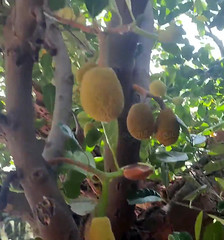
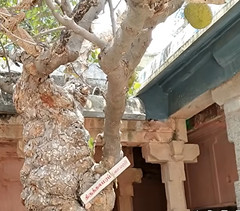
- The Sthala Vruksham Jackfruit tree is uniquely giving fruits at the branches like mangoes instead of from the base tree.
Main deities:
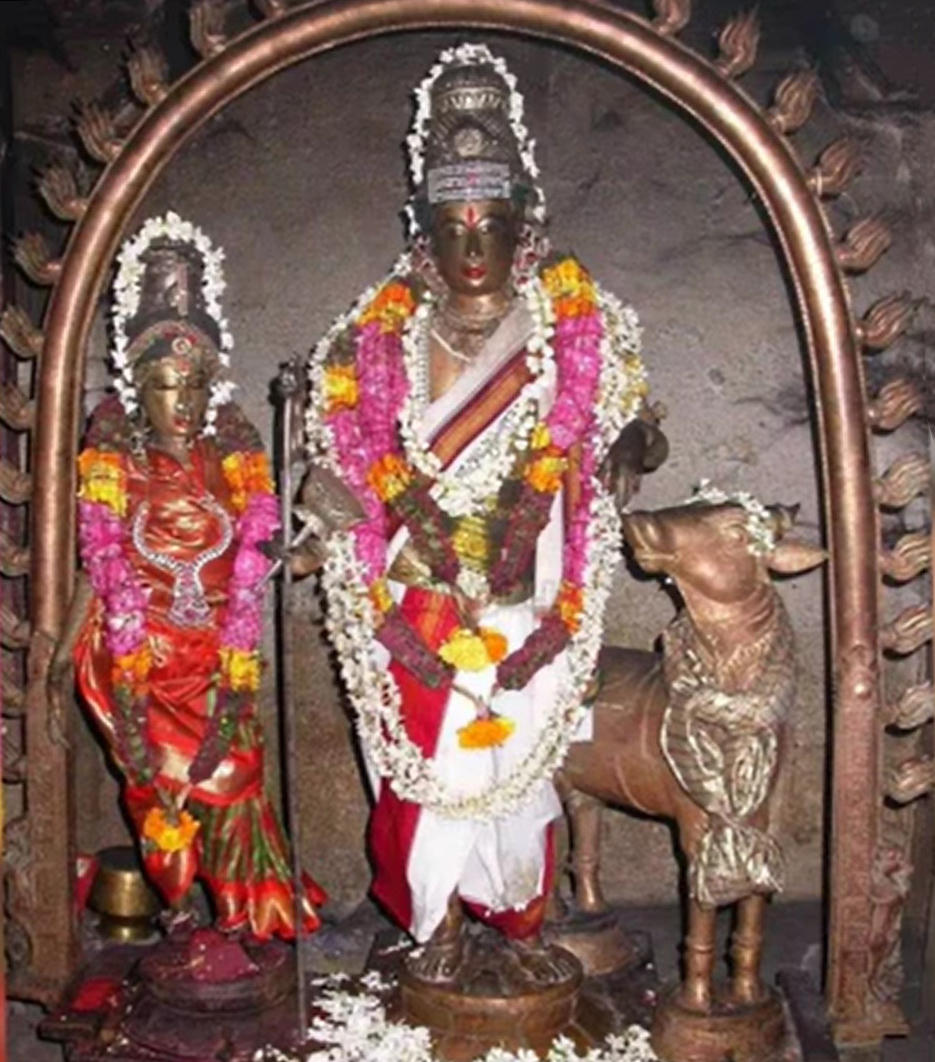
Sri Veezhinathar/ Sri Veezhi Azhagar/ Sri Nethrarpaneswarar as Swayambu lingam facing East with Ambal Sri Brihat Sundara Gujambal/ Sri Azhagiya Vanmulai ammai/ Sri Kathyayani also facing East
Legend:
- Sage Kathyayana and his wife did severe penance at Annniyur closeby to have a child and Parvathi devi wanted to be born to them in order to marry Bhagwan Shiva. All happened and Bhagwan Shiva took the hands of Parvathi devi on the Magam Star day in the month of Chithirai (April–May) here. So, this is considered as a special temple for people born on Magam star to worship.
- At the time of marriage, Bhagwan Shiva played with Parvathi Devi by lining up 1000 Shivas in front of Her. She got help from Sri Nandhi Bhagwan who whispered the Kathyayana manthram to Her describing Bhagwan Shiva from top to bottom, in order to identify the correct Bhagwan Shiva. This is the manthram to be recited for marriage related prayers.
- Bhagwan Vishnu lost His Sudarshana Chakra in His fight with demon Jaladhasura. Jaladhasura, though a demon, was a Shiva baktha. Bhagwan Vishnu, created a place called Vishnupuram closeby; brought Ganga as river Harisrutha in Sanskrit/ ‘Hari Sol aaru’ (ஹரி சொல் ஆறு) in tamil, which is now being called as Arasalaaru; created a theertham in His name in front of the temple and worshipped Bhagwan Shiva here daily with 1008 lotus flowers to get back His Sudharshana Chakra. On the last day, Bhagwan Shiva played with His penance by making one flower less. Bhagwan Vishnu didn’t hesitate to pluck out His eye and offer it as the last flower. Pleased with His penance, Bhagwan Shiva got back the Sudarshana Chakra for Him. For this reason, Bhagwan Shiva is called as Sri Nethrarpureeswarar, Nethram means eye. (The same legend is associated with some other temples also, Thirumalpur near Kanchipuram, for example).
- The moolavar vimanam is believed to have been brought here by Bhagwan Vishnu from Sri Vaikundam itself, as in Srirangam.
- Name Thiruveezhimizhalai:
Once this place was dense with many trees like sandal, shenbagam, jackfruit and vila – all collectively called as Veezhi. A hunter named Mizhalai Kurumbar was a devotee of Bhagwan Shiva and offered Him the Vila fruit for nivedhana. Pleased with his devotion, the Bhagwan taught him the Ashtama siddhi, the 8 great yogic thanthra lessons. The Vila fruit is still found at the feet of the Bhagwan in the temple. Hence, the place came to be known as Thiru + Veezhi + Mizhalai — a combination of the names of the fruit and the devotee hunter. - When Saints Appar and Sambandar visited this place, there was a severe drought all around. They prayed to Bhagwan Shiva to tide over the famine condition and restore fertility in the land. Bhagwan gave one Padikasu (Gold Coin) each every day to both of them. Saint Sambandar got Padikasu at the Peetam in front of the Dwajasthambam on the eastern side. Saint Thirunavukarasar got gold coin in the Peetam in the western outer prakaram, in exactly opposite direction. Using these gold coins, they setup Thirumadams in the respective directions at the outskirts so that they can offer food to not only the people of this village but to all who pass through the two ends of the village. These peetams can be seen at the temple.
- In this process, Saint Thirunavukarasar got good coins whereas Saint Sambandhar got slightly less valued coins. Saint Sambandhar very politely requested the Bhagwan for good coins also to him with his popular pathigam that starts as ‘வாசி தீரவே, காசு நல்குவீர் மாசின் மிழலையீர், ஏச லில்லையே’, meaning, give me good coins without any devalue (குறைபாடுகள் (வாசி) இல்லாத) Oh Thriuveezhinmazhalai Bhagwan, I am not scolding you in angry (ஏச லில்லையே), I’m just asking you. Bhagwan gives the reason for His act as – whereas Sambandar was doing service/ worship only through his pathigams, Thirunavukarasar was doing the same through his pathigams and also physically through his Uzhavarappani everywhere. This pathigam is highly powerful and popular to plead for wealth from Bhagwan for some noble/ sincere reasons.
- An exactly similar legend of of Thirukkadaiyur – involving Markandeyan, Yama and Sri Shiva – exists here also but instead of Markandeyan, it is King Swetha Kethu here.
- Worshipped by: Sri Bitchadanar, Sri Rathi devi, Sage Vasishtar, Sage Manu and Kamadhenu
- Sri Arunagirinathar had sung Thiruppugazh on this Sthala Murugar
- Saint Sambandhar had sung 15 pathigams and Saint Thirunavukarasar 8 pathigams on this temple.
The Temple:
- This is a huge fortress like temple with huge temple tank and there are so many special things to see.
- A 5 tier Rajagopuram welcomes us on the Eastern side
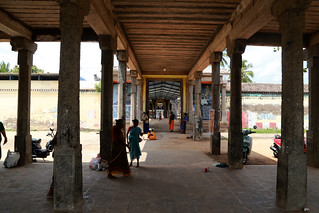
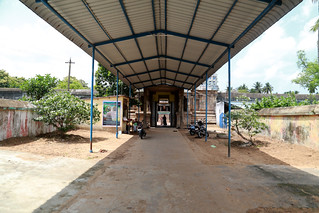
- The following dharshan sequence is advised: 1) Sri Padikkasu Vinayagar on the Western side, 2) Dwajasthambam, Nandhi Bhagwan and Sri Moolanathar, 3) Sri Veezhinathar and 4) Ambal Sri Sundara Gujambigai
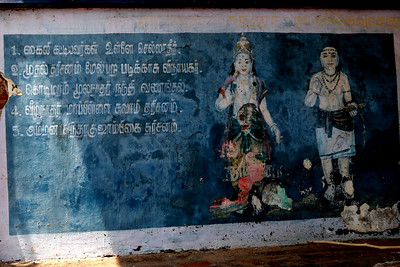
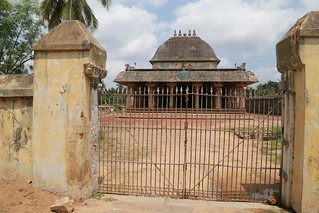
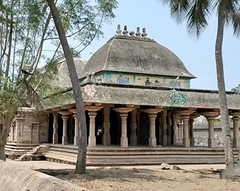
- As soon as we enter we can see on the right side, the mandapam where weddings and other functions take place
- Sri Padikkasu Vinayagar is present at the back (western) side entrance.
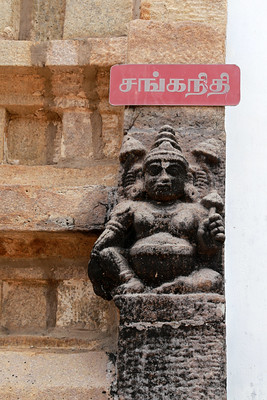
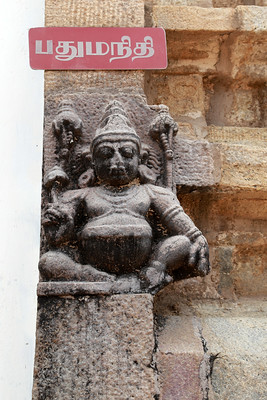
- Gubera’s Devaganas – Sanganithi who gives wealth and Pathumanithi who gives wisdom – are present at the main Rajagopura entrance
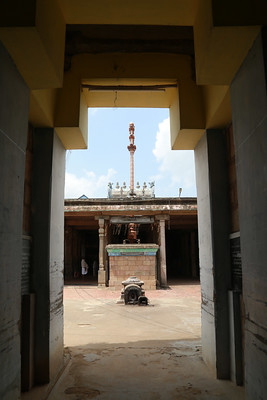
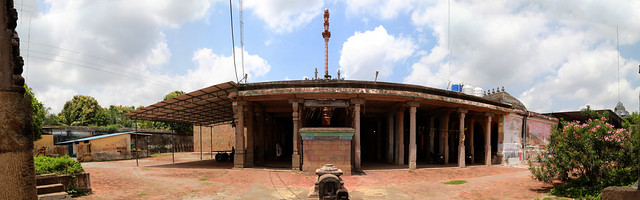
- This is a “Mada kovil”, i.e., the main shrine is at a raised platform and the path to the sanctum goes up in steps. There are 12 Mathappadi steps on one side representing the 12 months and 12 Rasis and 7 Vaarappadi on other side representing the 7 days of a week.
- Since Parvati devi, reborn as Katyayani, married Bhagwan Shiva here, this temple is widely known as a “Marriage Parihara Sthalam”. The inner mandapam resembles a Wedding mandapam with a Panthakkal pole – a turmeric painted pre wedding sacred pole (covered in bronze sheets here) that announces the wedding. In this hall, we can see moolavar in front and the Urchavar Sri Mappillai Swamy on the right.
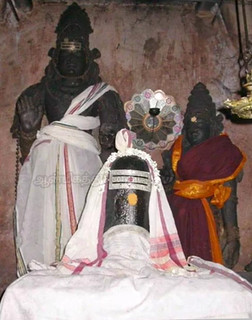
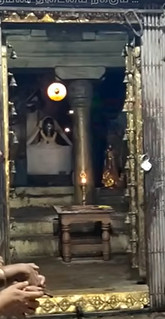
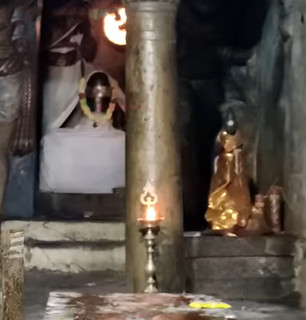
- Bhagwan Shiva and Parvathi Devi are present in human form with a height of about 15 feet just behind the main deity, Sri Veezhinatha Swamy, in linga form. There is a pillar just before the main deity called Arasaani kaal within the garba graham.
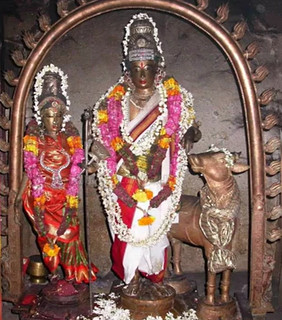
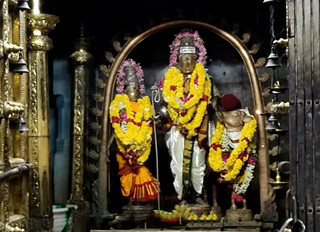
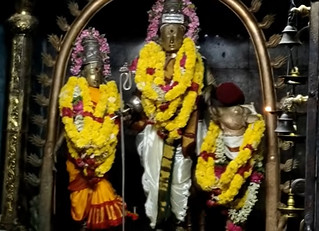
- We can see the Urchavar – Sri Mappilai Swamy with Parvathi devi, in Kasi Yathra posture of marriage, holding the stick, adorned in full alankaram with silk vasthras and all rich ornaments, in a stylish posture. Nandhi Bhagwan is present by the side looking at them curiously with head up with no intention of looking anywhere else, mesmerised in the divine couple’s beauty . The eyes plucked out by Bhagwan Vishnu for worship is present on the right foot of the Bhagwan and the Sudharshana Chakra is closeby. The Thiruvasai around the deities has attachments for 27 deepams, indicating 27 stars. Whereas in other temples you can see them in ‘after marriage’ posture, here you can see them in pre-wedding posture (Kasi Yathra). With the front mandapam looking like a real wedding hall, it gives a feeling of witnessing the real wedding of the divine couple.
- There is no Palliyarai for the deities since the wedding takes place every day and they interchange their garlands every day.
- 6 grand abhishegams per year are performed to Sri Mappilai swamy
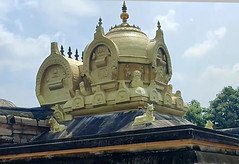
- The moolavar vimanam is believed to have been brought here by Bhagwan Vishnu from Sri Vaikundam itself, as in Srirangam. It is called as Indhra vimanam, Vinnezhi vimanam, Boolokha Kailayam, Akasa nagaram
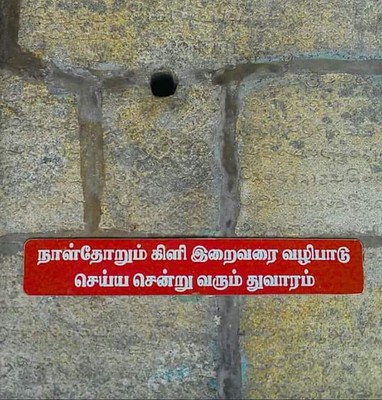
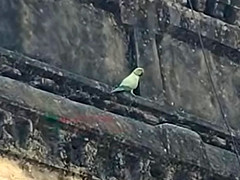
- There is a small hole at back of the garbagraha wall through which parrots enter inside the shrine and worship Bhagwan. It is said that they hear Vedic chanting in the morning and repeat them in humming in the evening. The Gurukkal says that he sees parrots even today when he opens the shrine in the afternoons.
- In the praharam we can see: Sri Irattai Vinayagar, Naalvar, Sri Munnai Vinayagar, Sri Subramanyar with His consorts Sri Valli and Sri Deivanai, Sri Mahalakshmi as beautiful Sudai sculpture, Sri Jyeshta devi, Sri Kala Samhara moorthy, Sri Moolanathar, Sri Selva Thyagarajar, Sri Natarajar, Sri Meikanda deva Nayanar, Sri Kalahastheeswarar, Sri Kala Bairavar, Sri Vaidhyanathar, Sri Suryan, Sri Annamalaiyar, Sri Saneeswaran, Sri Mahalinga swamy, Sri Mayura Natha swamy and others
- In the koshtam: only Sri Dakshinamoorthy shrine is present and He is appearing without the usual banyan tree above and Muyalagan below
- There are plenty of miniature sculptures all around the garbagraham
- There is a Bathala Nandhi in front of Sri Chandikeswar shrine associated with Sri Moolanatha Swamy and both are at the same floor level. They belong to the Thretha yuga whereas the current temple of Sri Veezhinathar belongs to the Kali Yuga and is built above this Nandhi. The Bathala Nandhi is actually at the ground level only but since the whole main shrine is above him, he appears in a closed chamber under the main shrine now as a Bathala (underground) Nandhi. Evening poojas are done to both Bathala Nandhi and Sri Moola nathar. For the same reason of raised up main shrine, the Khomugam (abhishega water outlet) of the main shrine is at around 10 feet height from the floor level.
- The Ambal shrine is a temple of its own with a 2 tier Rajagopuram, Nandhi Mandapam, Bali peedam, Sthala Vruksham, Theertham (well), shrines for Sri Vinayagar, Sri Murugar with His consorts and Sri Chandikeswari.
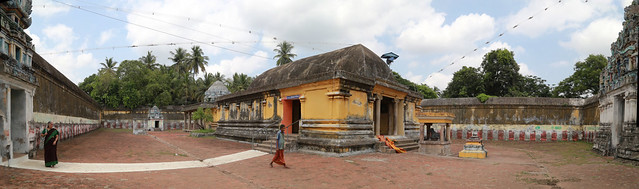
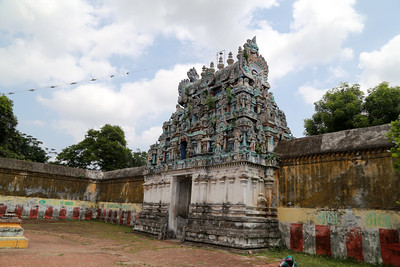
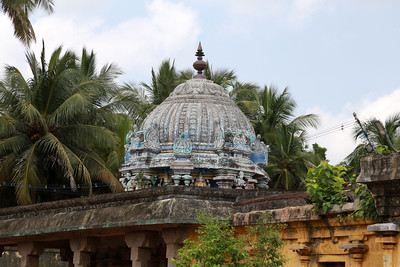
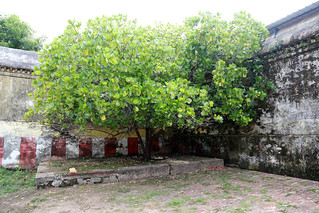
- There is a Padikkasu Vinayagar shrine which is supposed to be worshipped first as a worship procedure at the outer prahram on the backside (Western) of the temple.
- The Sthala Vruksham is Jackfruit. Since the jackfruits are heavy, usually they grow from the heavy base tree itself but here they are grown in relatively small sizes at the branches like mangoes, which are never seen anywhere.
Prayers:
- Since the Bhagwan Shiva and Parvathi devi got married here and are present in their wedding posture, this is considered as a good Marriage Parihara Sthalam and all marriage related prayers are answered. As a prayer procedure it is recommended to come with 2 garlands for both the deities, take back the garlands home after worship and chant the Kathyayana manthra daily for 48 days. After marriage they should come back with the same garlands and return to the temple.
- For sincere/ noble needs of wealth, for jobs and for recognition at jobs, we can pray to Bhagwan by reciting the temple pathigam starting as ‘வாசி தீரவே, காசு நல்குவீர்’.
- There is exactly similar legend of – Markandeyan, Yama and Sri Shiva – of Thirukkadaiyur but involving King Swetha Kethu here and so this is a prayer sthalam to remove death fears. Weddings and 60th, 70th and 80th birthdays are celebrated here.
- Since Bhagwan Vishnu offered his eye and got blessed, the Bhagwan is called as Sri Nethra pureeswarar (Nethra means eye), all eye related problems are cured by praying here. The Panchakshara Sahasranama composed by Bhagwan Shiva Himself exclusively for this temple is recited for this pariharam.
Sthala Vruksham: Jackfruit tree
Theertham: Vishnu Theertam
Contact: Sri Mahalinga Sivacharyar @ 80723 29033/ 75983 48700
91-4366-273 050, 94439 24825
The temple Gurukkal explains the temple significances in this video
This is a nice video to take you through the whole temple
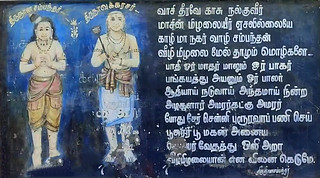
The Temple Pathigam to recite for wealth and Job:
வாசி தீரவே, காசு நல்குவீர்
மாசின் மிழலையீர், ஏச லில்லையே. 1
இறைவ ராயினீர், மறைகொள் மிழலையீர்
கறைகொள் காசினை, முறைமை நல்குமே. 2
செய்ய மேனியீர், மெய்கொள் மிழலையீர்
பைகொள் அரவினீர், உய்ய நல்குமே. 3
நீறு பூசினீர், ஏற தேறினீர்
கூறு மிழலையீர், பேறும் அருளுமே. 4
காமன் வேவவோர், தூமக் கண்ணினீர்
நாமம் மிழலையீர், சேமம் நல்குமே. 5
பிணிகொள் சடையினீர், மணிகொள் மிடறினீர்
அணிகொள் மிழலையீர், பணிகொண் டருளுமே. 6
மங்கை பங்கினீர், துங்க மிழலையீர்
கங்கை முடியினீர், சங்கை தவிர்மினே. 7
அரக்கன் நெரிதர, இரக்க மெய்தினீர்
பரக்கு மிழலையீர், கரக்கை தவிர்மினே. 8
அயனும் மாலுமாய், முயலும் முடியினீர்
இயலும் மிழலையீர், பயனும் அருளுமே. 9
பறிகொள் தலையினார், அறிவ தறிகிலார்
வெறிகொள் மிழலையீர், பிறிவ தரியதே. 10
காழி மாநகர், வாழி சம்பந்தன்
வீழி மிழலைமேல், தாழும் மொழிகளே.
Gathyayani Manthra
To be chanted for 48 days atleast once per day for auspicious marriage with noble husband, virtuous children, good health and prosperity.
1) தேவேந்திராணி நமஸ்துப்யம்
தேவேந்திரப்ரியா பாமினி
விவாஹ பாக்கியம் ஆரோக்கியம்
புத்திரலாபஞ்ச தேஹிமே
Dēvēndrāṇi namastubhyam
Dēvēndra-priyā pāmini
Vivāha bhāgiyam ārokiyam
Putra-lābham cha dēhi mē
O Divine Mother, the beloved of Lord Devendra,
my salutations to You.
Please bless me with auspicious marriage,
good health and the blessing of children.
This is a prayer to Goddess Indrani (Shachi Devi), the celestial queen and wife of Indra.
2) பதிம் தேவி சுதம் தேவி
செலபாக்கியம் தேவிமே சுபே
சொலமாங்கல்யம் சுகம் ஞானம்
தேவிமே சிவசுந்தரி
Patim Devi sutam Devi
Sela bhāgyam Devi mē śubē
Sola māngalyam sugam jñānam
Devi mē Śiva Sundari
O Divine Mother,
bless me with a noble husband and virtuous children.
Grant me prosperity and marital fortune,
auspiciousness, happiness, and divine knowledge,
O Goddess Shiva Sundari.
This is a prayer to Goddess Parvati / Shiva Sundari
3) காத்தாயனி மஹாமாயே
மஹாயோகிந் நதீஸ்வரி
நந்த கோப சுதம் தேவும்
பதிம்மே குருதே நமஹ நமஹ
kātyāyani mahāmāyē mahāyōginyadhīśvari ।
nanda gōpasutaṃ dēvipatiṃ mē kuru tē namaḥ ॥
O Goddess Kātyāyani, the Great Enchantress,
the Supreme Mistress of Yoga,
I bow to You with devotion.
Please grant me Lord Krishna,
the son of Nanda Gopa,
as my husband — victory and salutations to You.
This is the original mantra chanted by the Gopikas in Srimad Bhagavatam to marry Bhagwan Krishna.