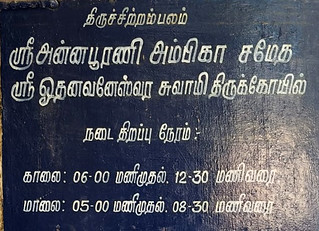
After completing dharshan at the Thiruvedhikkudi temple, we started for our next temple at Thiruchotruthurai, another saptha sthana temple, which is about 3 kms/ 10 mins drive from Thiruvedhikkudi. We reached the Thiruchotruthurai temple by 12:10 PM.
Like many other temples in this region which were undergoing renovation, this temple was also under renovation. When we went, it was the time for Uchi Kala pooja and as if the Gurukkal was waiting for us, he started the pooja immediately after our arrival. We attended the poojas at Bhagwan Shiva, Sri Subramanyar and Sri Ambal shrines. Again, here also, it was a personal one-on-one dharshan.
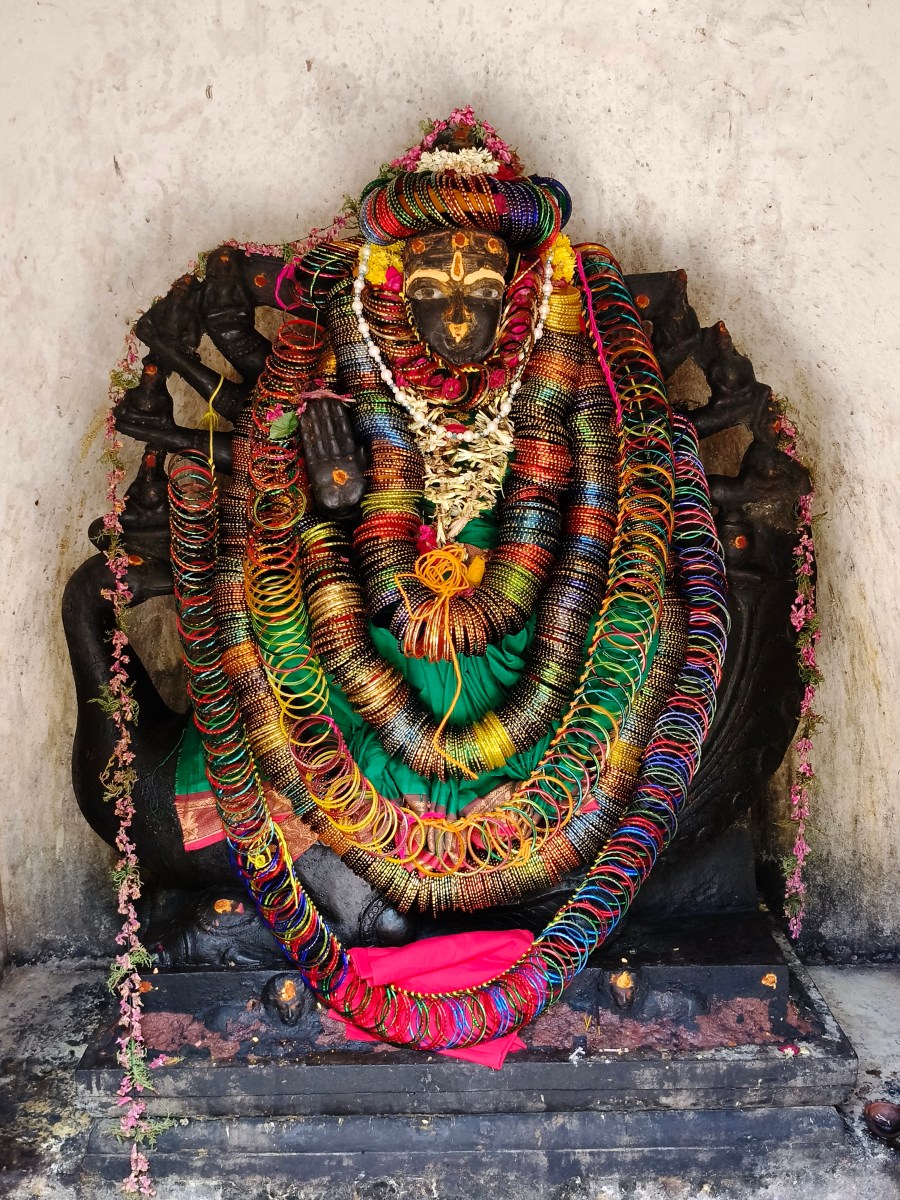
Sri Subramanyar usually will be present at the back praharam of any temple but here He is present at the front in the just adjacent shrine to Bhagwan Shiva shrine as Somaskandar between Bhagwan and Ambal shrines. He is stunningly beautiful – 7 feet tall with 6 heads and 12 hands sitting on peacock. The shrine is present in such a way that we can have a very close dharshan of such a big Subramanyar. We were following the Gurukkal and after the poojas at Bhagwan Shiva and Subramanyar shrines, we reached the Ambal shrine. In all the temples we visited in this trip, all the Ambals were in beautiful alankarams, mostly in Santhana kappu, due to the subsequent days of Aadi Pooram and Aadi Velli. With every temple, we were thinking that particular Ambal was the most beautiful in that alankaram but this went on with every other temple. One after the other, each Ambal was mesmerising us. This particular temple was the pinnacle of that experience. Next to Kasi, Sri Annapoorani Ambal is present as the main Ambal only in this temple. In other temples, you might have seen Her in sub shrines but here She is the main Ambal. She is very tall with the Akshaya Pathra food bowl on hand. On that day, She was in a beautiful alankaram with a big shining ear ornament and looked as if she was alive and talking to us directly. We were so engrossed in Her beauty that it took a lot of time for us to come out. Only then, we found the Gurukkal was just sitting outside very silently and smilingly waiting for us without making any gesture to close the shrine. It’s lucky that this temple has got such a sincere and courteous Gurukkal. Since we were very busy with the dharshans and it was time to close the temple, neither I could take much photos nor we could visit the inner prahara shrines. So, there is a need for us to revisit this temple in future along with a few other temples of this trip.
SCN013 – Sri Odhanavaneswarar Temple at Thiruchotrututhurai
Location: Around 5 kms North East of Thirukkandiyur, 1 km from Veerasingampettai.
Significances:
- One of the 276 Thevara Paadal petra sthalams
- One of the Saptha sthana sthalams
- The only temple after Kasi where Mother Sri Annapoorani is present as the main Ambal
Moola moorthies: Sri Odhanavaneswarar/ Sri Oppillachelvar/ Sri Chottru Thurai Nather/ Sri Tholayaa Selva nathar with Sri Annapoorani Ambal/ Sri Oppilla Ammai
Legend:
- Bhagwan Shiva is called as Odhanavaneswarar (Odhanam in Sanskrit means food) and the place was called as Odhanavanam
- Bhagwan Shiva solves the hunger pain of the people who worship Him here and so He is referred as Chorudaiyaan (சோறுடையான்) and the place is known as Chotruthurai (சோற்றுத்துறை). The irrigation canal to the south of this place was called Chorudaiyan Vaikkal (சோறுடையான் வாய்க்கால்) and is now being called as Sodaran Vaikkal. This temple is Annavatara stalam.
- Sage Gowthamar had his ashram here and attained salvation and this place was called as Gowthamashram
- When there was a famine here for 12 years, Sage Gowthamar penanced and asked Bhagwan to cultivate rice directly (instead of paddy) in some fields here. With that, Gowthamar solved the severe famine of this place and a particular field on the bank of Allikulam pond in the SouthWest of the temple is called Rice cultivated field (அரிசி விளைந்த வயல்) or Food cultivated field (அன்னம் படைத்த வயல்).
- Sage Gowthamar, Sri Indhra, Sri Brahmma, Sri Mahavishnu, Sri Aadhiseshan and Sri Surya worshiped Bhagwan Shiva here.
- Once severe famine stuck this place for several years and the people of this entire place were starving. Even the temples were not under worship. A staunch brahmin devotee of Bhagwan, Arulalan by name, and his wife, came to this temple, hit his head on the closed doors and cried incessantly towards Bhagwan Shiva. Rain and flood came immediately and Arulalan was rewarded with an Akshya Pathra that was coming floating on the floods. Akshaya Thiruthiyai started only from here. Arulalan then quenched the hunger pain of the entire village with that. So, the Bhagwan got the name as Tholayaa (everlasting) Selvar (தொலையாச் செல்வர்) and the Ambal got the name as Annapoorani (அன்னபூரணி).
- Bhagwan Shiva solves the pain of hunger as well as the pain of the birth-death cycle of human life. Soru not only means food but also mukthi and Bhagwan blesses His devotees with Mukthi (Mukthi sthalam).
- As a Saptha sthana sthalam, this village supplied food for Sri Nandhikeswar’s marriage.
- Sri Murugar is said to have talked to Sri Arunagirinathar and Arunagirinathar has sung Thiruppugazh on this Murugar.
- Per Sthala puranam, Dhasarathar went to many temples for a child and came to this temple also. Mesmerised by the beauty of Sri Murugar here, he prayed to Bhagwan Shiva for a child, like Sri Murugar of this temple. Bhagwan blessed him and asked to name the child as Rama. So, this temple plays a very important role in the birth of Sri Rama and Ramayana. So, people pray to this Murugar for child boon.
- A thief called Sambagan hid in a tree in this temple on a Sivarathri day and observed the Sivarathri pooja all thorough the night. Bhagwan Shiva blessed him with mukthi (though he was a thief) and so, this temple is considered to be a great mukthi sthalam.
- 6 thevara pathigams had been composed by the moovar – Thirunavukkarasar 4 pathigams, Sambandhar 1 pathigam and Sundarar 1 pathigam.
- Sri Ramalinga Vallalar worshipped Bhagwan Shiva here
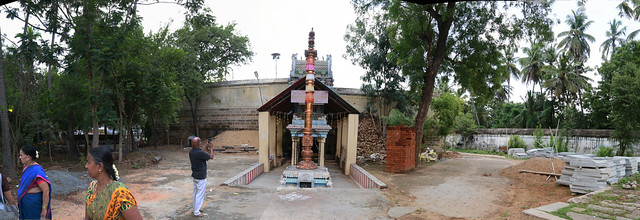
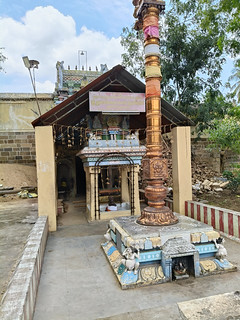
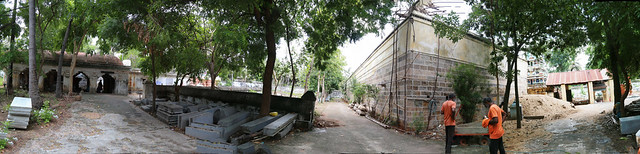
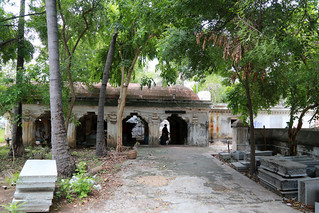
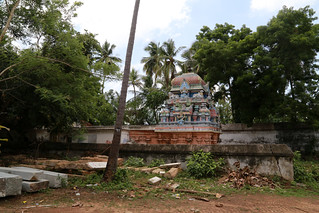
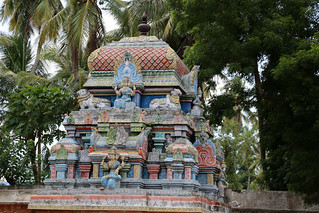
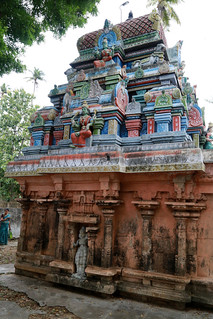
- The temple has a 3 tier Rajagopuram at the entrance.
- Bhagwan Shiva as Swayambu moorthy is facing East and Mother Sri Annapoorani Ambal in a separate shrine is also facing East (usually She will be facing South). Ambal shrine is located to the right side of Bhagwan Shiva shrine. Since both of them are facing East and Ambal is to the right of Bhagwan this is recognised as a wedding posture (கல்யாண கோலம்). So, this temple is considered as an important wedding parihara sthalam.
- This is the only temple after Kasi where Mother Sri Annapoorani is present as the main Ambal. You can see Her in a sub shrine in many temples but here She is the main Ambal. Since Bhagwan rewarded His devotee Arulalan with the Akshaya Pathra, Akshaya Thiruthiyai is considered to have started only from here. Ambal is seen with the Akshaya Pathra bowl in Her hand. On the Akshaya Thrithiyai day, devotees are given rice grains and flowers as prasad from this Akshaya pathra which blesses them with everlasting wealth and food.
- Annaprashanam for child is very special here.
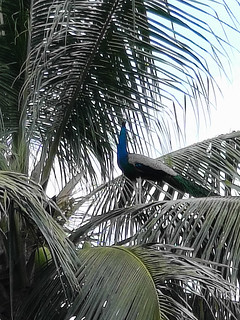
- On the left side of the entrance to the Ardha Mandapam, 7 feet tall beautiful Sri Murugar with 6 heads and 12 hands sitting on peacock is present in a separate shrine. It is present in such a way that we can have a very close dharshan of such a big and beautiful Subramanyar (not to be missed). Usually, He will be seen at the backside praharam of any temple but here He is present at the front as Somakandar by the side of Bhagwan Shiva shrine between Bhagwan and Ambal shrines, a special for this temple. Peacock is present facing the left side of Sri Subramanyar as Indhra Mayil. Till Soora samhara period, Indhra serves as the peacock vahana for Subramanyar and after the Soora Samharam, the demon Sooran serves as the peacock vahana. Peacock facing the right side is called as Asura Mayil.
- Sri Maha Vishnu facing East is present in a separate shrine in the Ardha mandapam.
- The sculpture of Sage Gowthamar worshipping Bhagwan Shiva is also present in the Ardha mandapam
- In the koshtam – Sri Dakshinamoorthy, Sri Brahmma and Sri Durga are present
- In the praharam – Sri Valamchuzhi Vinayagar, Sri Saptha mathars, Sri Ayyanar, Sapthasthana lingams, Sri Gajalakshmi, Panchabootha lingams and Sri Chandikeswar are present.
- Sri Adhikara Nandhikeswar, Sri Kala Samhara moorthy, Navagrahas, Naalvar, Sri Suryan and Sri Kalabairavar are present in the Ardha mandapam.
- Arulalan and his wife who got the Akshaya pathram are seen in a posture of deep meditation standing on knees in the mukha mandapam,
- During the Sapthasthana festival, Bhagwan Panchanatheeswara visits this place around noon. The devotees who follow the palanquin are fed here by the whole village.
- Adhitha Chola 1 had done many renovations.
- This is an all-round prayer sthalam – people pray to Sri Murugar for Child birth; people pray to Bhagwan Shiva and Ambal for a good and early marriage since both of them are seen in the wedding posture; Bhagwan blesses people with everlasting wealth and food and finally He gives Mukthi.
Sthala Vruksham: Vilvam
Theertham: Kudamurutti (a tributary of Cauvery), Surya Theertham
Links: Location Photos Weblink1 Weblink2
After Thiruchotruthurai temple, we started for Ariyamangai, the last of the Sapthamathar temples left in our visit. Though it was already 12:40 PM and the google map showed the arrival time at Ariyamangai as 1:20 PM, we decided to proceed because we got the guidance from a Sivanadiyar at the Chakrapalli temple on the previous day. We were told that the temple is in a remote place but always open and the caretaker living nearby can open the gates of the various shrines for worship. Remember we attempted to reach the temple the previous day the same time around but couldn’t succeed. We were circling around the place round and round and we were doubting the google map marking. But actually, the google map marking was very precise and correct. It looked destined that we should visit this temple only this day because the previous day no one could guide us properly but this day, everyone on the way (all muslims) was able to guide us properly. The temple is located within a garden farm grove with full of trees and will be visible only from about 100 meters. It’s a small temple without a Rajagopuram and so cannot be seen from a long.
The temple is around 3 kms from Chakrapalli and is located in a remote isolated place. We have to pass through an area of 100% muslims for about 2 kms. All the way, it is pathetic to see the signs of agraharams changed to muslim streets.
From wherever you come, first reach the Sri Chandraekara Pillaiyar temple (marked as A in the route map below), on the Kumbakonam – Tanjore main road itself. Take the road just by the side of the temple and go in the Railway Station road in the direction of Ayyampet Railway Station till Anjuman Marriage Hall (marked as B). Maybe it is a good idea to get the google map direction to Anjuman Marriage Hall directly and go. Till this point everything should be fine.
From here, the temple can be reached in 2 routes, marked as Route1 and Route 2 below and you can decide which way to go.
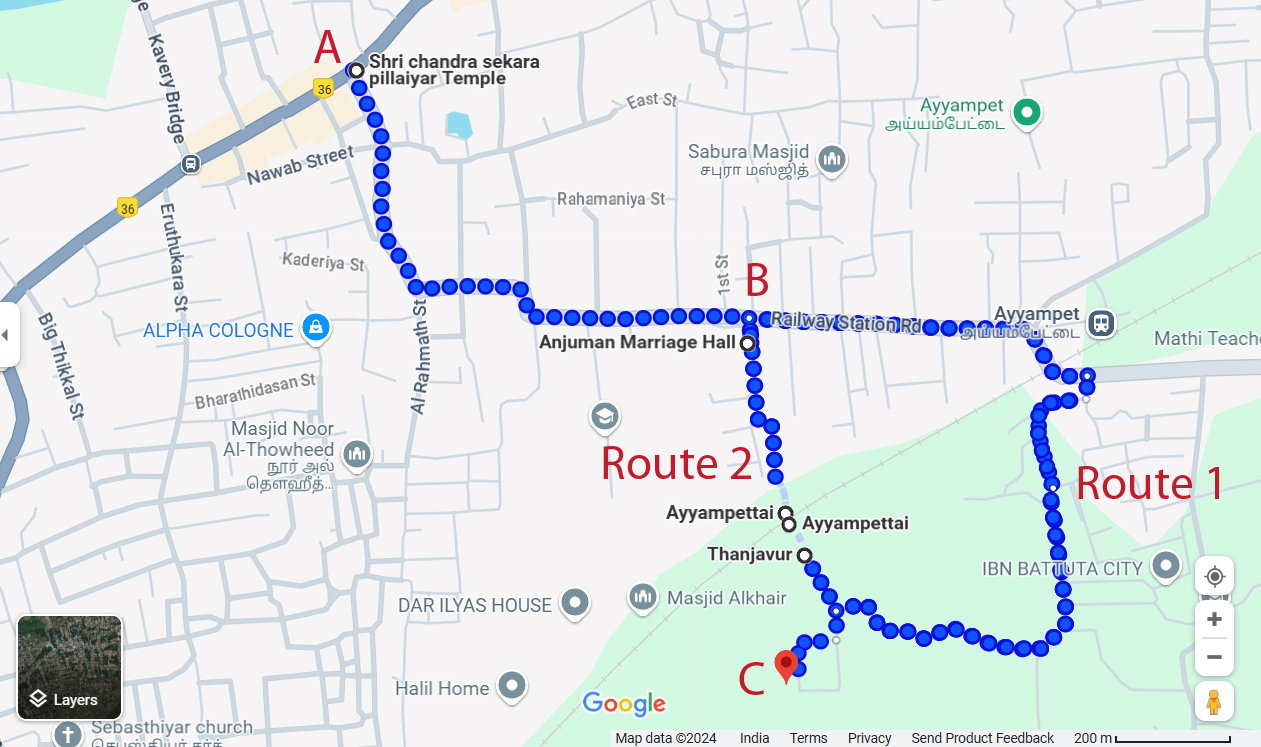
Route 2:
This is the route which we went. In this, either you can conveniently park the vehicle at the main road itself by the side of the Anjuman Marriage Hall or take the route by the side of it and travel for another around 350 meters and park there (we went till this point). From there you have to walk down, cross the railway line and walk down again. From Anjuman Marriage Hall, the temple is about 750 meters.
Route 1:
In this route, from Anjuman Marriage Hall, the temple is about 1.8 kms and possibly the 4 wheelers can reach the temple directly (the temple caretaker said that vans and cars came even the previous day). We didn’t go in this route the precious day because when we went gravels were paved fully on the road and it didn’t look like that it will lead to any temple. It looked like it was leading only to a private remote isolated farm grove and we could not see any symptom of a temple out there. We were a bit scared to venture in that road. But actually, that is the correct road and by now the road work would have been completed and it should be safe.
When we went, as expected the temple was open but the grill gates of all the shrines were closed. An aged care taker lady came, showed us around and explained the temple fluently in a very soulful loving tone. From the way she explained it looked as if she is living and playing with the Saptha mathars from child hood in this farm grove. The lady was very fluently listing out the 7 Saptha mathrikas as – Ariyamangai, Soolamangai, Pullamangai, Pasumangai, Nellimangai, Kannimangai and Thazhamangai. She didn’t care about how the outside world is listing out the Sapthamathars but this is what is her list. It means Nellimangai and Kannimangai are now Nandhimangai and Chakramangai? I vaguely remember her saying that even Chakramangai is not part of this list.
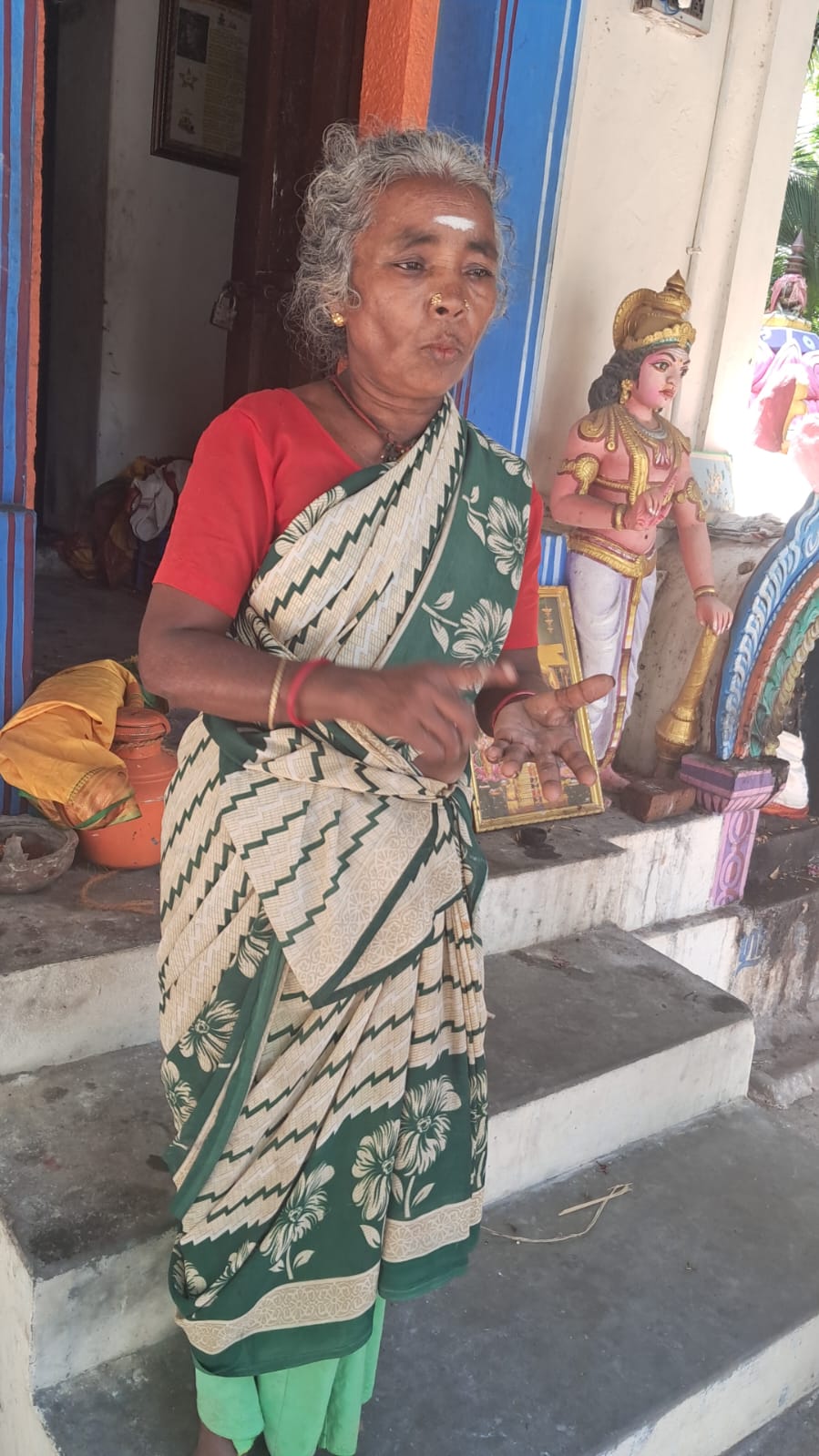
She said that this temple takes care of them perfectly and no one in this area is affected by any serious disease ever, touch wood. She said everyone here is living happily without any sort of difficulties only because of the deities of this temple.
A very special deity called Sri Ayur devi is present here. Yogi Venkataraman of Sri Agasthyar Organisation has established the first shrine of Sri Ayur Devi in this temple and later in some other temples also including a Saibaba temple at Maraimalai nagar, Chennai.
Considering the fact that this is the first installation of Sri Ayur Devi by a new age Yogi and She has been installed in a Saibaba temple too later, it is debatable about the relevance and the legend connection of this new Devi to Sapthamatrikas. In my opinion, it takes away the focus from the Sapthamatrikas. You may decide.
26) Sri Hari Muktheeswarar Temple at Ariyamangai (Harimangai)
Location: The Harimangai temple is located at 2 km from the Koyiladi bus stand near Ayyampettai.
Significances: One of the seven Saptha mathar temples associated with Sri Maheswari
Temple name: Hari Mangai
Saptha mathar associated with the temple: Sri Maheswari Devi
Moola moorthies: Sri Hari Muktheeswarar with Sri Gnanambika Ambal
Shiva Dharshan: Mother Parvathi along with the Saptha mathar Sri Maheswari Devi offered worship here and got the darshan of the divine Ganga on Bhagwan Shiva’s head – Shiva Ganga Darshan.
Devi’s Dharshan to Nadha Shanma – Anavidhya couple: Parvathi Devi showed Herself as an young adolescent school girl form of 8 to 11 years (பெதும்பை – பள்ளிப் பருவம்);
Legend:
- This place was once a gooseberry (Nelli) forest and Sri Mahalakshmi did penance here towards Bhagwan Shiva, surviving only on gooseberry and taking bath at the Sathya Ganga Theertham. She prayed to Bhagwan Shiva for an ever-lasting loving life with Sri Mahavishnu. She got His dharshan and got Her wishes granted. So, the place came to be called Hari-Mangai, referring to Sri Maha Lakshmi. It is also said that Sri Mahavishnu also came here to worship Bhagwan Shiva, to thank Him. (Sirumakkanallur temple where Sri Mahavishnu is present with Sri Devi and Sri Boodevi is closeby).
- The temple’s theertham – called the Satya Ganga Theertham or Hari Theertham – is said to be the water that flowed from Bhagwan Shiva’s Jadamudi, when He gave dharshan to Sri Parvati Devi and Sri Maheswari Devi here.
- It is said all the Saptha mathrikas always enjoyed swinging in oonjal and playing together here in this beautiful garden like environment.
The Temple:
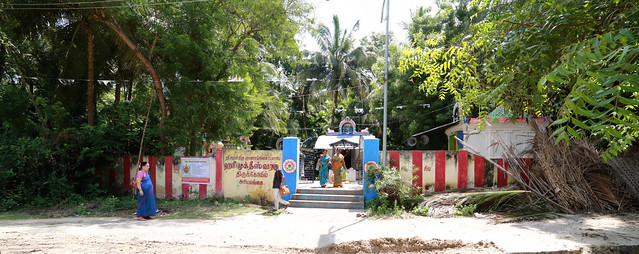
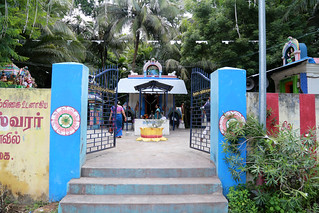
- Whereas all the other 6 Saptha mathar temples are within towns, this is the only temple in an isolated area within a beautiful garden grove.
- Once a big temple, this has been reduced now to a few shrines. There is no Raja gopuram, dhwajasthambam or bali peetham. Instead, beyond the entry gate is a small Nandi mandapam, following which is the East-facing Bhagwan Shiva and South facing Ambal shrine.
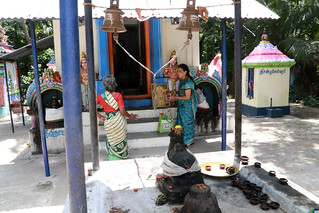
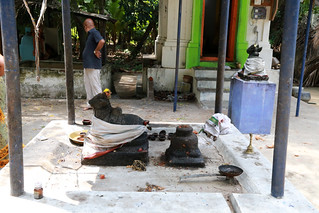
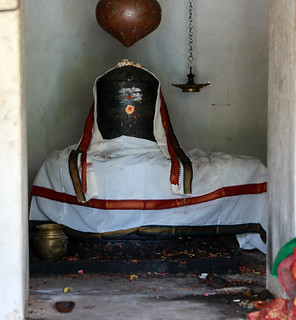
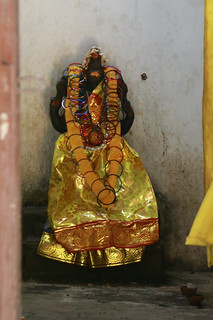
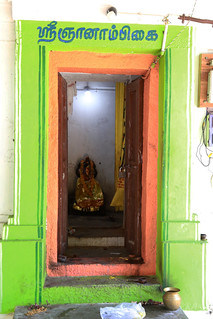
- Sri Mahavishnu is present here as Sri Udheetsharaja Perumal with His consorts Sri Sridevi and Sri Neeladevi facing North in a separate shrine.
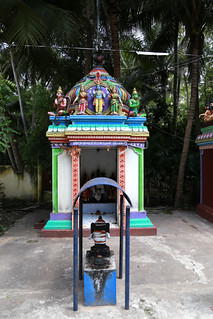
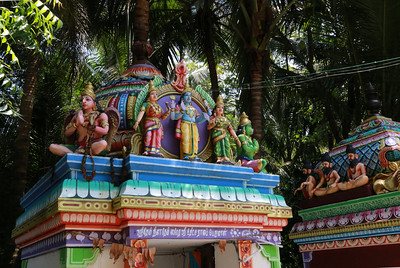
- As a rare feature, Sri Anjaneyar is present with His consort Swarsalamba in a separate shrine facing East.
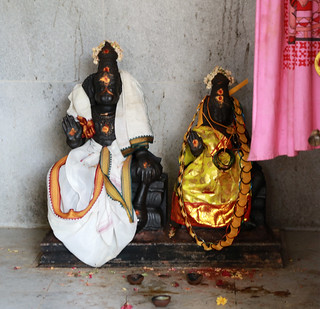
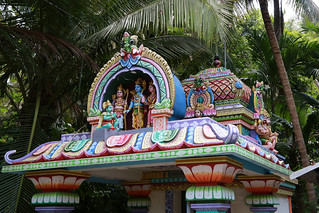
- Flanking the garbhagraham are Sri Vinayagar and Sri Murugan in small, separate shrines.
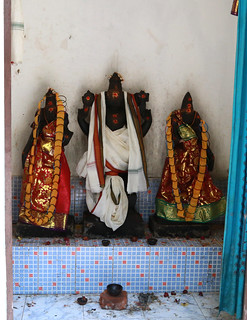
- There are shrines for Sri Chandikeswarar and Sri Durga.
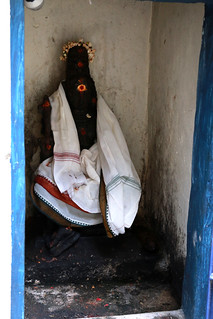
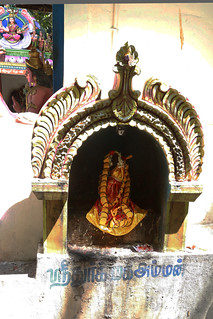
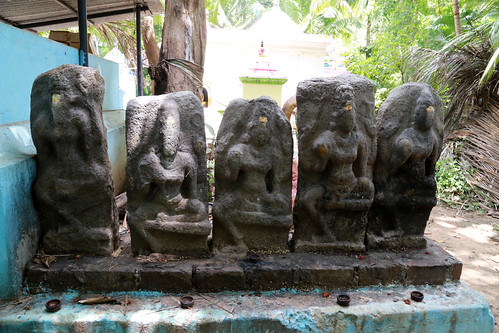
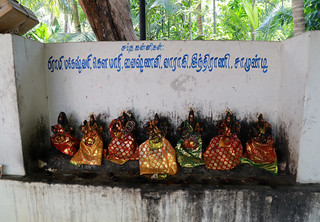
- There is a separate shrine that houses the ancient moothams of Saptha mathrikas. Since some of them are missing there, a new shrine with all the seven Saptha mathrikas is also present.
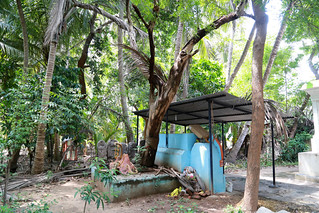
- Sri Dakshinamoorthy is present in the koshtam
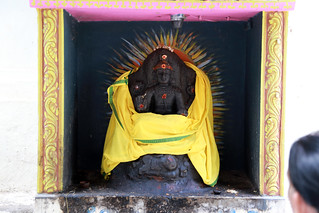
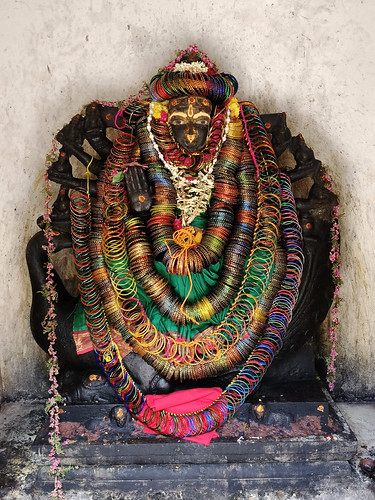
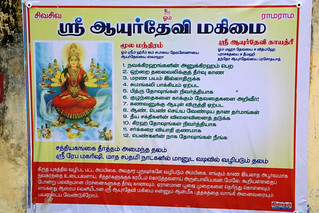
- Sri Ayur Devi: Yogi Venkataraman of Sri Agasthyar Organisation has established the first shrine of this Sri Ayur Devi in this temple and later in some other temples also including a Saibaba temple at Maraimalai nagar, Chennai. According to him, She is regarded as a manifestation of Parasakthi and the active worship of the Devi is said to have been in vogue during the Satya / Krita yugam. She has nine hands and sitting on an Hamsa vahana (Annapakshi). On seven of Her hands are seven sages seated individually; on Her eighth are Gargini Devi and another rishi who are consecrated together in a pot of nectar – together these eight hands are called “Kara Peethams”.; Her ninth hand is in abhaya hastham, blessing devotees.
Considering the fact that this is the first installation of Sri Ayur Devi by a new age Yogi and She has been installed in a Saibaba temple too later, it is debatable about the relevance and the legend connection of this new Devi to Sapthamatrikas. In my opinion, it takes away the focus from the Sapthamatrikas. You may decide.
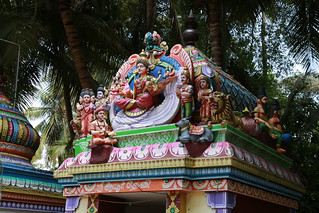
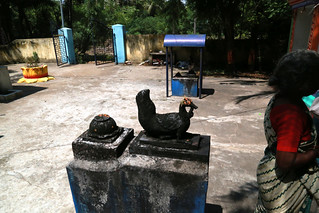
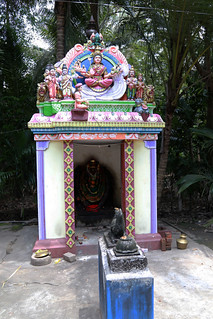
Theertham: Sathya Ganga Theertham
Sthala Vruksham: Gooseberry (Nelli)
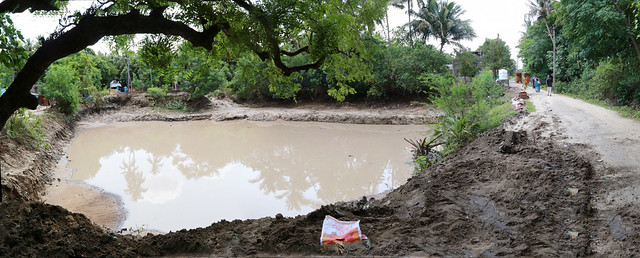
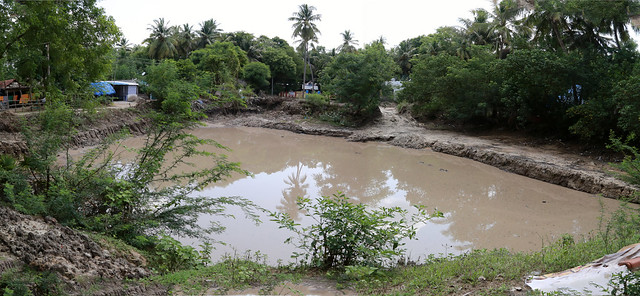
With this, we had completed dharshans at all the 7 Saptha Mathar temples. We then returned to our room by 2:30 PM, took lunch and a little rest.
In the evening, we went to Sri Pushpavana naathar temple at Thiruppoonthuruthi, the last of the Saptha sthana temple left in our trip.
Details in the next posting…