After lunch and taking rest, we started by 5 PM for Thiruppoonthuruthi temple, the last of the Saptha Sthana temples pending in our list and reached there by 6 PM.
The regular Gurukkal was unable to come on that day and so another Gurukkal from Trichy was present and preparing for the evening kala abhishegam. We decided to stay for the abhishegam and sat in front of the mooolavar. Again, here also, it was a personalised one-on-one dharshan. The Gurukkal himself was looking different like a Siddhar with a big jadamudi and the language in which he uttered some pathigams didn’t sound like either tamil or any other known language for us! We brought 10 sets of dhothis and sarees with jacket pieces for this trip, mainly to be offered to the Saptha mathar temples which are mostly small temples not so frequented by the people. Since we offered one dhothi and 2 sarees (to 2 Ambals) at Thiruppazhanam temple, we were left with just a single dhothi without a matching saree but luckily, we had an extra jacket piece. After the abhishegam, we asked the gurukkal whether dhothi and jacket piece (alone) was ok and he said nothing wrong. So, we offered here expecting that it will be adorned the next day after abhishegam. After completing the abhishegam and aarathi, while we were circumambulating the garbagraham, we heard the sound of an abhishegam again. When we went inside, to our surprise, another abhishegam was going on. It seems that morning kala abhishegam was missed out and so it was also being performed as 2 consecutive abhishegams and alankarams. So, we had the chance of seeing Bhagwan Shiva adorned with the dhothi we offered. It was a very satisfying dharshan especially with the Siddhar look alike Gurukkal. During the abhishegam, he didn’t look elsewhere, didn’t speak except uttering some pathigams and was fully concentrated on Bhagwan and the abhishegam.
Note:
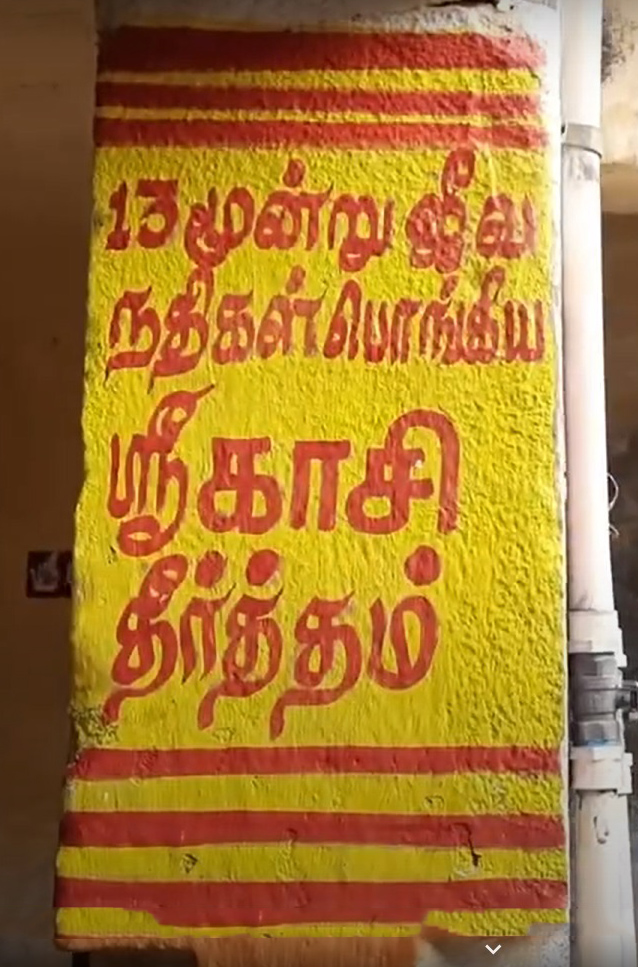
The google map showed a route that passed through some narrow streets among muslims area where only a single car can go. People were looking at us strangely and it took us to the temple through the sideways road. Instead, on return, we saw a big street in front of the temple and decided to take that. It took us straight into the main road without any hassles where there was an arch already! While coming to the temple, we saw this arch but it was painted ages ago and appeared as an entrance to something else (or may be IT IS) in the evening light. So, pls be careful with the google map and look out for an arch here and enter into this.
27) SCN011 – Sri Pushpavana naathar temple at Thiruppoonthuruthi
Location: The temple is located at around 3.5 kms West of Kandiyur between the rivers Cauveri and Kudamurutti.
Significances:
- One of the 276 Thevara Paadal petra sthalams
- One of the Saptha sthana sthalams
- Pithru dhosha parihara sthalam
- There is a sacred well containing theerthams from 13 sacred theerthams from various parts of Bharath.
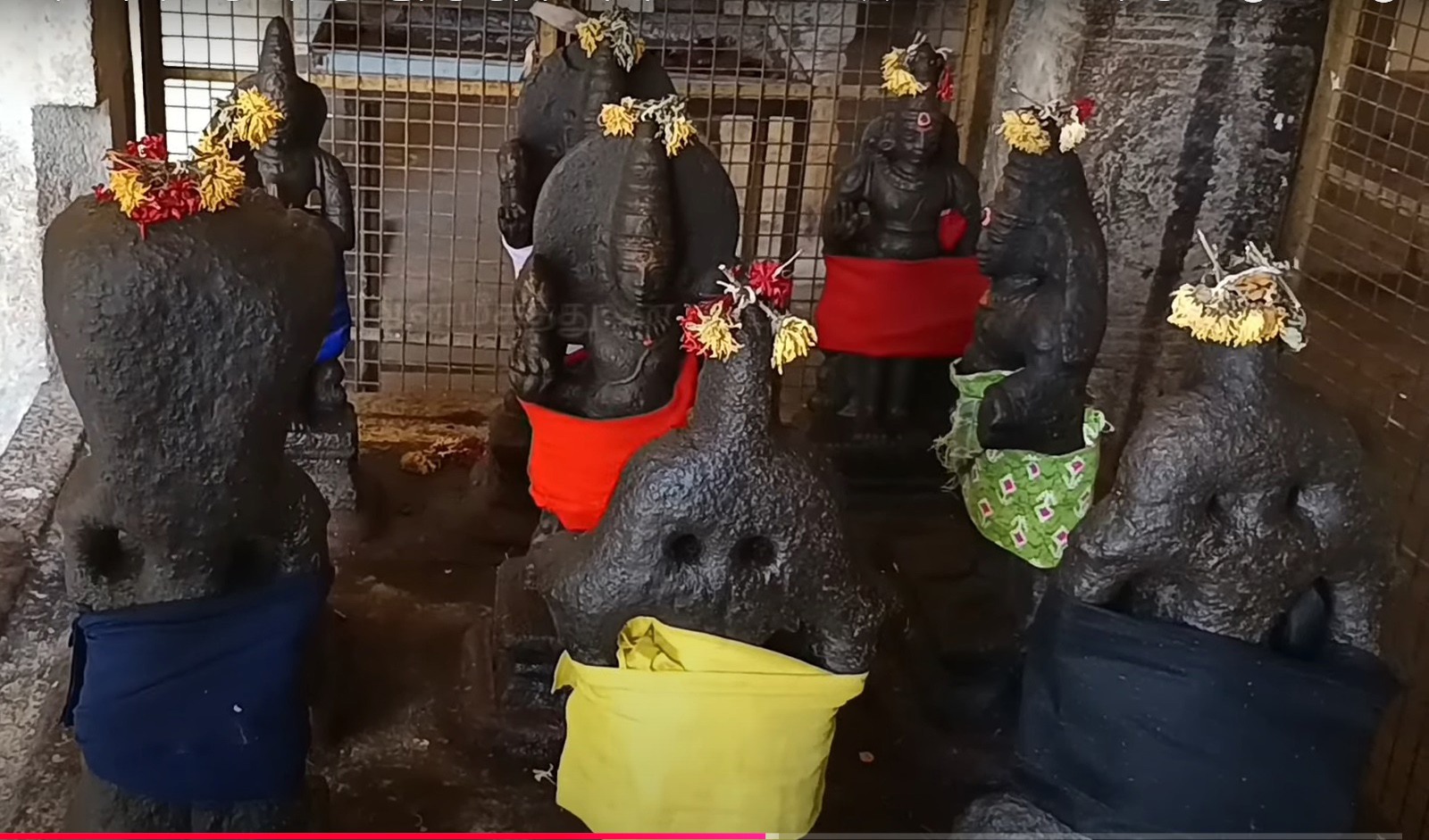
- All the Nandhis are slightly shifted away since Bhagwan Shiva Himself, wanted to see Appar and Sambhandar coming together into the temple.
- An important kshetram for the Sivanadiyars since this is the place where Saint Appar had his mutt and spent a good part of his life; since this is the place of meet between Appar and Sambhandar.
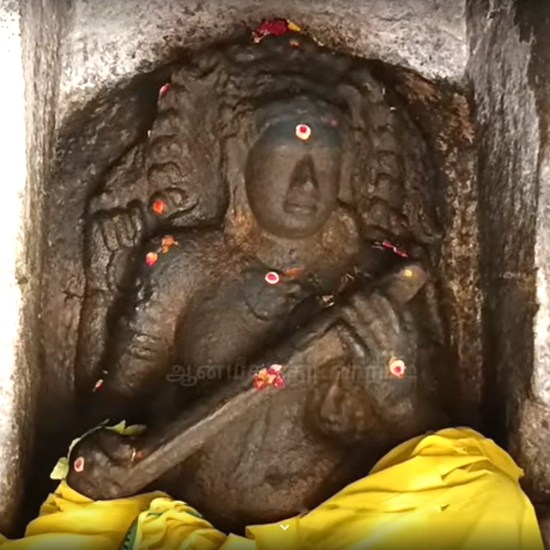
- People willing to excel in arts worship Veena Dhara Dakshinamoorthy here
Main Deities: Sri Pushpavana nathar/ Sri Poonthurutti Nathar/ Sri Aathipuranar as Swayambu lingam with Sri Azhagalamarntha Nayagi (அழகாலமர்ந்த நாயகி) / Sri Soundara nayagi/ Sri Uruvudaiyambigai Ambal
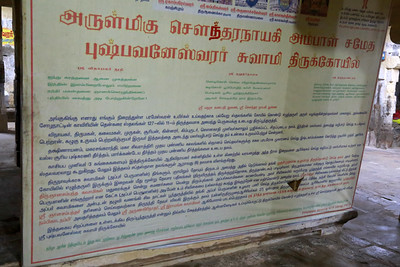
- Our puranams say that on an Aadi Amavasya day, taking bath in 13 sacred theerthams – Vedharanyam, Dhanushkodi, Sangamukham, Triveni Sangamam, Ganga, Yamuna, Godhavari, Saraswathi, Cauvery, Sindhu, Brahmmaputhra, Thamiraparani and Rameswaram – followed by pithru tharpanam and worshipping Bhagwan Shiva is very highly sacred that will erase out all our pithru doshams. All the celestial sages were longing to perform this on the same day but were puzzled on how to make it possible. Sage Kashyapar vowed to make this happen for the benefit of all the sages. He did severe penance and went to various Shiva kshetras for this purpose. He came to Thiruppoonthuruthi also as a part of his mission. Bhagwan Shiva, pleased with his penance gave dharshan to the sage Kashyapar as Sri Kasi Viswanathar and also brought all the 13 sacred theerthams into a single well here which is now being called as Kashyapa Theertham. Sage Kashyapar did abhishegam to Bhagwan and Ambal with this theertham and attained mukthi.
- Indira was cursed by Sage Gautamar to have 1000 signs all over his body for his immoral desire over Sage Gautamar’s wife. While he was passing through many Shiva shrines for remedy from this curse, he came to this area. At that time, a large part of the land around here was submerged in river Cauvery. He re-arranged the flow of cauvery in such a way that some of the submerged land could be reclaimed. Since the sand covering this place was so soft like flower petals, this place came to be called Thiru-poo-thuruthi. Places between rivers are called Thuruthi and this is located between two tributaries of river Cauvery – Kudamurutti and Vennar – on the banks of Kudamurutti river. As advised by Bhagwan Shiva, he created a flower garden here, worshipped Bhagwan with the flowers and got relief from the curse of Sage Gautamar. Due to this, the place was historically known as Pushpavanam and Bhagwan came to be known as Sri Pushpavaneswarar.
Note: There are Mela Thiruppoonthuruthi (West) and Keezha Thiruppoonthuruthi (East) and the temple is located in Mela Thiruppoonthuruthi. Whereas Keezha Thiruppoonthuruthi is located between Cauvery and Kudamurutti, Mela Thiruppoonthuruthi, where the temple is located, is between Kudamurutti and Vennar. Just want to clarify since the whole of internet is (wrongly) saying that the temple is located between Cauveri and Kudamurutti. Anyway, all these rivers are the tributaries of Cauvery only. - Two Vignjayar sages, who got eagle births due to a curse, worshipped Bhagwan Shiva and got their curse cleared off.
- Sri Surya got the sin of attending the Yagna of Dakshan and cleansed it out by taking bath at the Surya theertham here and worshipping Bhagwan Shiva.
- This is a place where Sri MahaVishnu and Sri Lakshmi offered prayers to Bhagwan Shiva. Since Sri Lakshmi, also called Poomagal, offered worship in this Thuruthi, this place came to be called Poo-Thuruthi.
- As a saptha sthana sthalam, this place supplied flowers to Sri Nandhikeswar’s marriage
- Saint Appar had his madam here which is being praised as “திங்களும் ஞாயிறும் தோயும் திருமடம்” and spent more than 7 years doing Uzhavarapani at various temples around.
- Sambhandar wanted to meet Appar after coming to know of his Kailaya dharshan at Thiruvaiyaru. So, he came to Thirupoonthuruthi after successfully re-establishing Saivism in Pandya Kingdom. When Appar who was very much a senior in age heard the news of Sambhandar’s (he was aged only 7 then) arrival here, he joined the crowd as one of the palanquin bearers without the knowledge of Sambhandar. When Sambhandar realised this, he was moved and fell at the feet of Appar calling him as a father ‘Appare (அப்பரே)’. Thirunavukkarasr got the name Appar only at this instance. From then onwards, they both visited several temples together. Due to this, this is a very important place for Sivanadiyars.
- When Appar peruman and Sambhandar came to the temple, Bhagwan Shiva, Himself, wanted to see them coming together into the temple and so asked Sri Nandhikeswar to shift slightly away. Another version is that Sambhandhar was hesitant to set foot inside the temple where Appar peruman stayed nearby and did uzhavara pani for long. On seeing it, Bhagwan Shiva asked Sri Nandhikeswar to move aside a little to allow Sambhandar to have a clear dharshan of Bhagwan Shiva. So, all the Nandhis are slightly shifted away.
- Appar got the Kailaya dharshan of Bhagwan Shiva here also like Thiruvaiyaru and so this is also considered equivalent of Kailayam.
- Appar has composed 3 pathigams and many songs on this temple. Thiru Angamalai Thandakam by Appar was composed from his Madam here and is very popular.
- Thiru Arunagirinathar has sung Thiruppugazh on this Bhagwan Muruga.
- Thiru Sekkizhar, Thiru Poonthuruthi Gaadava nambi and Thiru Ramalinga Vallalar composed pathigams on this Bhagwan.
- This is the birth place of Thiru Poonthuruthi Gaadava nambi whose composition of Thiruvisaippa are contained in the 9th He had composed Thiruvisaippa on Thiruvarur and Chidambaram temples.
The Temple:
- The temple is facing East with a 5 tier Rajagopuram
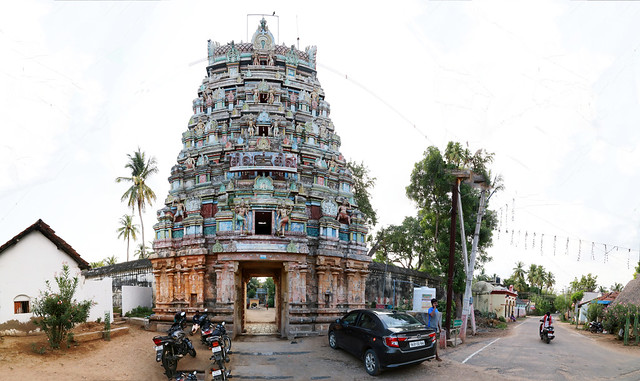
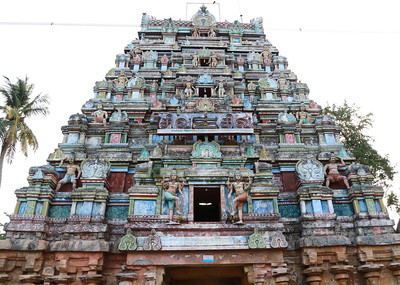
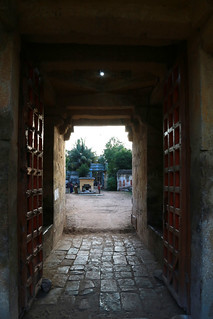
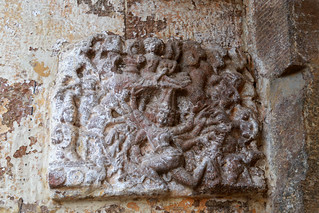
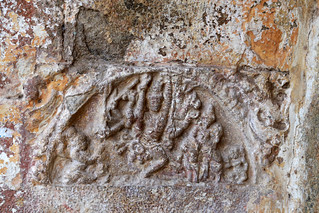
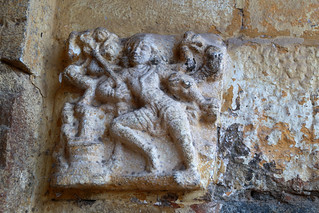
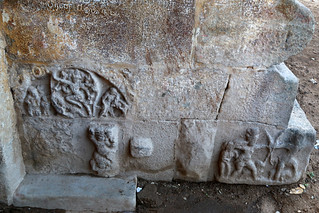
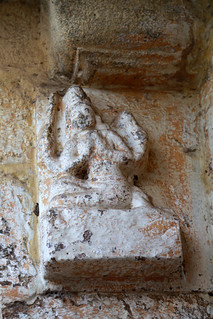
- As soon as we enter, we can see Panchamoorthy mandapam, Nandhi mandapam with Big Nandhi (as He is called at this point) and Bali peetam. There are 5 Nandhis at 5 stages of entrance and all of them are slightly shifted away. After the Nandhi mandapam, Ambal shrine facing South is located on the right side.
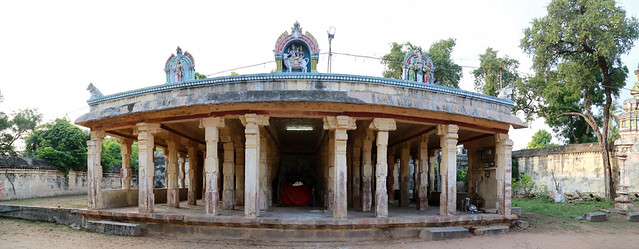
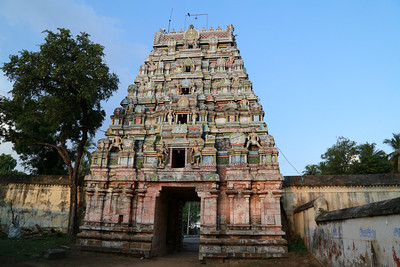
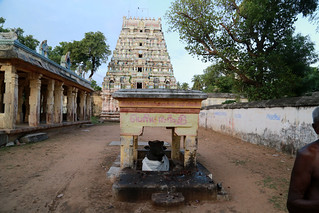
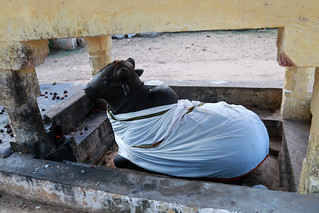
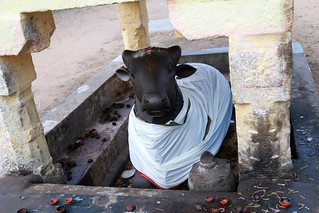
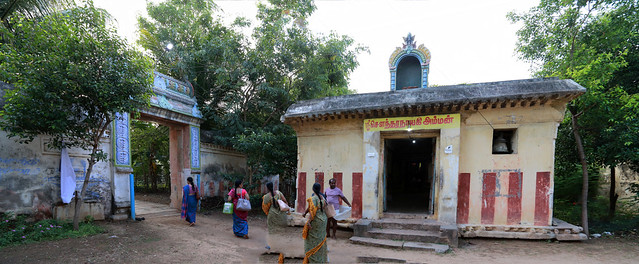
- At the 2nd level path to the temple, Vasantha mandapam and Thava/ Vana Durgai shrine are on the right and Sri Kasi Viswanathar shrine is on the left (apart from this, another Sri Kasi Viswanathar is also present near the Kashyapa theertha well inside). Dwajasthambam, Nandhi mandapam with Adhikara Nandhi, Soola devar and Bali peetam are also present here.
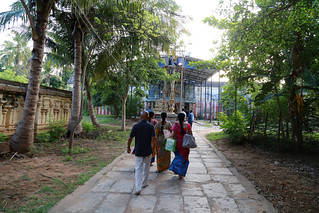
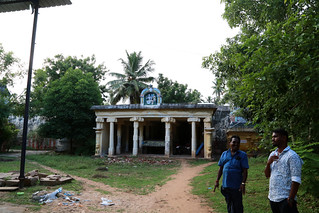
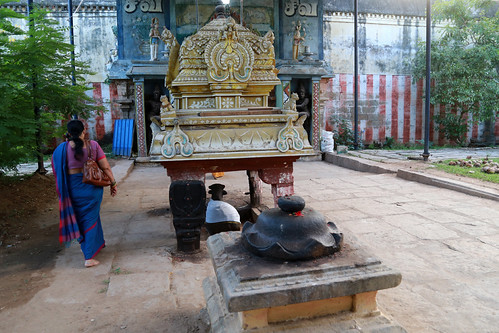
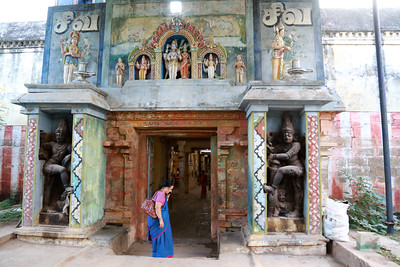
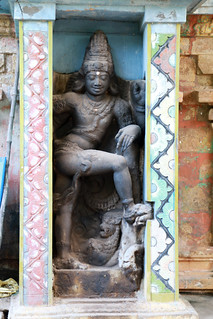
Sri Kasi Viswanathar shrine: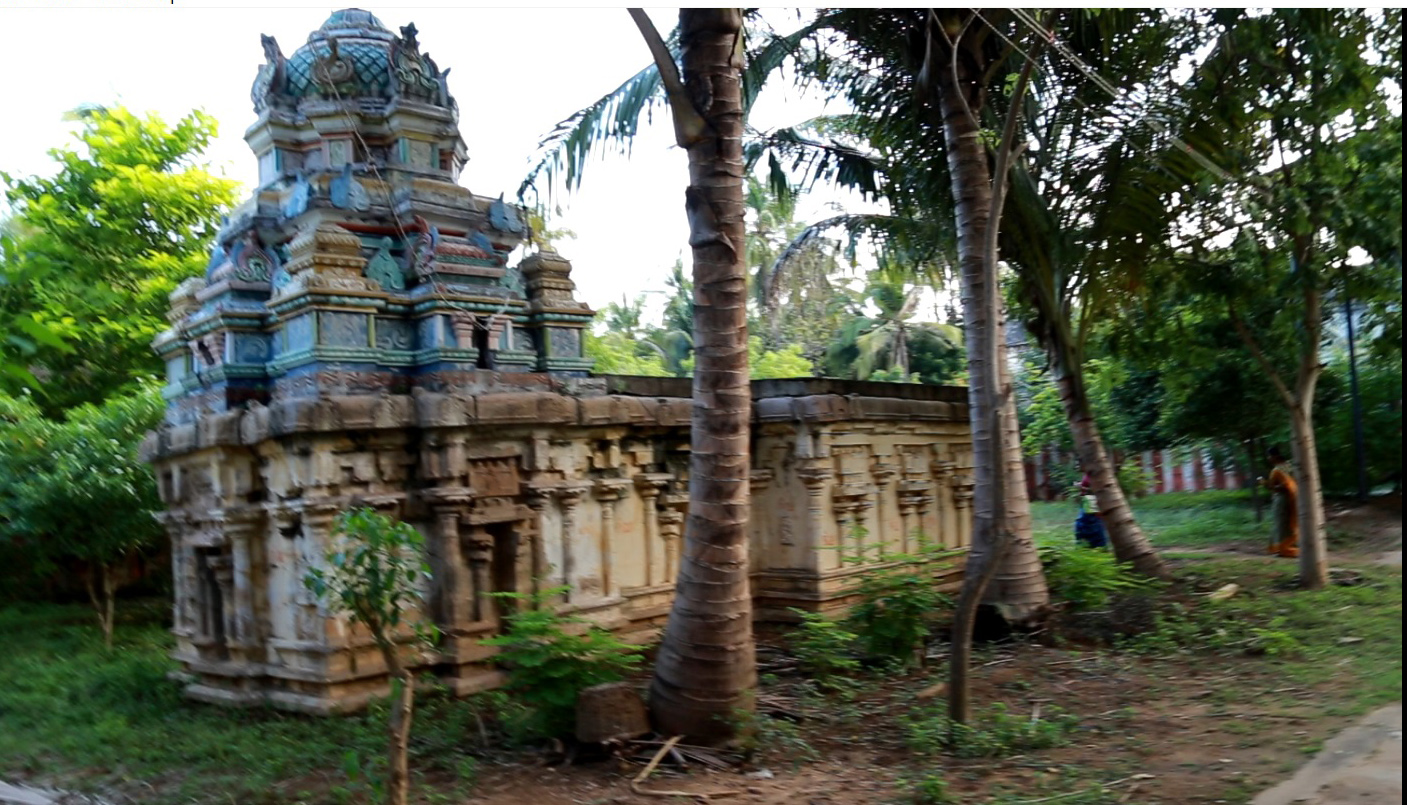
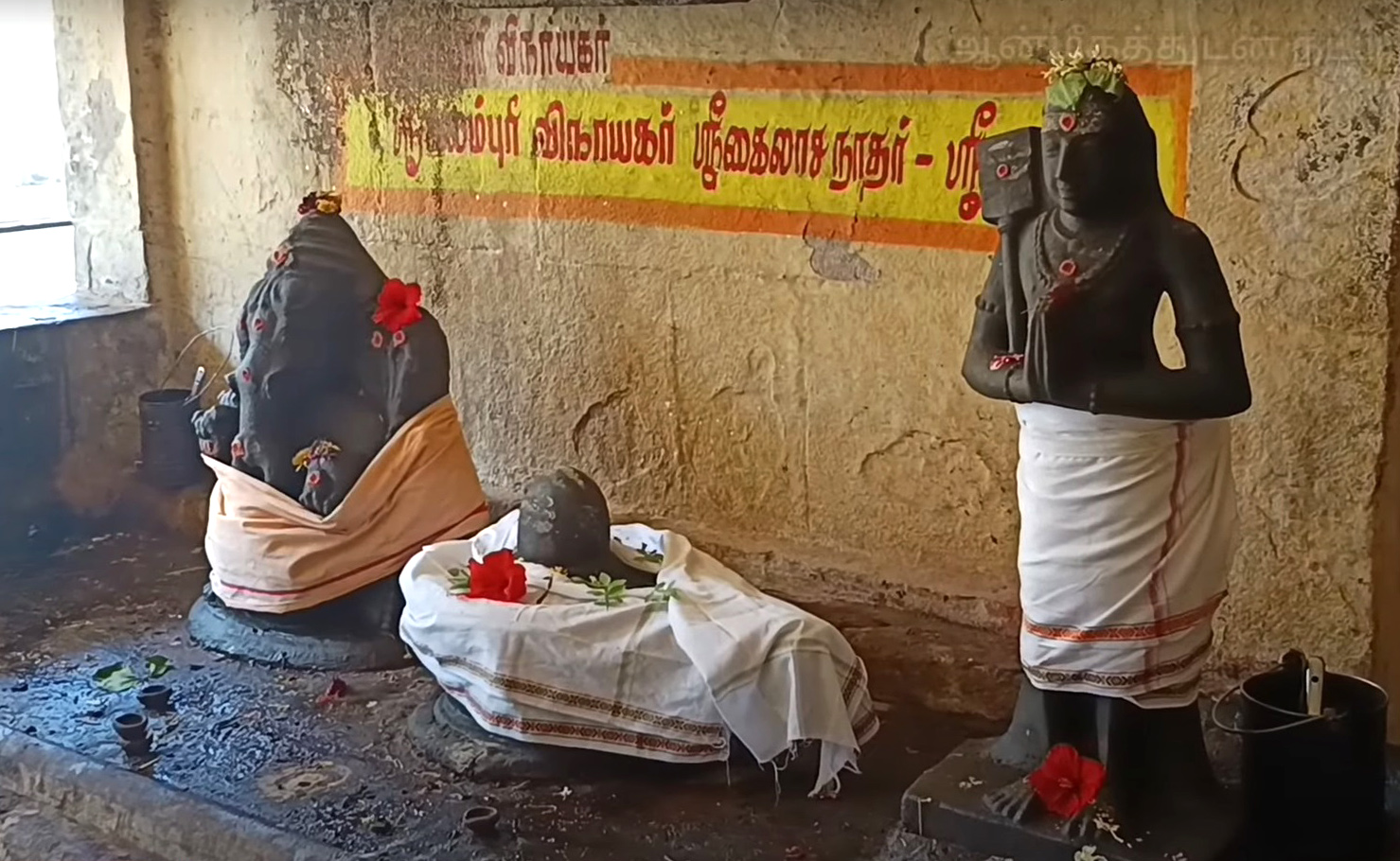
- After crossing Maha mandapam and Ardha mandapam, Bhagwan Shiva is present as Swayambu lingam in the garba graham. On the left side of Maha mandapam, Sri Valampuri Vinayagar, Sri Kailasanathar and Sri Appar are present and on the right side, Sri Balamurugan is present. There are totally 3 Kailasa nathar bhagwans here – Vada Kailayam, Then Kailayam and this Kailasa nathar.
- Sri Somaskandar in Somaskandha mandapam and Sri Natarajar in Natarajar Sabha are present at the South side of Bhagwan Shiva shrine and they are beautiful.
- While going around the inner praharam, the sacred Kashyapa theertham is located as a well adjoining the Somaskanda mandapam. Close to the Kashyapa theertham, Sri Aadhi Vinayagar is present in a separate shrine with Sage Vyagrapathar in the front wall.
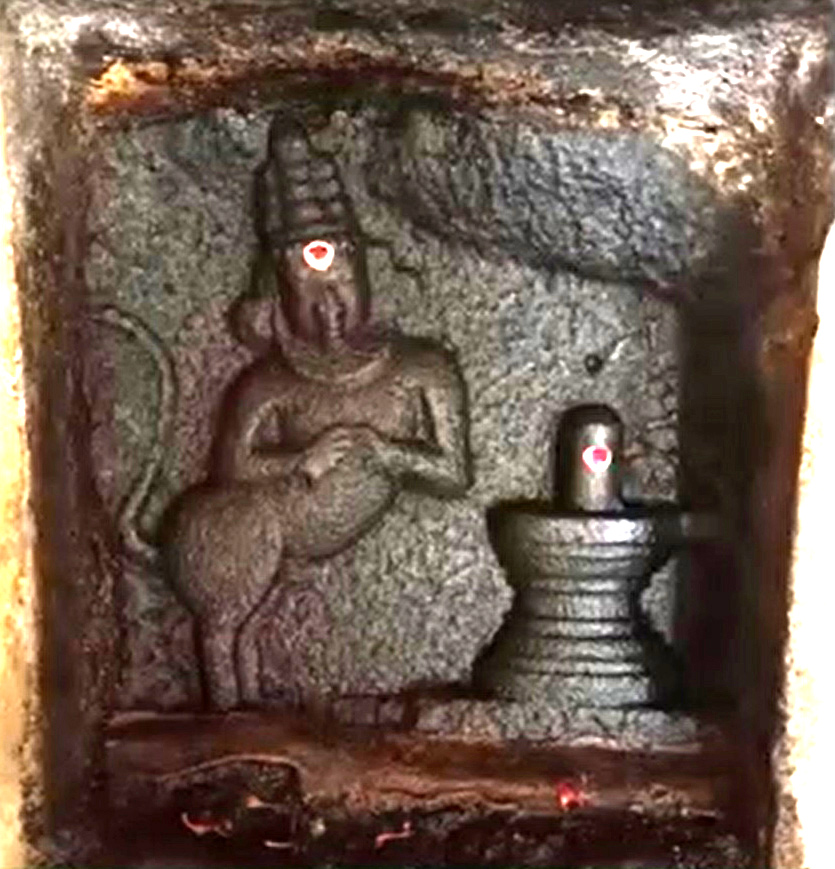
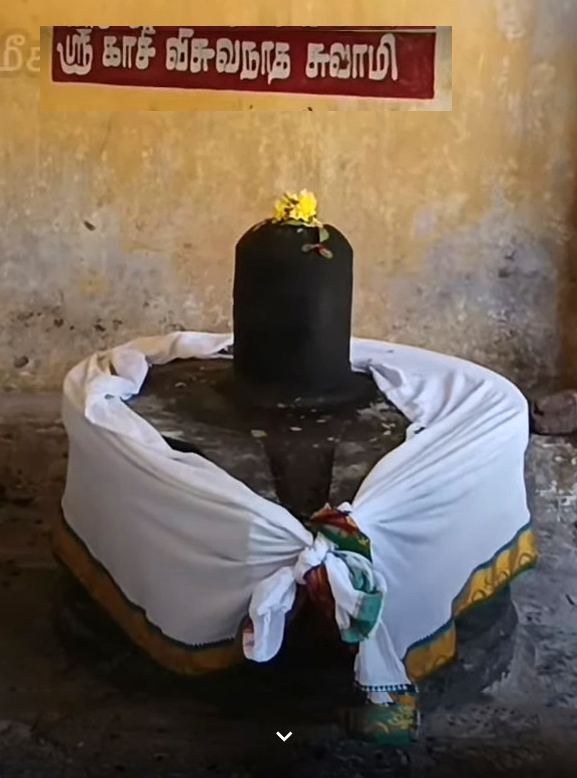
- Next to him is Sri Kasi Viswanathar since Bhagwan Shiva gave dharshan to Sage Kashyapar as Sri Kasi Viswanathar. The Kashyapa theertham or (Kasi Theertham as being called) brought by Sage Kashyapar through his penance, where 13 sacred theerthams from all over Bharath are present in a well, is located opposite to Sri Kasi Viswanathar. The Aadi Amavasya draws huge crowd. Taking bath in the Kashyapa theertham on that day is considered very auspicious since it gives the full benefit of taking bath in all the 13 sacred theerthams. It is considered to clear off all the pithru dhoshams and so, people in large numbers come here, take bath, do pithru tharpanam, light 18 lamps and do circumambulation (girivalam) of the outer praharam 18 times.
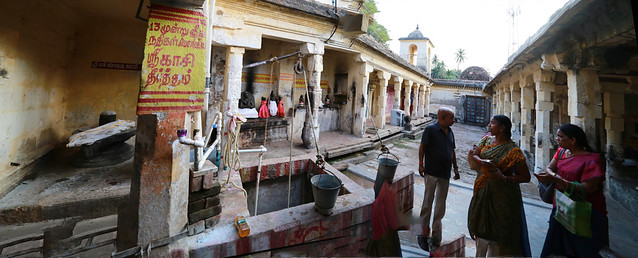
- Next to Sri Kasi Viswanathar, Gaadava nambi who was born here, Appar in a rare sitting posture, Sundarar with Paravai and Sangili Nachiyars are present in a row on the same peetam.
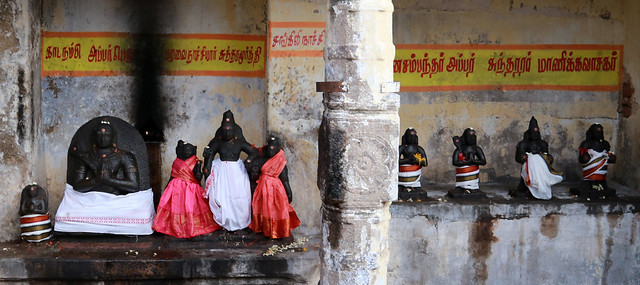
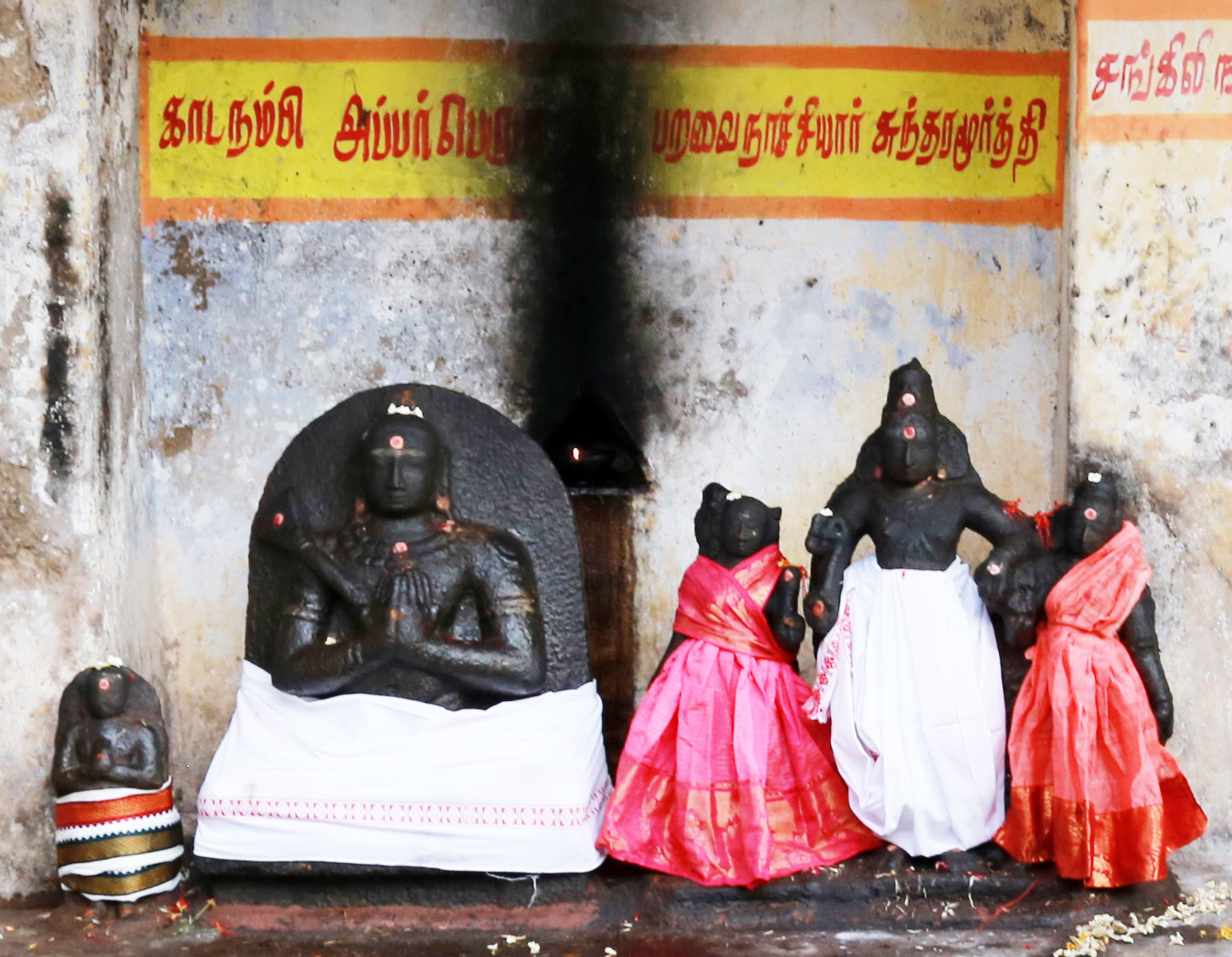
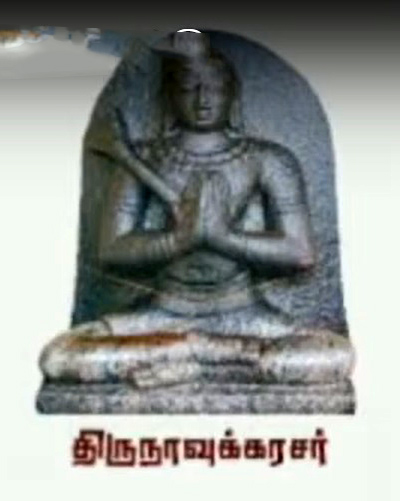
- Next to them, Naalvar saints are present. By the side, there is also a tiny shrine for Sri Villenthiya Velavar (Murugar with a bow) like in Thiruvaiyaru.
- Sri Sapthamathars, Sri Saraswathi, Sri Mahalakshmi, Sri Durgai, Sri Veerabhadrar, Sridevi and Sri Ayyanar are also present together in a row.
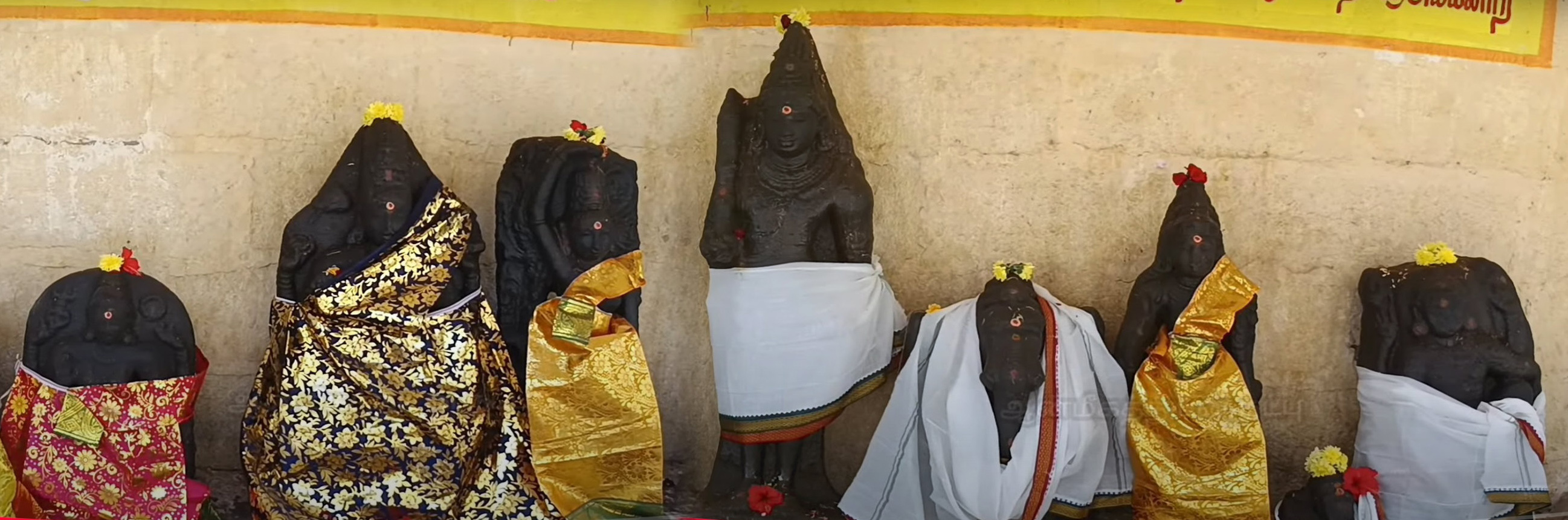
- Like Thiruvaiyaru, here also North Kailayam and South Kailayam are present in the North and South direction of the inner praharam respectively. In the Vada Kailayam, both Bhagwan and Nandhi are separately present whereas in Then Kailayam, Bhagwan Shiva sits on Nandhi devar along with Sri Parvathi Devi and so, only Bhagwan Shiva is present in a big linga roopam without Nandhi.
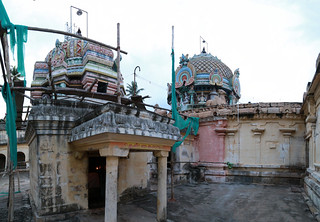
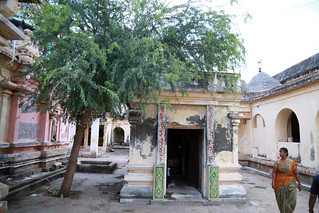
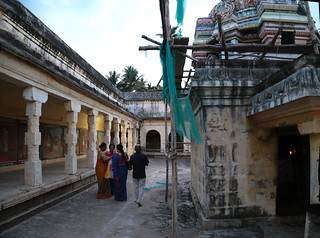
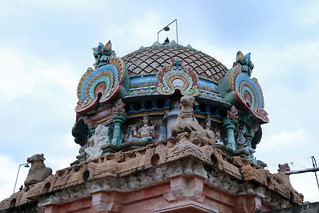
Vimanams of Then Kailayam and Sri Shiva shrine: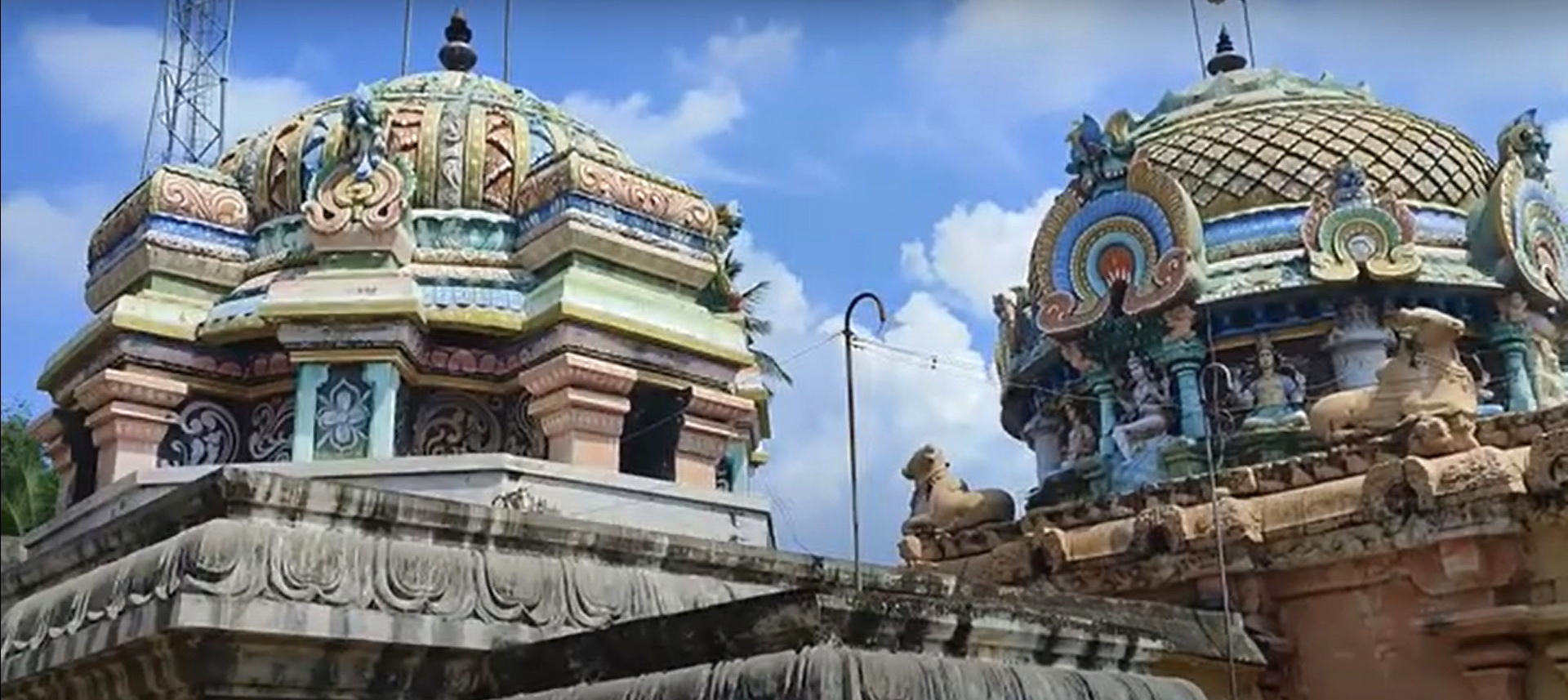
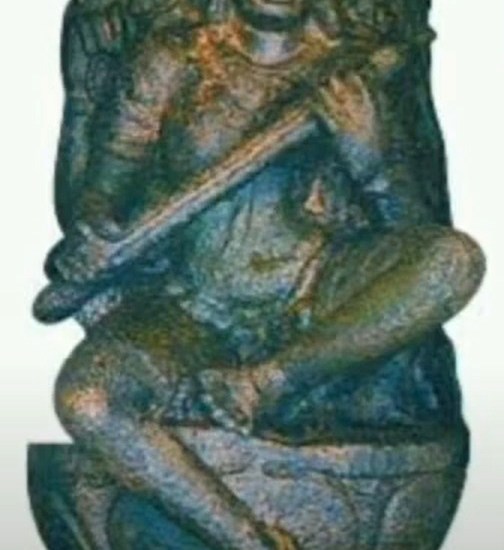
- In the koshtam Sri Ardhanaareeswarar, Sri Veena Dhara Dhakshinamurthy and Sri Sankara Narayanar (in the usual position of Koshta Brahmma) are present.
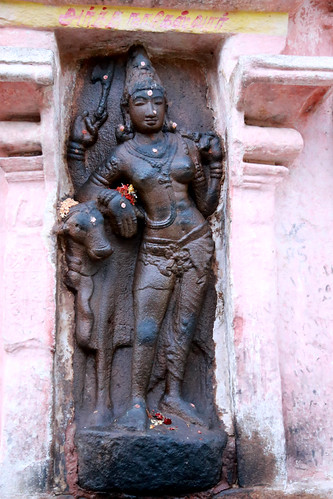
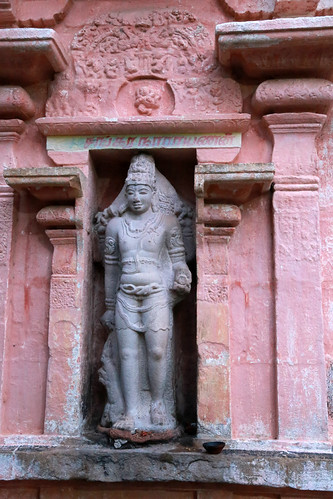
- Sri Dhakshinamurthy is present with Veena as Veena dhara Dhakshinamurthy. Worshipping Him will make people excel in arts. Since Thiruvaiyaru is the land of Saint Thyagaraja, many people wanting to excel in singing, visit Thiruvaiyaru and come here to worship SriVeena dhara Dhakshinamurthy
- Per Sthala puranam, Sri Durga devi had done penance here standing on one leg to clear off Her dhosham of killing demon Mahishasuran. Sri Durga is not present in the koshtam whereas She is present in two places. In the inner praharam She is present in a posture of doing penance standing on one leg with one hand up. In the outer praharam, She is present in a separate shrine with a smiling face in a sitting posture looking to be happy after Her dhoshams are cleared off. This shrine was named as Vana Durgai till 2 years back but now the same shrine has been changed to Thava Durgai (penancing Durgai). It also looks even the Durga moorthams are changed!! For me, this Durgai should be Vana Durgai only and not Thava Durgai since She is sitting and smiling here whereas in the inner praharam She is already present in a penancing posture.
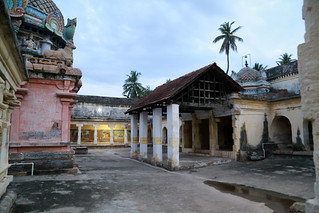
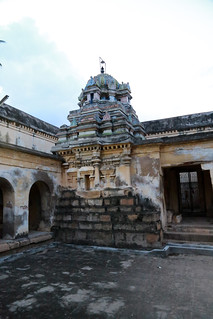
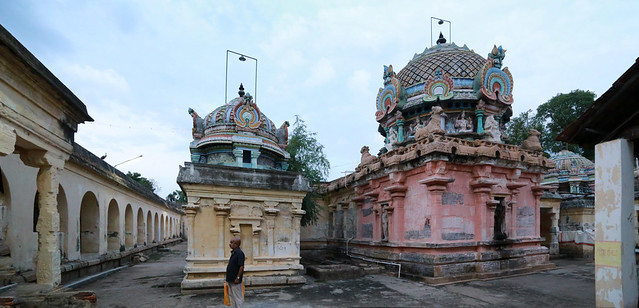
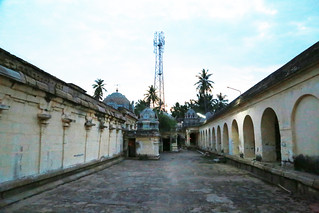
Sri Shiva shrine Vimanams:
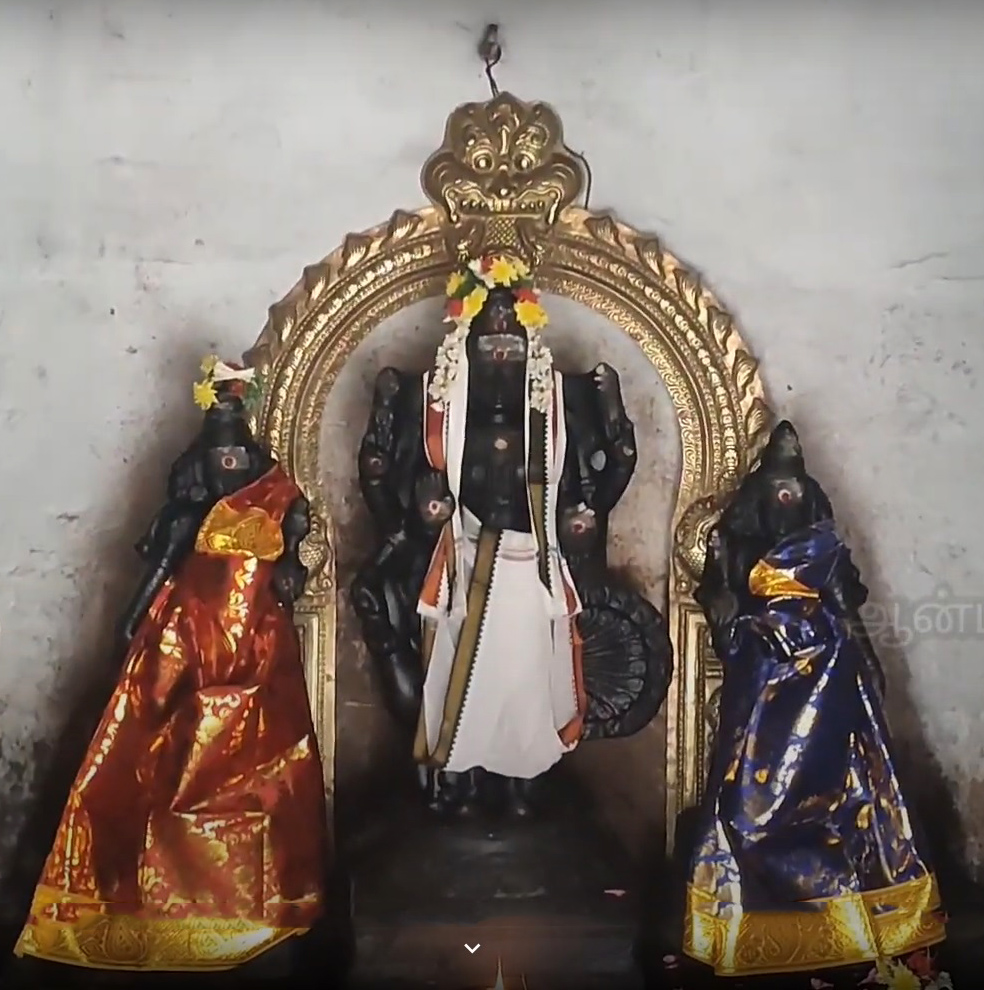
- Sri Subramanyar is present sitting on peacock with single face and 4 hands along with His consorts Sri Valli and Sri Deivanai. Sri Arunagirinathar had sung Thiruppugazh hymns on this Murugar.
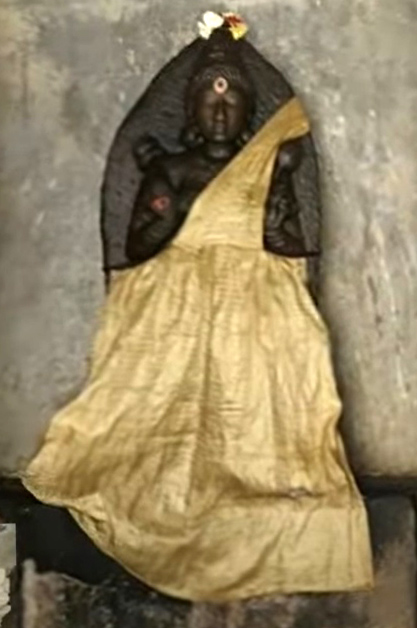
- Sri Mahalakshmi is present in a separate shrine without elephants, i.e., not as Gajalakshmi as is usual in other temples. She is said to be sitting on a little higher peetam than Moola moorthy Sri Bhagwan Shiva. So, She is considered very special and blesses prosperity to the devotees. It is said that if there are steps to walk up and have dharshan of Sri Mahalakshmi, like here, it is considered special.
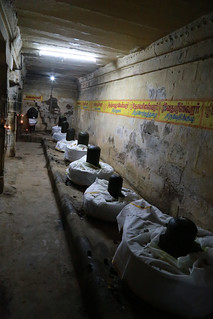
- The Sapthasthana lingams and Kala Bairavar are present in ardha mandapam.
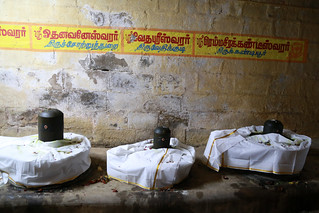
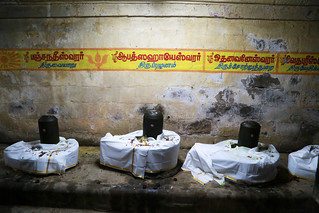
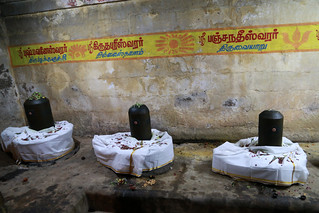
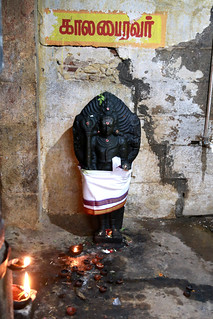
- Like two Kasi Viswanathars and two Durgas, there are two Kala bairavars also. Apart from Sri Kala Bairavar in the ardha mandapam, Sri Kabala Bairavar is also present in the outer praharam.
- All the navagrahas are facing Sri Suryan at the centre. Sri Suryan and Sri Guru facing each other is considered very special here.
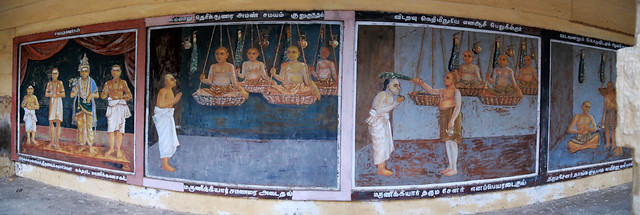
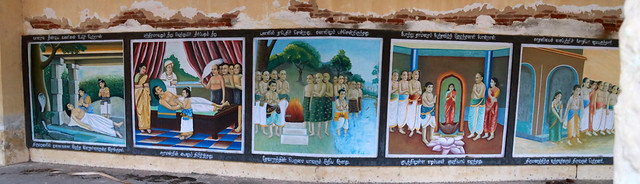
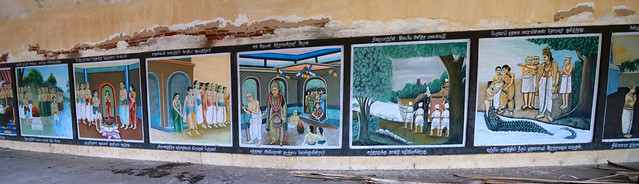
- There are several beautiful paintings on the left and right side prakara walls, depicting the various legends connected with this temple.
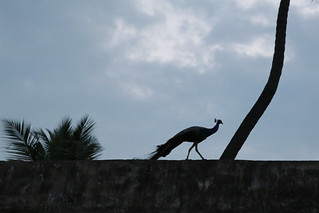
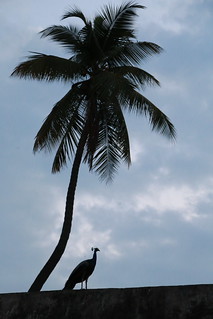
- Like we have seen in some other temples in this region, peacocks were freely roaming around here also
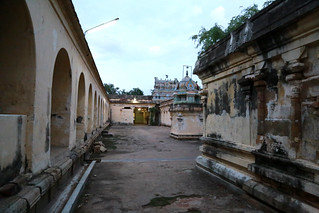
- There are seven gopurams/ vimanams in this temple and all of them can be seen from a particular spot in the inner prakaram near the Chandikeswar shrine.
- This is relatively a more frequented temple and hence poojas are offered four times a day.
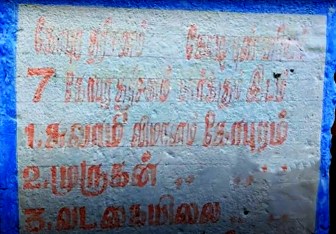
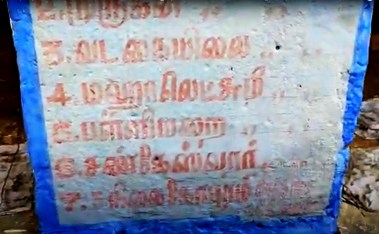
Some inscriptions: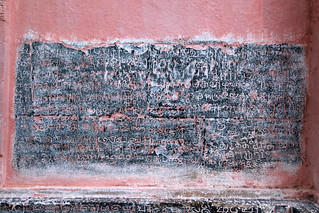
Sthala Vruksham: Vilvam
Theerthams: Kashyapa theertham, Surya theertham, Ganga, Cauveri, Markandeya theertham and Agni theertham.
Contact: Sri Saravanan @ 97914 80824, Sri Rajendran @ 99441 14172/ 97517 95512
Links: Location Photos Weblink1 Weblink2
Thirupoonthuruthi Upacharam (திருப்பூந்துருத்தி உபச்சாரம்)
When Sambhandar at the age of 7 came to visit Appar who was very much senior in age, Appar went to the border of the town and joined the crowd as one of the palanquin bearers without anybody’s knowledge. When Sambhandar realised this, he was moved and fell at the feet of Appar. The ancient phrase Thirupoonthuruthi Upacharam actually means this holy act of great reception and gesture.
But now, It has been distorted and misrepresented for the exactly opposite. It is being used nowadays to make a mockery of the hospitality of people, like saying “you people will not eat in our house and you would have already finished your food”. No idea when this distortion happened and by whom. Like many of our Hindu practices been purposely distorted by the missionary groups like Govinda, namam etc., this could have been their work or maybe by our own people to make a mockery of one group by the other. Anyway, it is sad that such a holy act of hosting has been made a mockery.
Sri Appar Madam
Location: About 100 meters from the temple.
Saint Appar had his madam here which is being praised as “திங்களும் ஞாயிறும் தோயும் திருமடம்” and spent more than 7 years doing Uzhavarapani around. Appar has composed 3 pathigams and many songs on this temple. Thiru Angamalai Thandakam was composed by him from here only and is very popular.
Links: Location
Sri Narayana Theerthar Jeeva Samadhi Temple at Thiruppoonthuruthi
Location: About 500 meters from the temple.
Thiruppoonthuruthi is also famous for the saint composer Sri Narayana Theerthar (1650-1745) who was born in a village called Kaza of Guntur Dist in Andhra Pradesh. His major work in Sanskrit is called Krishna Leela Tarangini, an opera on the life of Bhagwan Sri Krishna, highly suitable for dance drama. The songs are popularly called “Tarangas” meaning waves.
The Gita Govinda of Sri Jayadeva Goswami, Krishna Karnamritam of Sri Bilvamangalacharya and the Krishna Leela Tarangini of Sri Narayana Theertha are being glorified as the ‘three gems’ of the medieval Vaishnava literature.
Legend has it that when Sri Narayana Theertha was along the banks of Naducauvery village nearby, he was suffering from a serious stomach ailment and prayed to Thirupathi Sri Venkateswara Perumal. A divine voice asked him to follow a boar which led him to the nearby village Varahur’ (‘Varaha’ means boar). The boar which guided him was nothing but Bhagwan Sri Varaha Perumal Himself. Sri Narayana Theerthar got the dharshan of Bhagwan Sri Venkateswara Perumal here. A beautiful Sri Lakshmi-Narayana temple, Sri Navaneetha Krishna and Sri Srinivasa Perumal is present now. Bhagwan Sri Krishna is believed to have danced to the Krishna Leela songs presented by Sri Narayana Theertha at this temple.
Although he lived in Varahur, Sri Narayana Theerthar attained Jeeva Samadhi in 1745 at Thiruppoonthuruthi under a huge mango tree on the Masi Sukla Ashtami, Guruvaram, Krithika Nakshatra day. A small shrine has been constructed now under the sprawling mango tree.
The devotees of Sri Narayana Theertha have been organising music festivals at the Samadhi shrine here for over 300 years on the Masi Sukla Ashtami Day.
Links: Location
Note:
Thiruppoonthuruthi is also considered as the place of Jeeva Samadhi of Sri Theertha Narayana Sathguru Swamigal as per temple information board and also as per Sri Sivan Sir’s book of Enippadigalil Manthargal. Wehther both Sri Narayana Theerthar and Theertha Narayanar are the same or not, I don’t know.
Appar Medu/ Sambhandar Medu
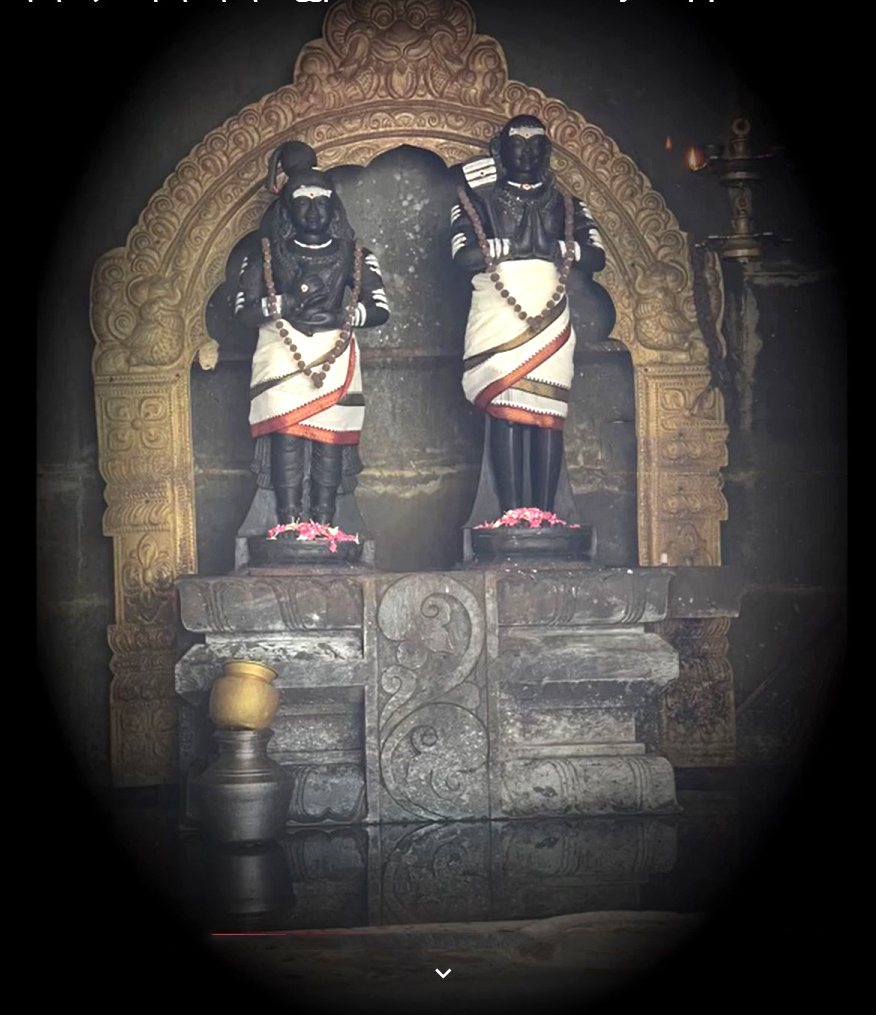
The place where Appar Peruman carried the palanquin of Sambhandar is called Sambhandar medu at Vellamperambur nearby and there are two small shrines for both the saints there.
Links: Location
Our Trip:
It was already 7 PM when we completed dharshan at the temple and so drove straight to the room. The Appar Madam which we would have visited was just about 100 meters from the temple but I came to know about it only after our visit. Also, the Narayana Theerthar Jeeva Samadhi was at just about 500 meters and there was another Thevara Padal petra sthalam at Thiru Alampozhil at about 1.5 kms but we missed all these. Everyone was exhausted and felt enough for the day. Maybe it was His call to have a reason for us to come again. We returned to the room by 8 PM.
With this, we had accomplished our mission of this tour – visiting all the seven Saptha sthana temples and all the seven Saptha mathar temples. We started off the tour keeping the return date open. Since our main mission was accomplished, we decided to wind up the tour the next day. We missed a few more Thevara Padal Petra Sthalams, Saint Thyagaraja’s house & Samadhi and some more important temples but decided to keep them open for another trip.
Well, we had seen all the Saptha sthana temples but there is one more temple left out which is the very base for the Saptha Sthana festival. We will be visiting that tomorrow and wind up the tour.
Stay tuned for the concluding part of this series…..