Day 5 (Sunday):
Since we had completed our major focus of the tour – Saptha sthana temples and Saptha mathar temples – we decided to wind up the tour but before that we wanted to visit Sri Maha Periyava’s birth place at Eachangudi which was very close to our place of stay and we were passing through it back and forth all these days.
28) Sri Maha Periyava’s birth place at Eachangudi
We reached the place by 7 AM. This is Sri Kanchi Maha Periyava’s maternal native place (mother’s birthplace) house where he lived until the age of 5. Surprisingly the village name itself is Easan Kudi, i.e., the residence of God.
Note: Sri Maha Periya’s birth place is a small house at the centre of the Villupuram town. The room where he was born is kept like a temple and the house has been converted into Veda Padasala. I think it is near Kamaraj Government High School (thanks to the blog reader for the info).
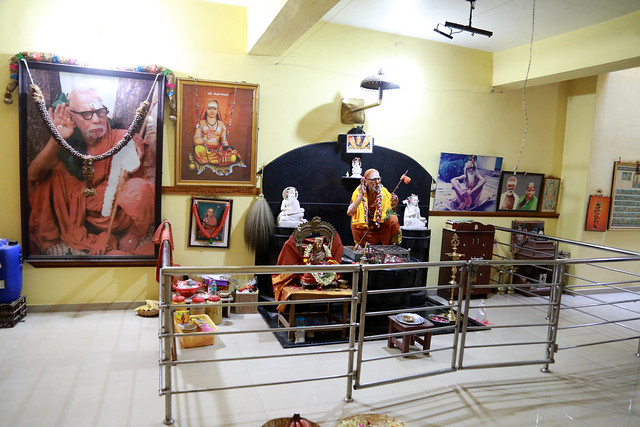
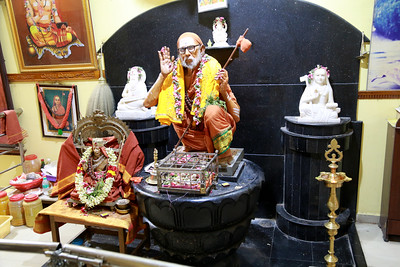
When we went, the house was locked but the caretaker was just a few houses away and he came and opened it for us. The entrance and the hall were filled with Sri Maha Periyava’s photos all through. Possibly you can find here any Maha Periyava’s photo seen anywhere else. In the hall, there is a pooja area with all pooja items, Maha Periyava’s life size cutout, photos of Maha Periyava’s parents and Maha Periyava’s brother, Sri Sivan sir. The Maha Periyava’s life size cut out gives a real feeling of his lively presence there and blessing us. A great place to meditate and even the people who had never meditated will get calm down and get good vibrations – It’s such a strong and powerful place.
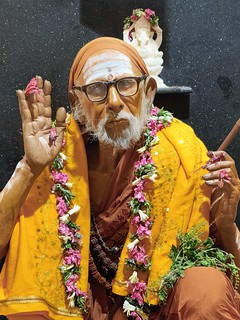
A Vedha padasala is running on and off in the house. Nowadays they are not finding sufficient no of students to run it and so it was not running when we went.
The street is somehow maintaining its typical agrahara status. Sri Kachabeswarar Shiva temple is present at the end of the Agraharam but it was not opened at that time. We had seen peacock roaming around freely here also.
From here, we then started off for our next temple.
Sri Nandhikeswar was born to Sage Silaathar through the blessings of Thiruvaiyaru Sri Aiyarappar. Sri Aiyarappar adopted Sri Nadhikeswar as His son, officiated his marriage from front and took the couple in palanquin procession to the Saptha Sthana Sthalangals as a thanks giving gesture since all the places had contributed in some way for the marriage.
We had visited all these Saptha Sthana Sthalangals but what about the place where the actual marriage itself took place? It is not Thiruvaiyaru, it is not one of the Saptha Sthana Sthalangals but it is called Thirumazhappadi, around 15 kms/ 25 min drive from Thiruvaiyaru. We should have visited it first and then the Saptha Sthana Sthalangal but we are going in the reverse order.
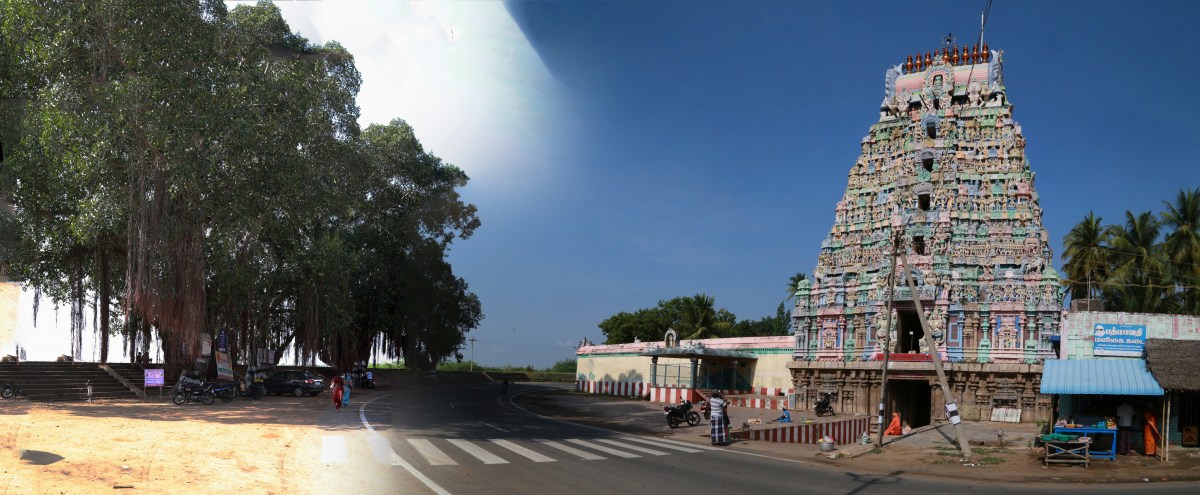
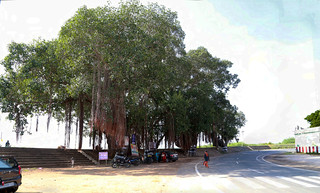
Thirumazhappadi is located in a picturesque spot on the banks of the Kollidam river with about 5-6 huge banyan trees. There is a small stage in front of the temple and the Kollidam river bank has been constructed with gallery style steps facing the stage under the banyan trees. It is a very nice setup. The Nandhikeswara marriage function takes place every year in the stage and the gallery structure gives a convenience to the people to sit and watch any temple function conveniently.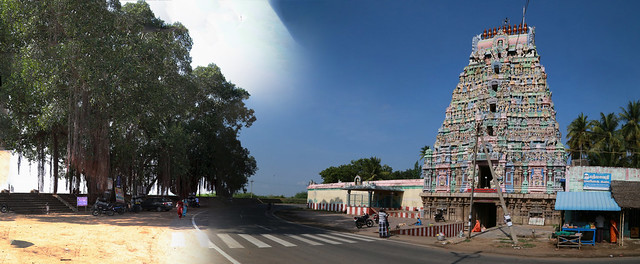
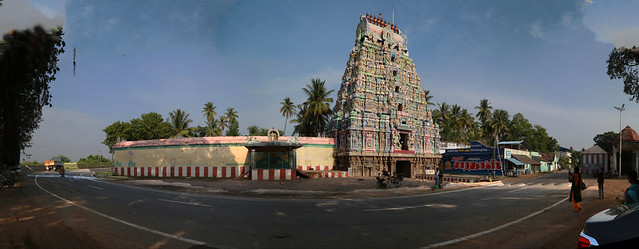
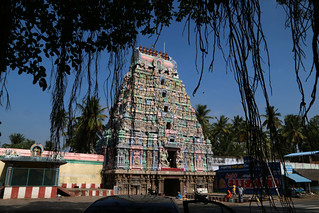
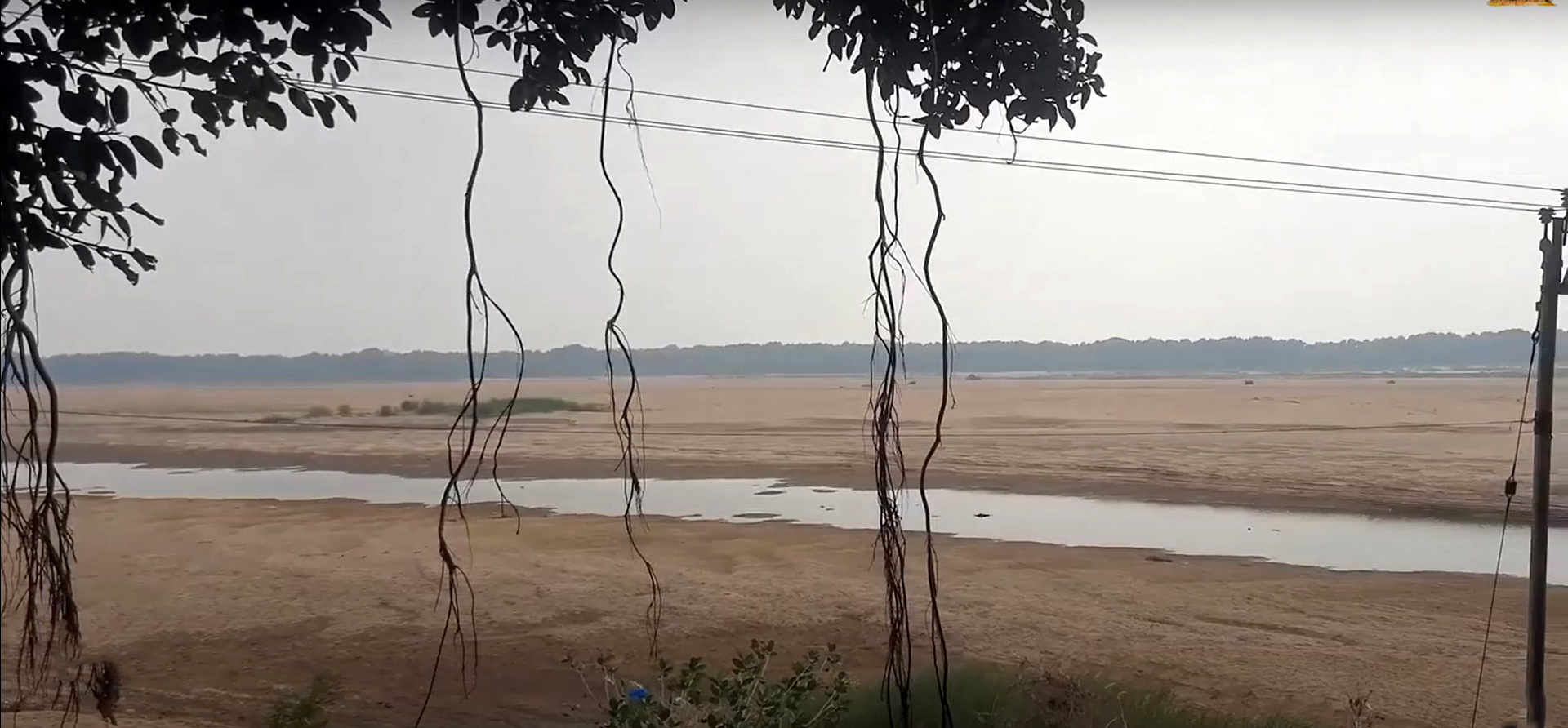
Since this is the place where Sri Nandhikeswar’s marriage took place, this is considered as a good Marriage parihara sthalam. When we went, a boy was sitting with his parents to do the parihara pooja.
29) NCN054 – Thirumazhapadi Shri Vaidyanathaswami/ Vajrastamba Nathar Temple
Location: It is located on the banks of Kollidam river in a picturesque spot with the Lalgudi – Thirumanur main road going around the temple. It is about 15 kms from Thiruvaiyaru.
Significances:
- One of the 275 Thevara Padal petra sthalams
- Sri Nandhikeswar’s marriage took place here
- A very good Marriage Parihara Sthalam
Moola moorthies: Sri Vajra Sthambeshvarar/ Sri Vaira Thoon Nathar/ Sri Vaidhyanatha Swamy as swayambu lingam facing East. There are two Ambals Sri Azhagammai (அழகம்மை)/ Sri Sundarambigai is the main Ambal in a separate shrine facing East and Sri Kalyana Balambigai in the Ardha mandapam is facing South.
Legend:
- Marriage for Nandi:
Sage Silaathar got all the boons from Bhagwan Sri Aiyarappar of Thiruvaiyaru for the marriage of his son Seppaser (Nandhikeswar) to Sri Suyasambika / Swayampraksai, granddaughter of Sage Vasishta. Marriage function took place here in the Tamil month of Panguni (March – April) on Punarpoosa Nakshatra day. Bhagwan Shiva Himself, like a father, officiated the wedding. - This region was occupied by a sect called Mazhavar under the rule of Kooli Mazhavan and his war troops camped here, hence the name of the place as Mazhapadi. Padi means the camping place of war troops.
- Sage Markandeya could not witness the Aadhi Thandavam of Bhagwan Nataraja at Chidambaram since he reached late there. Bhagwan Nataraja promised the sage to give another cosmic dance at Dhalavanam, the original name of this place on full moon day in the Tamil-month of Vaikasi for his benefit and He did it with Mazhu (a weapon like an axe) in His hand here and so this place was called as Mazhuvadi [Mazhu+ Aadi (dance)] which later became Mazhapadi.
- Worshipped by Sri MahaVishnu, Sri Mahalakshmi, Sri Indhran, Sage Agasthiyar, Sage Vasishtar and Purushamirugam.
- Since Bhagwan Shiva cleared off Moon God Chandra’s doshams, He is called as Vaidhyanathar.
- Purushamirugam had brought the shiva linga of this temple from Brahmalogam, consecrated and was doing pooja here. Brahma devar came here to get back the Shivalinga but he couldn’t move it even an inch, however hard he tried. Indhiran got amazed and exclaimed “Is it a diamond pillar (இது வைரத் தூணோ)?” and so Bhagwan Shiva of this temple is called as Vaira Thoon Nathar/ Vajra Sthambeshvararar.
- This incident is described by Thirunavukkarasar in his hymn as, “மறை கலந்த மழபாடி வைரத்தூணே”.
- Sambhandar in his pathigam says “வரிந்த வெஞ்சிலை யொன்று உடையான் மழபாடியைப் புரிந்து கை தொழுமின் வினையாயின போகுமே” meaning, those who worship this Vajra Sthambeshvararar will get freed from all their sins.
- The temple has the significance of Bhagwan Shiva Himself called up Sundarar and made him sing on Himself. While Sundarar was taking rest at Thiruvalampozhil during his pilgrimage in that region he heard a voice asking, “Sundara, did you forget to come to Mazhappadi”. Sundarar was shocked, started searching for this temple and came here. He sang a song on this Vajra Sthambeshvararar with the meaning of “who else can I think of by forgetting you (நின்னை அல்லால் இனி யாரை நினைக்கேனே)”.His thevara pathigam has 10 verses and the first verse of his pathigam is highly popular:
“பொன்னார் மேனியனே புலித்தோலை அரைக்கசைத்து
மின்னார் செஞ்சடைமேல் மிளிர்கொன்றை அணிந்தவனே
மன்னே மாமணியே மழபாடியுள் மாணிக்கமே அன்னே
உன்னை அல்லால் இனி யாரை நினைக்கேனே”
All the 10 verses of this pathigam end with “who else can I think of by forgetting you (நின்னை அல்லால் இனி யாரை நினைக்கேனே)”.
- Bhagwan Shiva of this temple was sung in a total of 6 pathigams by all the three saints who sang thevara pathigams – Thirunavukkarasar has sung 2 pathigams, Sambhandar 3 pathigams and Sundarar 1 pathigam.
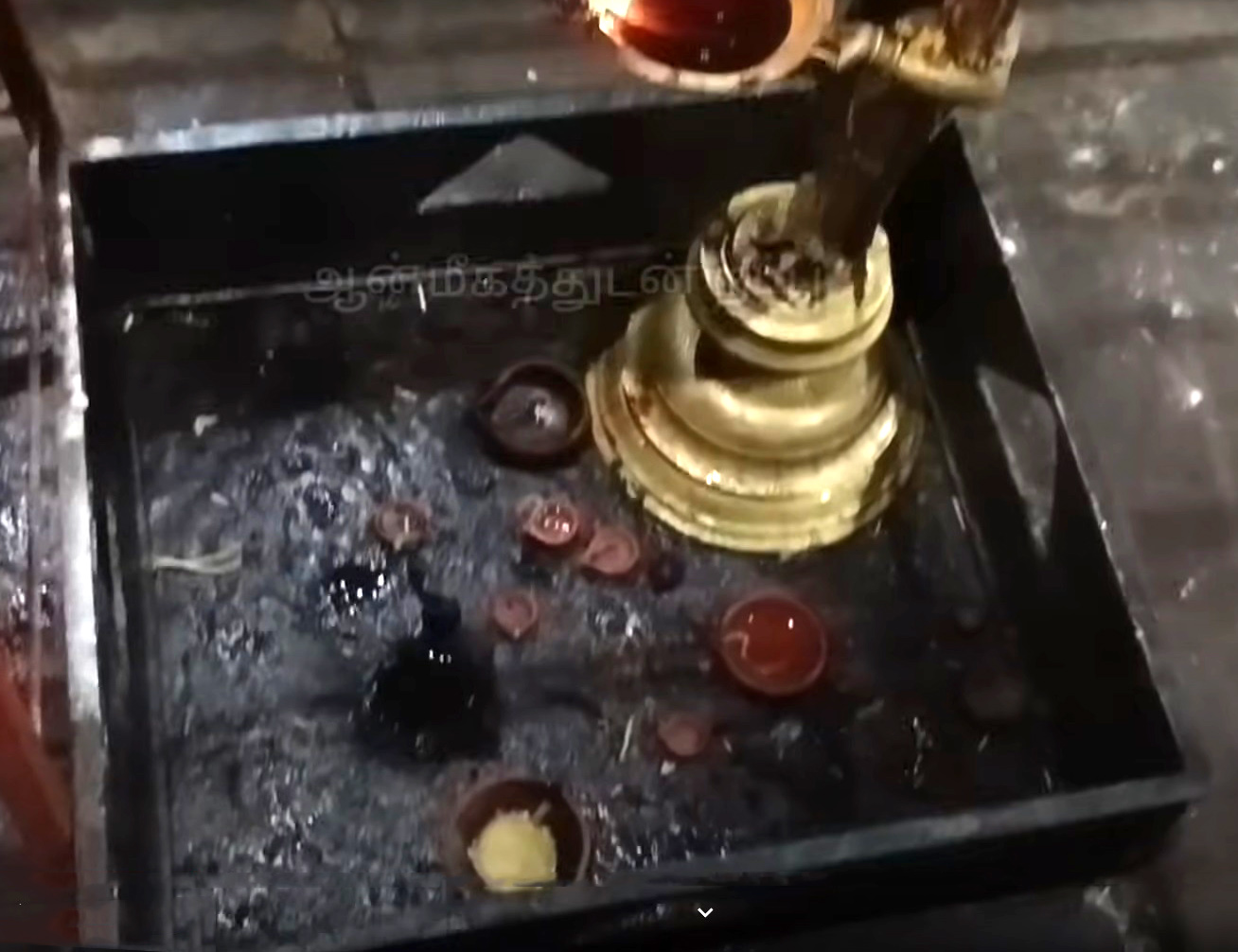
- There are no Navagrahas here but there are 3 pits between Bhagwan Shiva and Nandhi which are being worshipped as Navagrahas. It is said that Bhagwan Shiva burnt the Navagrahas into ashes with His three eyes. Sibi Chakravarthi got his Navagraha dhoshas cleared off here.
The Temple:
- The temple is located on the banks of the Kollidam river in a picturesque spot with the Lalgudi – Thirumanur main road going around the temple. About 5-6 huge banyan trees add striking beauty to the place. There is a small stage in front of the temple and the Kollidam river bank has been constructed with gallery style steps facing the stage under the banyan trees. It is a very nice setup. The Nandhikeswara marriage function takes place every year in the stage and the gallery structure gives a convenience to the people to sit and watch any temple function conveniently.
- Any river flowing Northward (Utharavahini) is considered sacred and the River Kollidam does that here. So, this is considered as more powerful than Kasi itself (காசியை விட வீசம் அதிகம்).
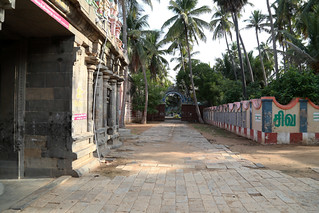
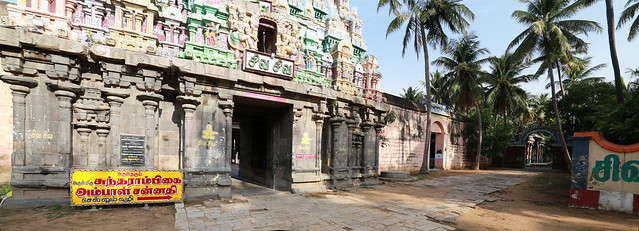
- The temple facing East is spread over 7 acres and has a seven tier Rajagopuram that belongs to the Pandya period.
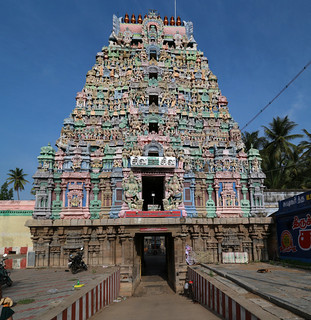
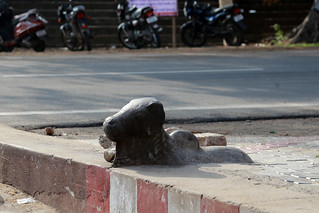
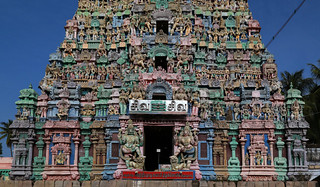
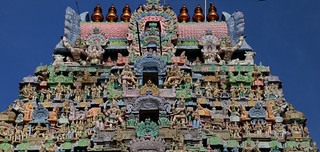
- After entering through the Rajagopuram, we can see the Dwajasthambam, Balipeedam and Nandhikeswar as Adhikara Nandhi in marriage mood with a great smile.
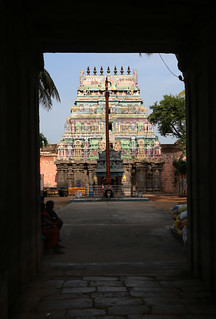
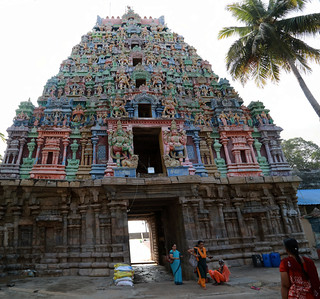
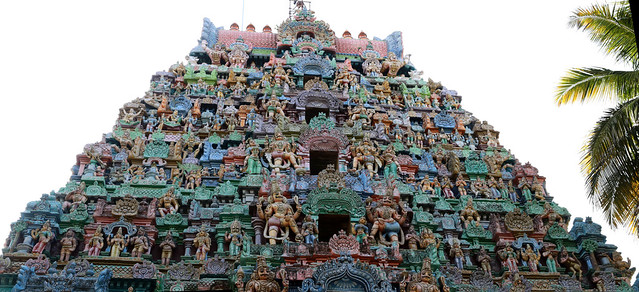
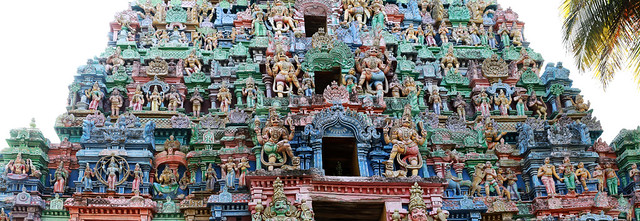
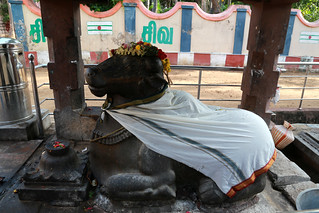
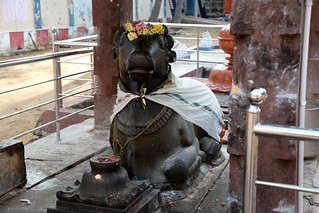
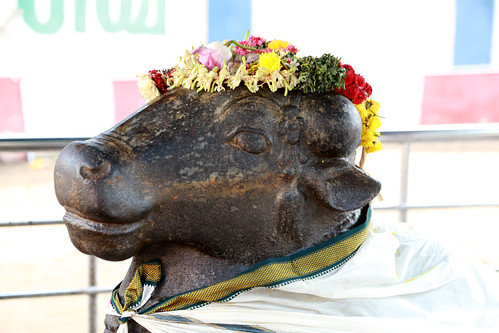
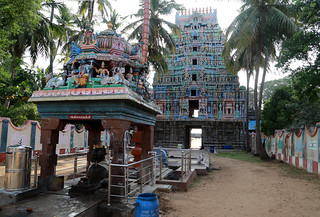
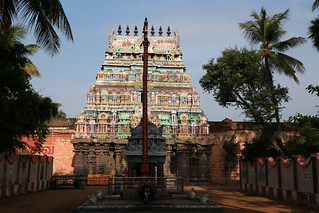
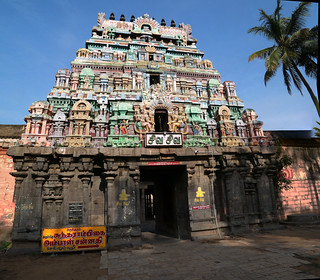
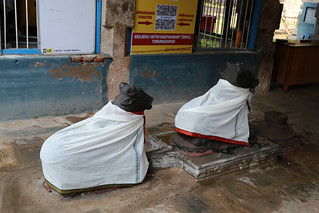
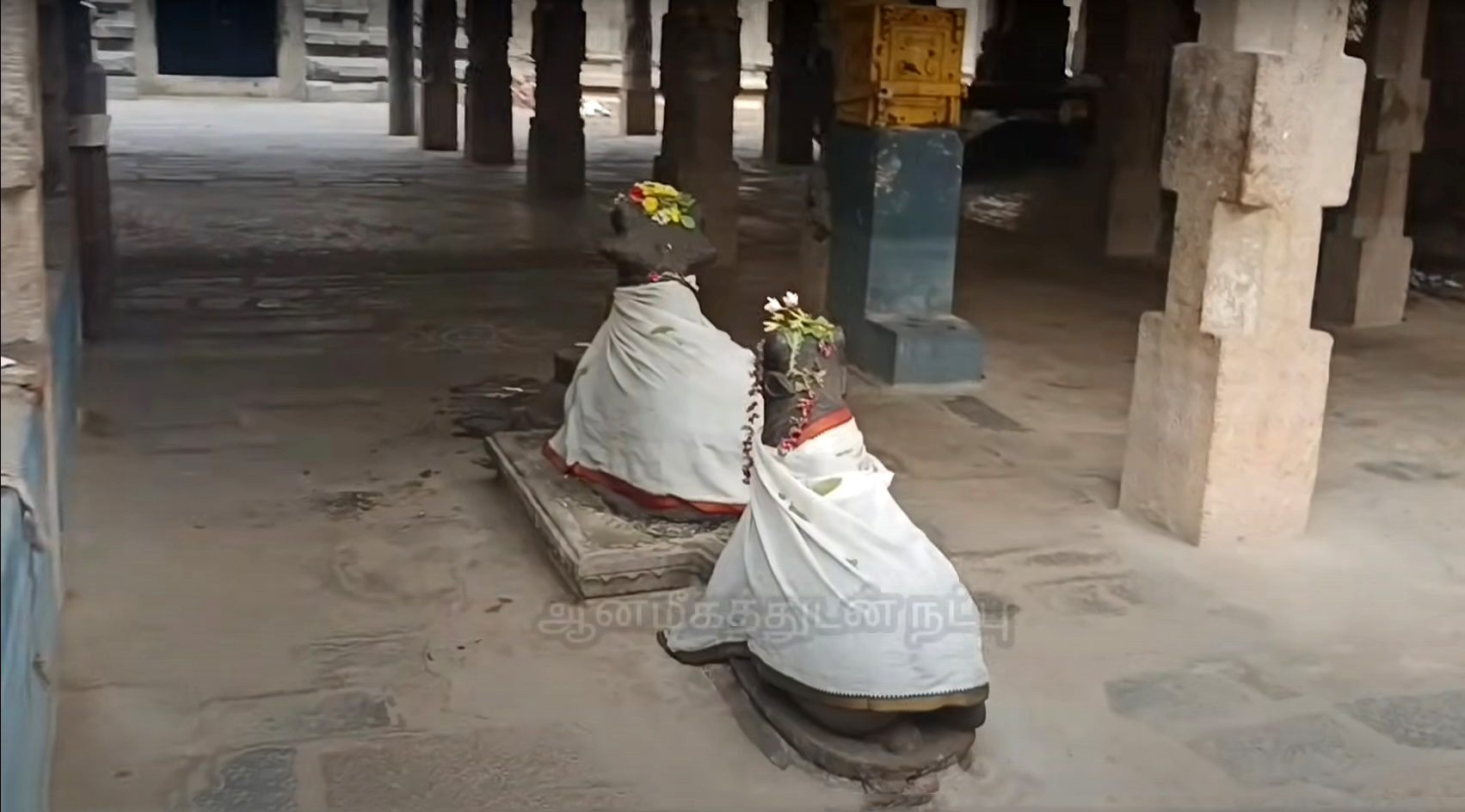
- After passing through the second tower, we can see two Nandhis one behind the other in the big Alankara Mandapam.
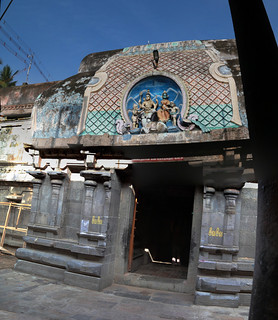
- To the left of the second tower entrance, Sri Suryan, Sri Chandran, Sri Agora Veerabadhrar, Sri Vinayagar and Sri Subramanyar are seen in separate shrines.
- After passing through the third entrance, we can reach the Maha Mandapam, Somaskanthar temple and the sanctum.
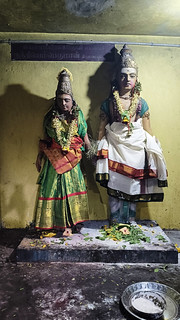
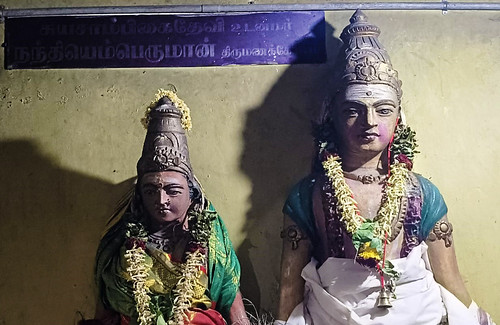
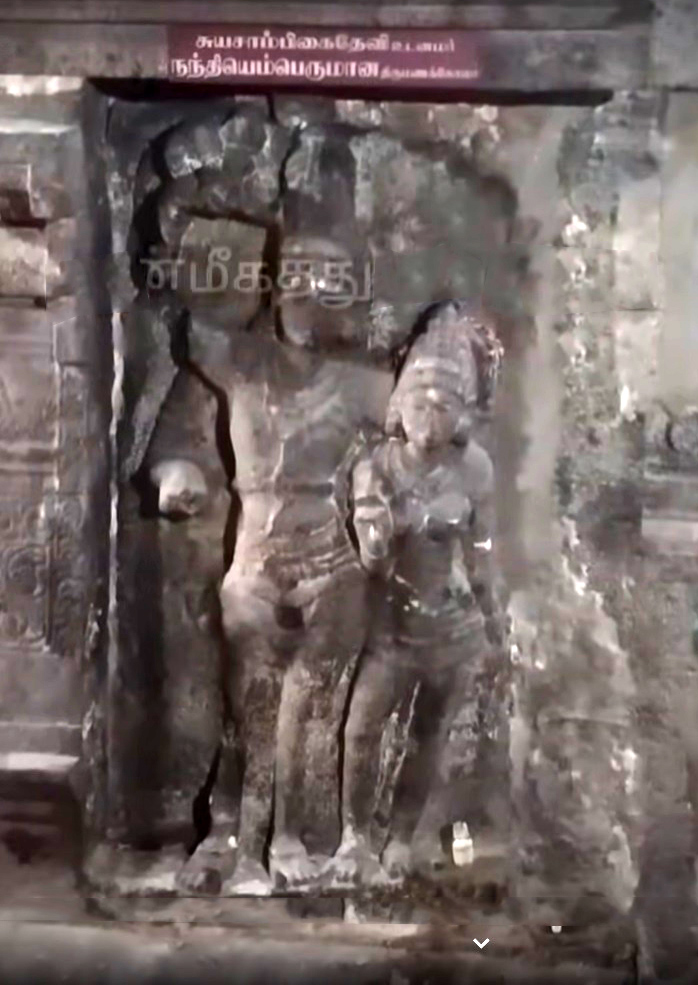
- Sri Nandhikeswar is present in human form along with his wife Sri Swayampraksai on the right side of the entrance to the sanctum. The couple is also present within the grabagraham as bas relief sculpture.
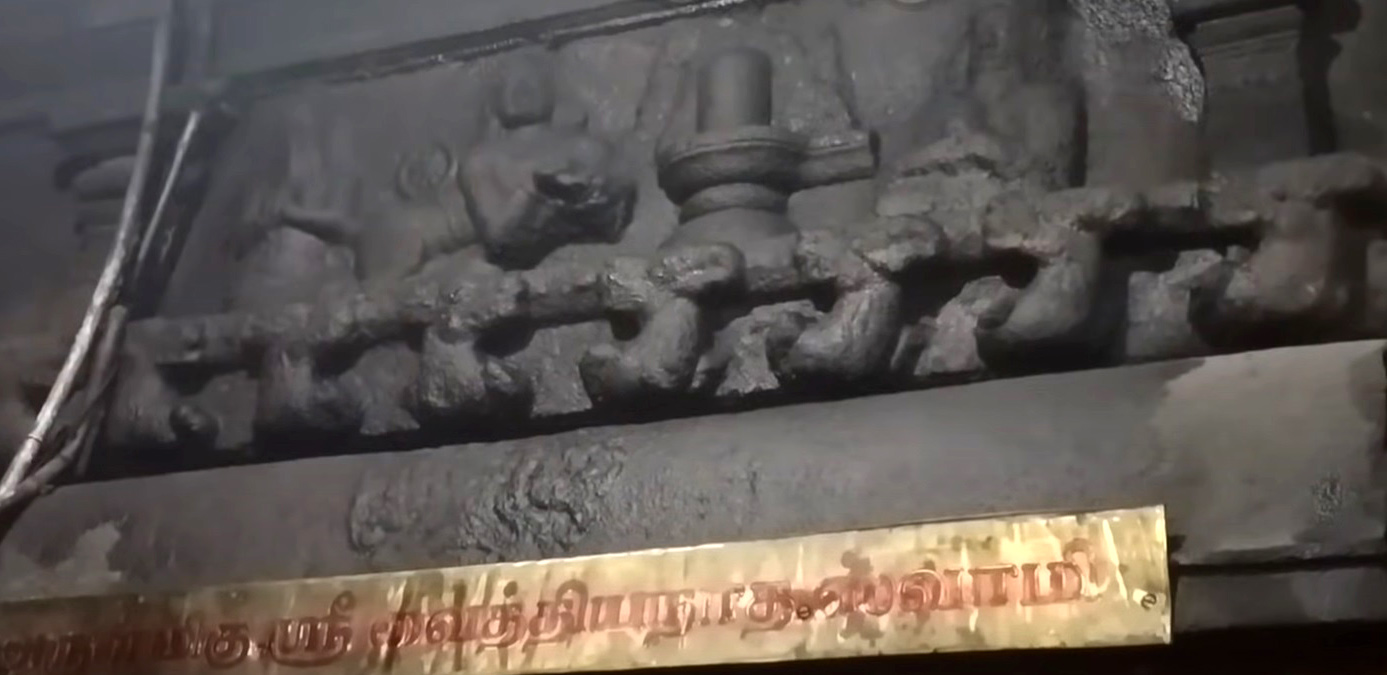
- Bas relief sculpture of Purushamirugam with human head and tiger body worshipping Bhagwan Shiva is present on top of the entrance to the sanctum.
- There are no Navagrahas but there are 3 pits between Bhagwan Shiva and Nandhi. People are worshipping them as Navagrahas by lighting lamps in them.
- In the Ardha mandapam, Sri Surya, Sri Gathyayani Ambal on peacock vahana,
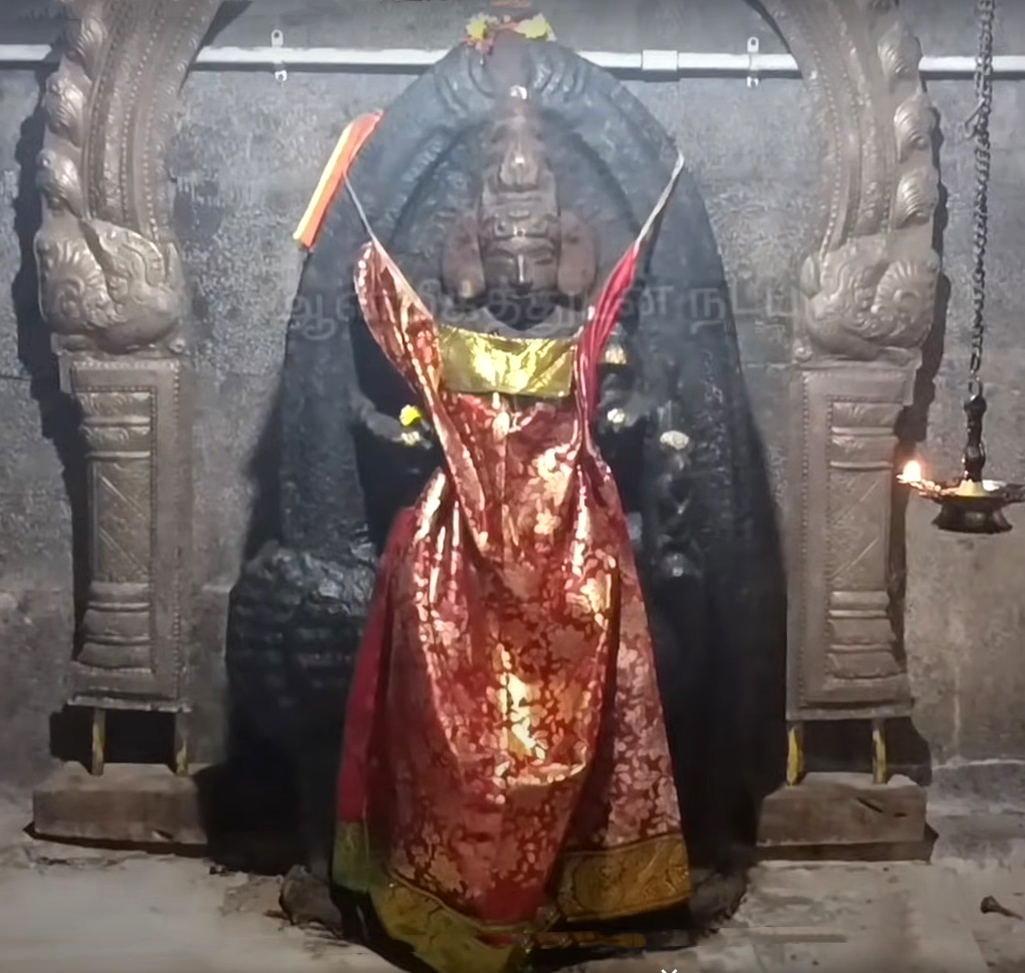
Saptha mathars, 7 Mazhai Kannigais in the names of Muni, Deva, Lotus, Water, Forest (Vana), Sumathi; Sri Agasthiyar and Sri Sundara Vinayagar are present.
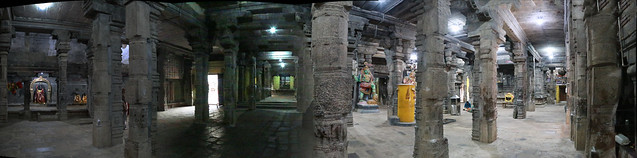
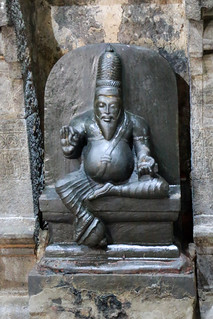
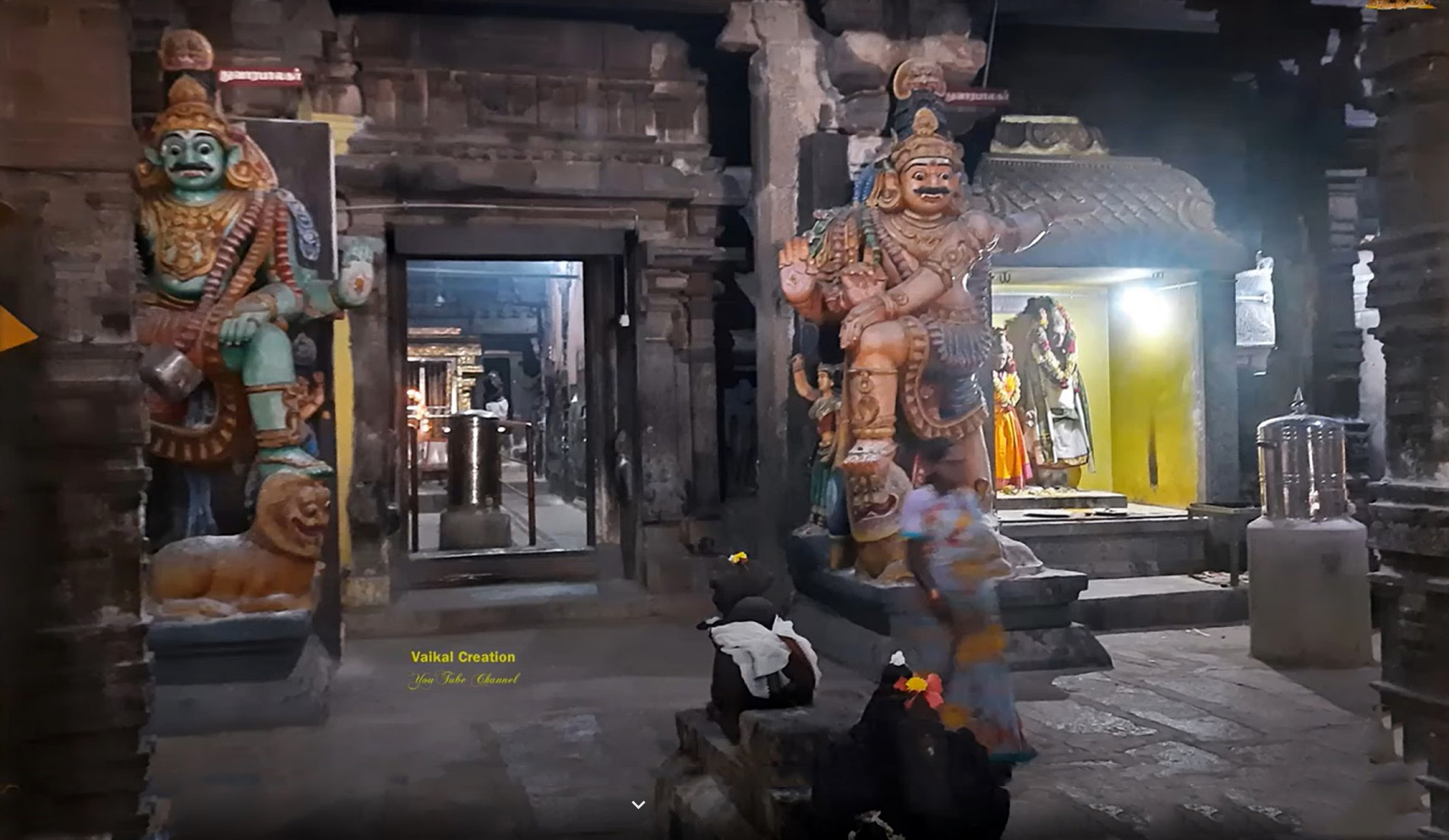
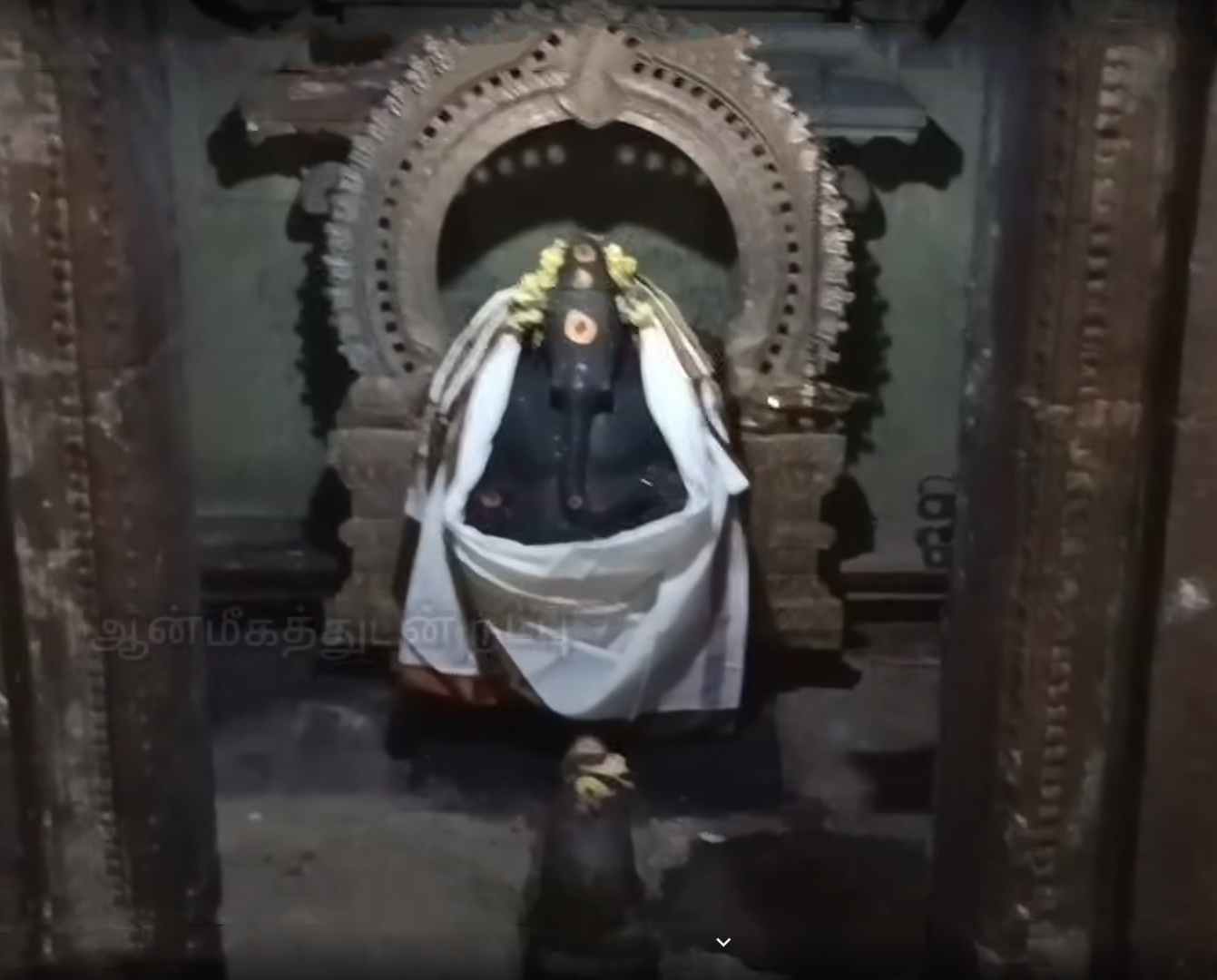
- Usually, Sri Vinayagar will be present facing East at the front side of the sanctum but here Sri Sundara Vinayagar is facing South at the left side of the sanctum.
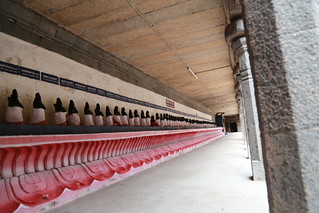
- The inner praharam is two tiered and has 63 Nayanmars, Naalvar in the South praharam.
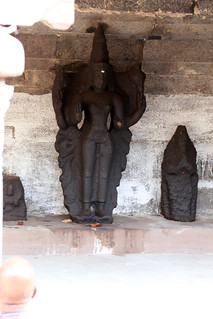
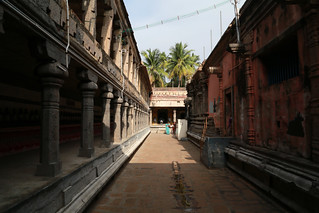
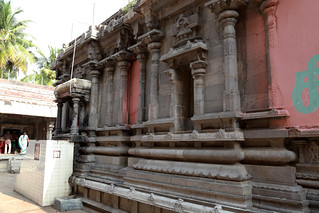
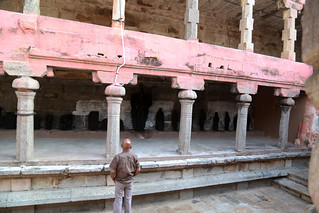
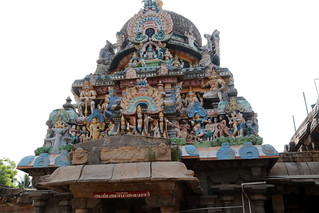
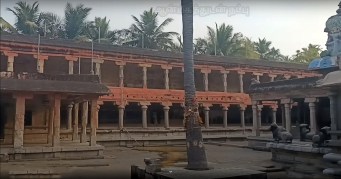
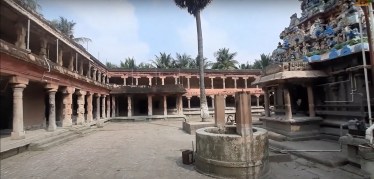
- Sri Somaskandar created of a single stone is special and very beautiful.
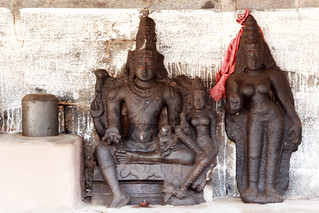
- There is a shrine for Sri Jwarahareswarar that belongs to the Rajendra Chola period. People worship Him to get relief from any disease.
- There are 4 beautiful Vedha Nandhis representing 4 Vedhas in the praharam just opposite Sri Brahmma in the koshtam.
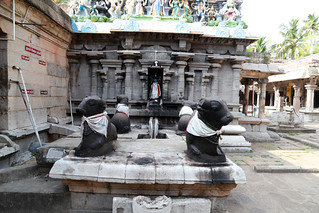
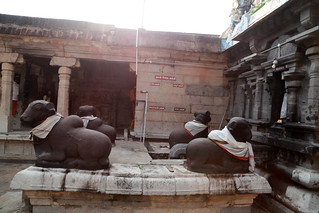
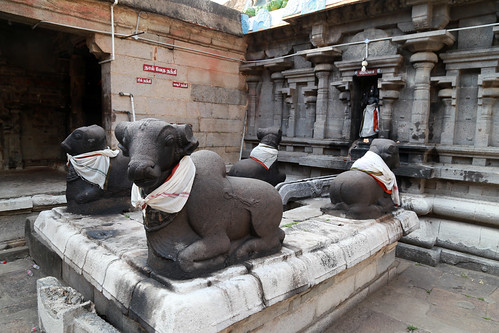
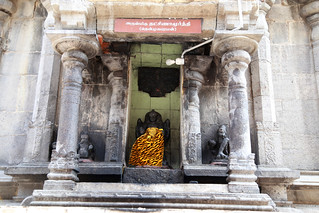
- In the koshtam, Two Dakshinamoorthies, Two Lingothbavars, Sri Brahmma and Sri Siva Durgai are present.
- In the koshtam two Dakshinamoorthies – one Medha Dakshinamoorthy sitting on Rishaba vahana and the other as Aadhi Dakshinamoorthy – are present.
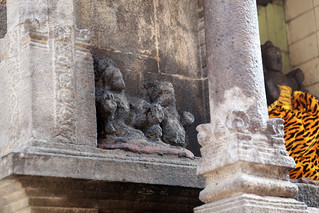
Outer Praharam: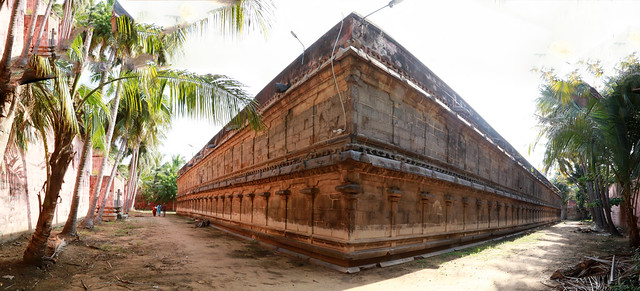
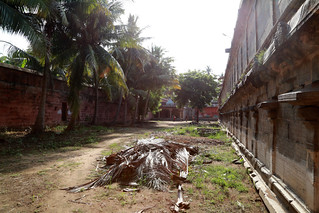
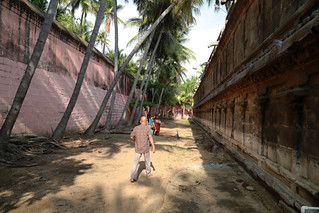
- The temple has two Ambal shrines. Sri Kalyana Balambiga shrine facing south is present within main shrine in the Ardha mandapam and the other Sri Sundarambigai Ambal shrine is outside the main shrine.
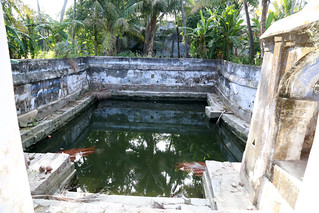
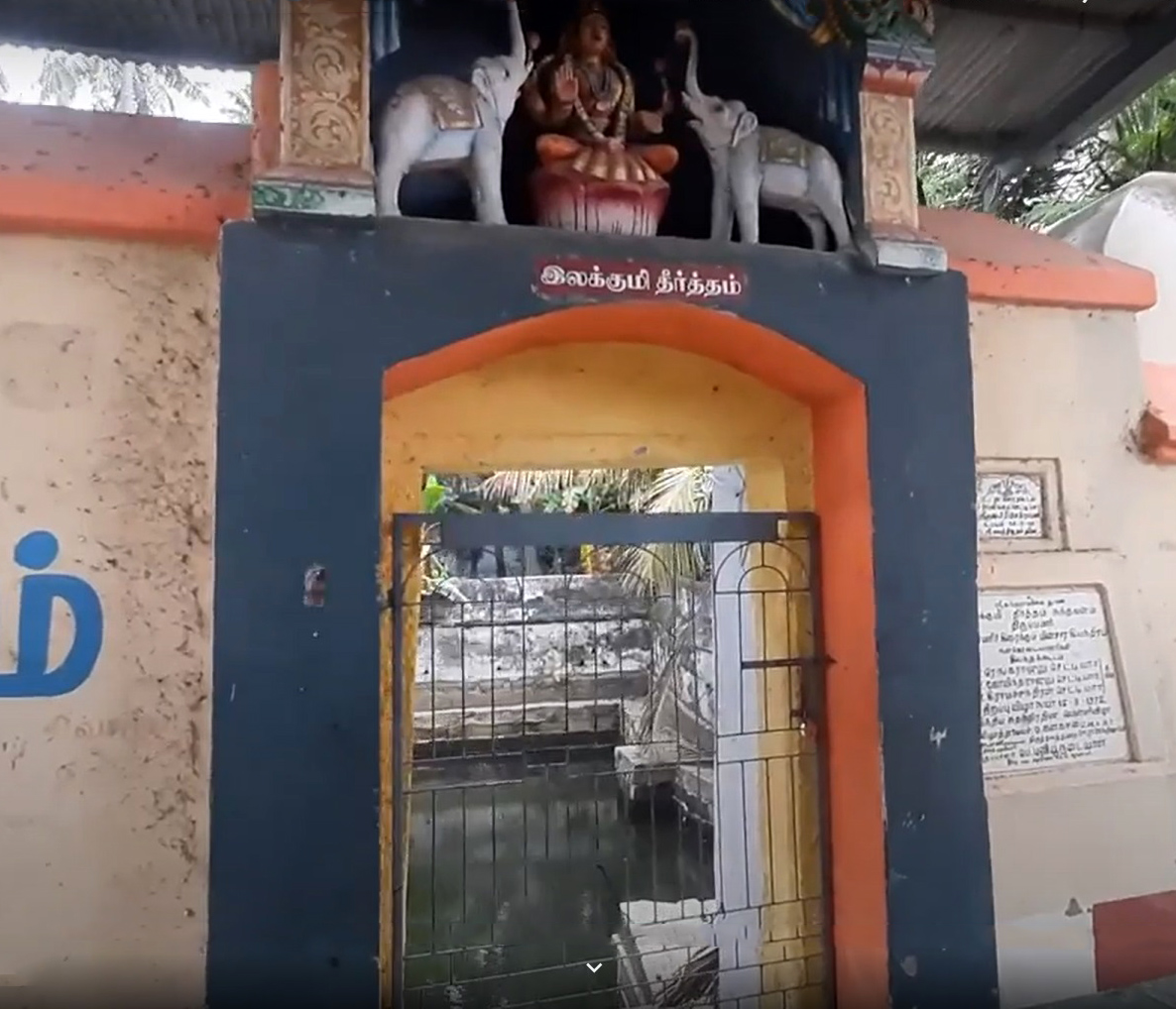
- The main Ambal shrine of Sri Sundarambigai facing East is located outside the main shrine. This shrine belongs to the Rajaraja Chola period. Sri Chandikeswari is present in the outer praharam of Ambal shrine. Lakshmi Theertham is located just opposite the Ambal shrine. A small Sri Anjaneyar is also present by the side of Lakshmi Theertham.
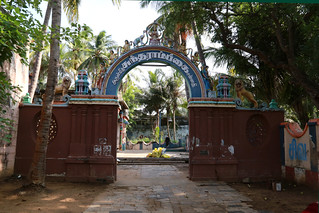
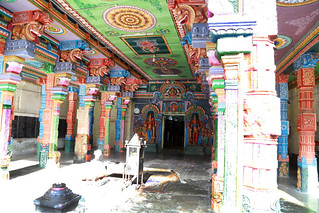
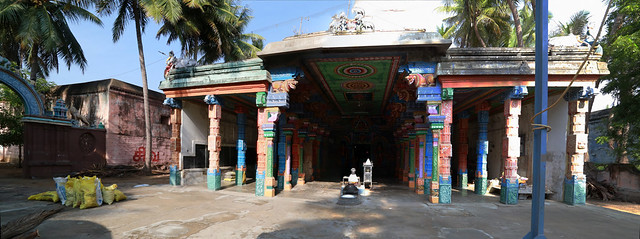
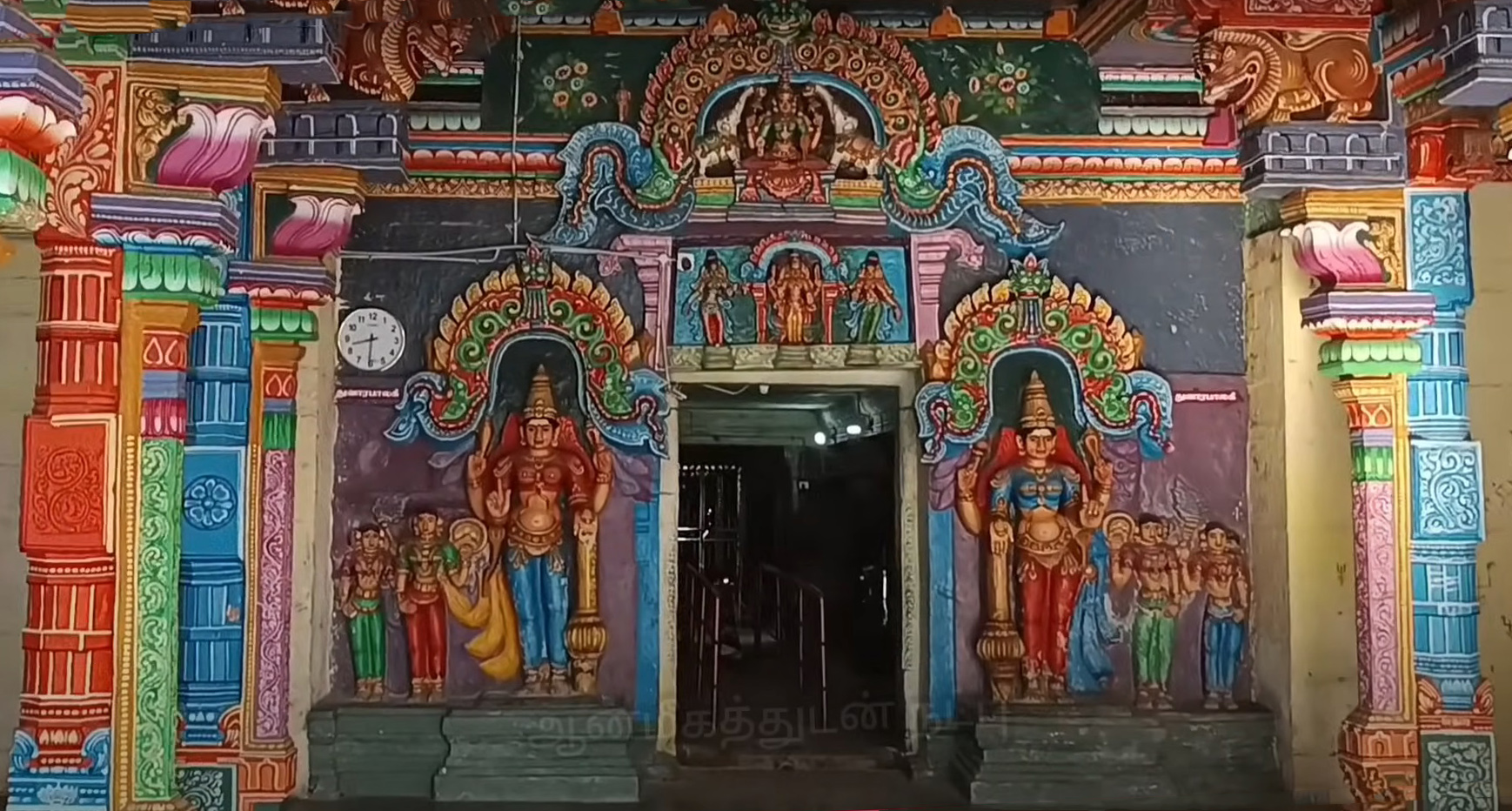
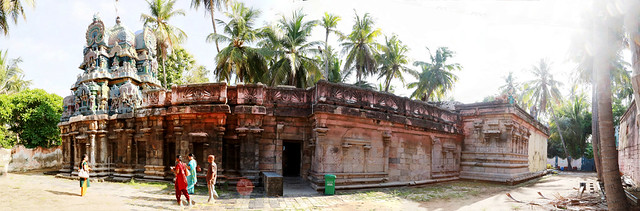
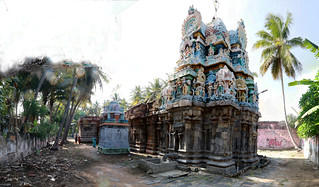
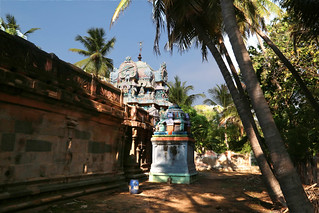
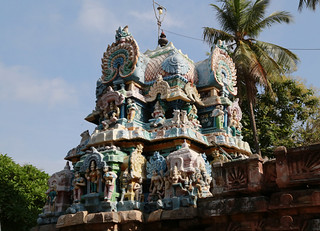
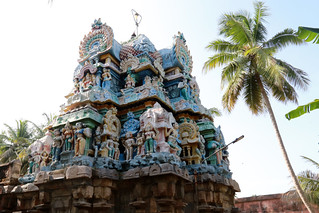
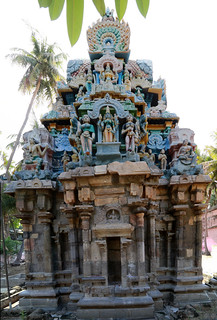
- The 100 pillar mandapam and Somaskanda mandapam belongs to the 13th century
- There is Vijayanagara period Koneri Raya Mandapam outside just opposite the temple.
- This is a great place for people of all ages – a good sacred spot for the devotees, a good marriage prayer sthalam for people of that age and a beautiful picnic spot for all ages.
Sthala Vriksham: Palm tree – present in the inner praharam just opposite Sri Annamalaiyar in the koshtam.
Theertham: Lakshmi Theertham opposite the Ambal shrine, Sivaganga theertha well in the inner prahram opposite Koshta moorthy Sri Annamalaiyar and the Kollidam river.
Worshipping:
- Sri Mahalakshmi got some skin diseases due to a curse by a sage and got it cured by taking bath at the Lakshmi Theertham here. It is believed to have medicinal qualities and people with skin diseases, take bath in the Lakshmi Theertham on Tuesdays of Tamil month Panguni (March-April) and worship the Ambal. They circumambulate the Ambal shrine 9 times and offer salt and pepper in the Bali peetam in front of the Ambal shrine.
- People who suffer from severe diseases take bath in the Lakshmi Theertham and do abishegam to Sri Vaidhyanatheswarar. They offer Rasam rice with parboiled rice to Sri Jwarahareswarar.
Nandhi Marriage and Before Nandhi (நந்திக்கு முந்தி):
The Nandhi marriage festival takes place in the Tamil month of Panguni (March – April) on the Punarpoosa Nakshatra day. Thirumazhappadi is the place of the bride Sri Suyasambigai and Thiruvaiyaru is the place of the bridegroom Sri Nandhikeswar.
On the marriage function day, Thiruvaiyaru Sri Aiyarappar and Sri Dharma Samvardhini Ambal in a palanquin, followed by Sri Nandhikeswar in bridegroom attire on horse vahana start at 4 AM for the marriage. They travel via Thillaisthanam, Vaidhyanathampettai and arrive at the middle of the (empty) Kollidam river. A big pandhal is erected there for the function. Sri Vaidhyanatheswar and Ambal Sri Sundarambigai of Thirumazhappadi along with the bride Sri Suyasambiga in a separate palanquin would have arrived there already to receive the people of bridegroom. Nitchayathartham takes place there, after which all of them come to Thirumazhappadi. There is a small stage in front of the temple and the marriage function takes place there at 7 PM. The gallery structure opposite the stage built on the Kollidam river bank gives a convenience to the people to sit and watch the function conveniently.
It is believed that if people who are facing marriage delays or other issues participate in the Nandhi marriage festival, they will get their marriage fixed before the next Nandhi marriage. This is popularly being called as ‘Before Nandhi (நந்திக்கு முந்தி)’
Temple Timings: 7 AM to 12:30 PM and 4 to 8.30 PM – 4 times pooja services take place.
Contact: +91 4329243282, 9790085702, 9750302325.
Links: Location Photos Weblink
After finishing the dharshan, we took up the homemade breakfast of idlis sitting in the gallery structure opposite the temple. I always like taking homemade food under big trees on the way during our travels and this place is an exceptional one for the same. Your kids will love it and don’t miss to take them here.
The End of the Tour:
Well, we finished the tour with a happy and auspicious ending of Sri Nandhikeswar’s marriage. The trip was very enjoyable on the whole with a convenient room, home-made food with an exclusive cook, crowd less dharshans etc., In spite of our 5 days trip we were left out with temples for at least another 2 full days. The pity thing is there is no lodging/ homestay facilities around Thiruvaiyaru. Coming from Tanjore everyday could be a time waste. If anybody can start a home stay/ home food with a value addition of complete information on all the temples around, route wise, including the contact nos of Gurukkals/ Bhattars, temple timings etc., that would be a great spiritual tourism business. It will increase the economy and traffic in this region and let’s see whether there is anyone to take it!
From here, we then went to visit our elder relative at Tanjore and then returned to Chennai through Trichy highway.
This trip was for just 5 days but it took me about 4 months to complete the writing of this blog series. Hope you had enjoyed my writings and thanks very much for all those who followed me all through. Your feedback will induce me to write more.
Thanks, and bye for now…