Day 4 (Saturday):
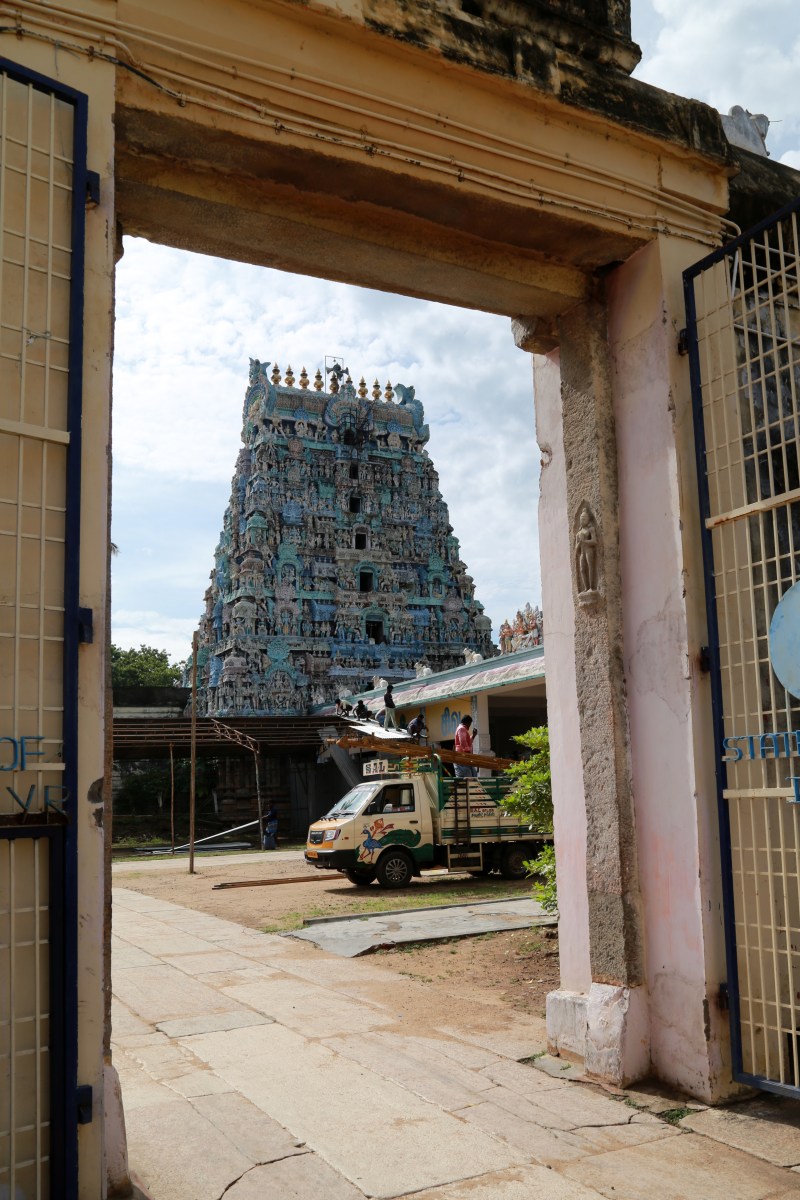
On day 4 of our trip we visited Thiruvaiyaru Sri Aiyarappan Temple. At the start of the tour itself, we decided that first we will complete the dharshans of small temples which will open only for few hours and then come to this big temple. We knew that this temple will take at least an hour and as such it took us 2 hours. We Started by 7 AM from the room without taking breakfast and reached by 7:25 AM and came out by 9:20 AM only. Such a vast temple indeed. Though we had visited this temple many times, we would have missed some important aspects of the temple every time that will come to be known only later. Also, we never had an elaborate visit like this before. Visited many places for the first time like the sacred Surya Pushkarani from where Thirunavukkarasar miraculously got up after a dip at a pond in North midway during his Kailaya trek.
When we reached the temple, there were many tourist buses and vans parked outside and we thought there is going to be a significant crowd but believe me, even in this temple, we had a one-on-one dharshan in both Swamy and Ambal shrines. Along with us, a tourist van parked and a large crowd alighted but we have no clue where they went. It only shows that the temple parking space is being used by the whole town! We expected personalised dharshan in remote not so popular temples but here, in such a popular temple, a personalised dharshan was never expected. On one side, we were happy to have such a dharshan but on the other hand it was very sad to see such a state. People visiting only on special days and deserted on other days is the reason for the Gurukkals coming only for a few hours daily on normal days and it has a cumulative effect of people coming from long distance having an issue of being not being able to visit as many temples as they want within a given time frame. Only a political change with a spiritual mind set can change the situation. As of now, a big sigh only!
In the Ambal shrine, the previous day Aadi Velli Santhana kappu alankaram was intact and She was so beautiful in that. During our dharshan flowers fell from Ambal as a good sign. When we just came out, screens were put on to remove the alankaram for new abhishegam and alankaram of that day.
Note:
This particular post had taken me nearly 3 weeks and new information were coming out as I dig deeper and deeper inside. I tried my level best to make this the single source of information for the temple. So, I request you to pass on this to your known groups and friends as much as possible so that most people can benefit out of this.
Thiruvaiyaru is highly popular for the 2 big festivals:
- The Saptha Sthana festival and
- The annual Aradhana festival for Saint Thyagaraja
For details on Sapthasthana festival, see the post published earlier in this ‘Thiruvaiyaru temple visits’ series:
https://wordpress.com/post/shanthiraju.wordpress.com/7940
Note:
FYI, there are photos from my 2012 and 2024 trips and they are mixed up relevently. Also I’ve used few relevent photos from the net. Photos with flickr links are mine and the others are not.
22) NCN 051 – Sri Ayyarappan Temple at Thiruvaiyaru
Significances:
- One of the 276 Thevara Paadal petra sthalams
- First of the Saptha sthana sthalams
- Ambal shrine is one of the 51 Sakthi peetams; Ambal is present in Vishnu roopam.
- Known as Dakshina Kailasam, the equivalent of Kailasam
- One of the 6 places of Tamilnad which are considered at par with Kasi
- Bhagwan Shiva conducts pooja to Himself
- Bhagwan Shiva built the temple for Himself
- One of the just 3 temples in India where Mukthi mandapam is present
- Birth place of Sri Nandhikeswar
Moola moorthies: Sri Aiyarappar (in Tamil) / Sri Panchanadheeswarar (in sanksrit) as swayambu lingam with Sri Aram Valartha Nayagi (in Tamil) / Sri Dharma Samvardhini Ambal (in Sanskrit).
Five Rivers:
Five tributaries of the cauvery river – Cauvery, Kudamurutti, Vennar, Vettar, and Vadavar – flow around Thiruvaiyaru. ‘Pancha’ in Sanskrit or ‘Ai’ in Tamil refers to five and ‘nadhi’ in Sanskrit or ‘aaru’ in Tamil refers to river. This is the reason for the name of the place as Thiruvaiyaru and the name of the moolavar as Sri Aiyarappar / Sri Panchanadeeswarar
Legend:
Sri Nandhikeswar:
This is the birth place of Sri Nandhikeswar. His father, Sage Silaathar conducted Puthra Kameshti Yagna and chanted Rudhra Japams at the Jappesa mandapam here to get a child. Bhagwan Shiva rewarded him a box with a child inside (at a place called Anthanakurichi closeby) and he was named as Jappesan. Unfortunately, he was destined only for 16 years of life. On nearing 16, Jappesan, unable to see the pain of his parents, took up severe penance standing in one leg at the Surya Pushkarani here and chanted seven crores Rudhra Japams at the Jappesa mandapam. Pleased with his penance, Bhagwan Shiva appeared and bathed him with 5 sets of Abhishega waters – Ganga water, Chandra water, Mother Devi’s milk, Brahmma Kamandala water and Rishaba (Nandhi)’s Saliva water – and adopted him as His foremost attendant and the head of the Bootha ganas in the name of Nandhikeswar. The bathed waters became 5 tributaries of the cauvery river. Thus, Nandhikeswar got the first Panchakshara Deeksha of Bhagwan Shiva and got the distinction of the first of the Thirukkailaya Parampara heritage lineage. Bhagwan Shiva, like a father, also arranged the marriage of Sri Nandhikeswar to Sri Swayamprahasa, the daughter of Sage Vyagrapadhar at Thirumazhappadi nearby. The most popular festival of this region, the Sapthasthana festival is connected with this marriage of Sri Nandhikeswar.
Sri Nandhikeswar’s avatar took place at a place called Anthanakurichi close to Thiruvaiyaru on the Thiruvathirai star day of Tamil month Panguni. His marriage took place at Thirumazhappadi near Thiruvaiyaru on the Punarpoosa star day of Tamil month Panguni. Both the festivals take place at Thiruvaiyaru and Thirumazhappadi respectively.
Appar’s Kailaya Dharshan:
When Thirunavukarasar (Appar Peruman) was on his trek to Mount Kailash, his health was deteriorating badly as he proceeded and his age didn’t cooperate. Bhagwan Shiva, in the disguise of a sage, intervened and said it will be impossible for him to reach Kailash due to his health condition but Appar was determined to proceed at any cost. The sage then asked Appar to take a dip in the nearby pushkarani. When Appar got up after the dip, he miraculously got up at the Appar kulam just outside the temple and Bhagwan Shiva blessed him the Kailaya dharshan along with Parvathi devi on Nandhi vahana. So, this temple is considered equivalent of Kailayam and the Surya Pushkarani is considered equivalent to Manasarovar. This happened on Aadi Amavasya day and the festival takes place at Surya Pushkarani every year on that day.
Appar kulam:
The temple tank where Appar got up here during his Kailaya Yathra is Appar kulam (now being called as Appankulam/ Uppankulam) located just outside the temple at the NorthWest corner(this is being wrongly told as Surya Pushkarani inside the temple by many people). There are good steps to take bath. Just opposite this temple tank, there is a temple of Sri Abhishta Varatha Maha Ganapathi. There are shrines of Kasi Viswanathar & Visalakshi and Sri Durga within the temple. On the wall there is a painting of Appar getting up at the temple tank and getting Bhagwan’s Kailaya dharshan in Rishabha vahana. Don’t miss to visit this.
Sri Aatkondar shrine:
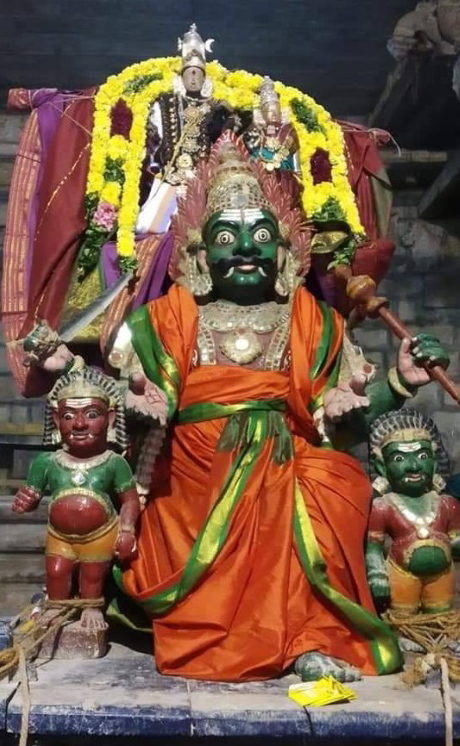
- When a young Brahmin boy, Susarithan was chased by Yama, he surrendered to Bhagwan Shiva at Thiruppazhanam temple nearby and as per his advice, he came to Thiruvaiyaru and sat down at the South Rajagopuram (Aatkondar shrine entrance) chanting Shiva nama, When Yama came, Bhagwan Shiva sent one of His Dwara balahars of the South Rajagopuram, Sri Aatkondar, to chase away Yama and save Susarithan.
- The western Dwara balahar has a separate shrine as Aatkondar/ Kala Samhara moorthy with Yama under His feet. He is wearing a garland of poisonous creatures like scorpion, snake and Centipede (பூரான்). The other Dwara balahar is called Uyyakkondar.
- Worshipping Aatkondar will remove death fear and protect us from bytes of poisonous creatures & the evil works (பில்லி, சூன்யம்) of the enemies.
- There is a Kundam in front of the shrine where devotees put Kungliyam (a kind of herbal Sambrani) as an offering to get rid of death fear. The Kundam will always be smoking due to the burning of Kungliyam.
- The Karthigai month Kalashtami day is considered to be the day when Susarithan was saved from Yama and on this day special festival for Sri Aatkondar takes place. Theerthavari, special abhishegam and street procession of Sri Aatkondar on Yama vahana takes place.
- Sri Aatkondar is the Kshethra Balahar of the temple and is the protective God for Thiruvaiyaru town.
- Like Thirukkadaiyur, here also Yama was chased away by Bhagwan Shiva since Yama troubled His devotee. So, this is also considered a special temple to conduct 60th, 70th and 80th birthday functions.
Bhagwan Shiva built the temple for Himself:
King Karikal Chola’s chariot once got stuck into the ground while passing through this place. While digging around the wheels of the chariot to get it out, they were rewarded with Sri Aiyarappar lingam, Goddess Dharmasamvardhini, Sri Vinayagar, Sri Murugar and a Nandhi. To top it all, they also found the Siddhar Nyamesar deep in meditation underground with his long hair spread all over the ground. The King got scared and feared for having disturbed the meditation of the Siddhar but the Siddhar blessed the King to build a temple at the same place. He also told the King to dig under a hoof mark of the Nandhi where he would find the wealth needed to build the temple. We can find these marks with 3 rounds and a pit near the Jappesa mandapam in the 2nd praharam. It is believed that the Siddhar is none else than Bhagwan Shiva Himself and His long hair is spread over behind the garbagraham. Due to this, it is not allowed for people to go around the backside of the garbagraham. Thus, per temple legend, this is the temple built by Bhagwan Shiva Himself for Him through the King!
Bhagwan Shiva conducted pooja for Himself:
Once, 24 Sivacharyars had the pooja rights at this temple. When one of them went for Kasi Yathra but didn’t return in time, the other 23 snatched all the wealth and rights of that Sivacharyar. When the missing Sivacharyar’s family prayed to Bhagwan Shiva, He Himself came in the disguise of the missing Sivacharyar and did pooja (to Himself). After some time, when the original Sivacharyar returned from Kasi, Bhagwan Shiva disappeared and revealed Himself. In the mukha mandapam before the garbagraham, there is a chest containing a Maragatha (emerald) lingam, a Spatika Lingam and Spatika Ambal. Daily poojas to them are taking place in the mornings at the Thiruvolakka mandapam of this temple. It is said that when the real Sivacharyar returned, Bhagwan Shiva as Sivacharyar was doing the pooja in the same place and so the same tradition continues now. This is the reason for two lingams in the chest. Special poojas to the Maragatha and Spatika lingams are performed during the festival of ‘Bhagwan Shiva doing pooja to Himself’ on the 5th day of Brahmmostavam/ Chithirai festival.
Sundarar and Seraman nayanar’s dharshan/ Sri Olamitta Vinayagar:
When Sundarar and Seraman nayanar came here to worship Bhagwan, there was a heavy flood in the Cauvery. Sundarar cried with a loud shout of “ஐயாறுடைய அடிகளே! ஓலம் ஓலம்!” and sang a hymn from the opposite bank asking Aiyarappar to give way for His dharshan. In the South Gopura entrance, Sri Olamitta (ஓலமிட்ட) Vinayagar is present next to Aatkondar shrine. On hearing Sundarar’s cry, He is said to have replied back to him and also echoed Sundarar’s stranding on the opposite bank to Sri Aiyarappar. Flood then gave way for Sundarar and Seraman Nayanar.
It is also said that this Vinayagar sounded the public in midnight to warn and save them from floods.
Legend Contd..
- Bhagwan Shiva gave a test to Sri Ambal by giving just two measures of grains and asking Her to quench the pain of poverty of the people of the whole world. Sri Ambal had done 32 kinds of dharmams with that and so got the name Aram Valartha Nayagi / Dharma Samvardhini
- Sage Agasthiyar is said to have obtained his dwarfed physical stature here.
- All the four – Sundarar (1 pathigam), Appar (12 pathigams), Sambandar (5 pathigams) and Manikka vasagar had sung Thevara pathigams in praise of Bhagwan here.
- Arunagiri nathar had sung Thiruppugazh hymns on Bhagwan Muruga of this place.
- Surya Bhagwan, Indhran, Vaali, Pattinathar had worshipped
The Temple:
- The temple is spread over 15 acres, 3 times bigger than Thanjavur Periya koil.
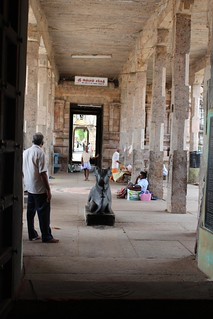
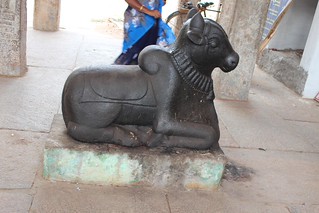
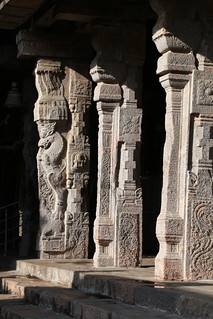
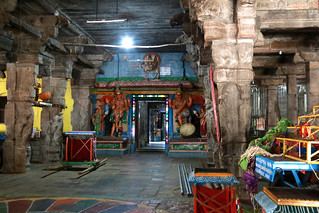
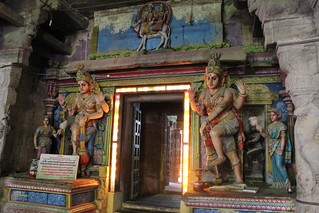
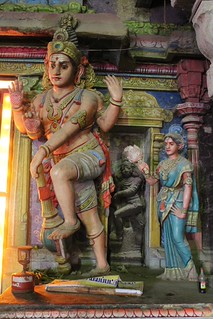
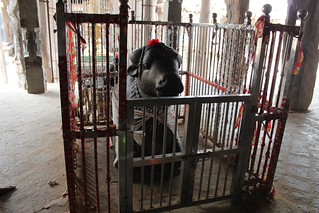
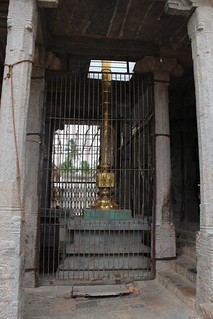
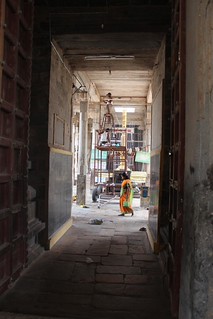
- The mooolavar lingam is swayambu and made of sand (Prithivi) and so no abhishegam is done for the lingam. only punugu chattam (a rare fragrant herb) is applied on to the lingam morning and evening with betel leaf (வெற்றிலை) and panner leaves. He will not be touched by hands even by the Gurukkal (தீண்டா திருமேனி). Ahishegam is done only to the Aavudaiyar (the base) with the waters of the 5 rivers flowing around.
Ambal shrine: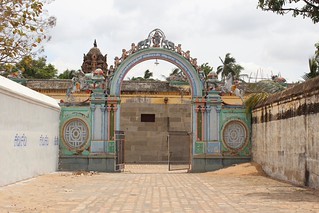
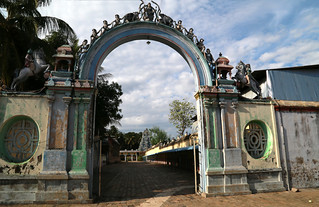
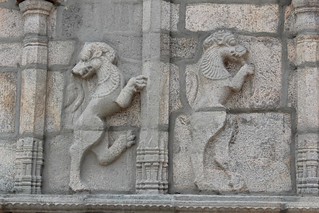
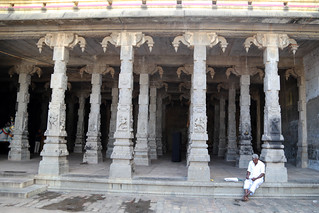
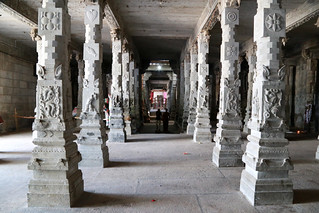
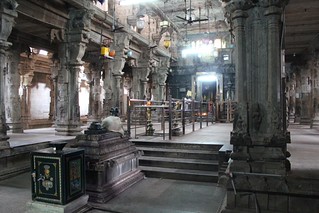
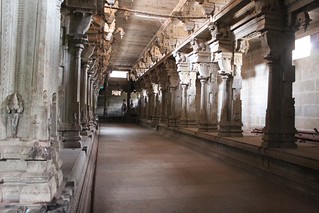
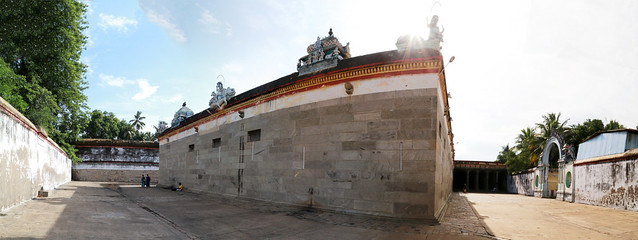
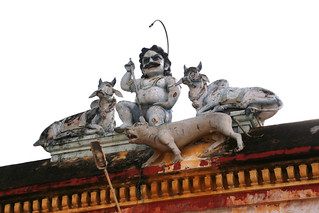
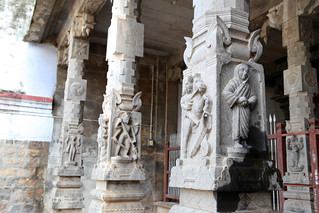
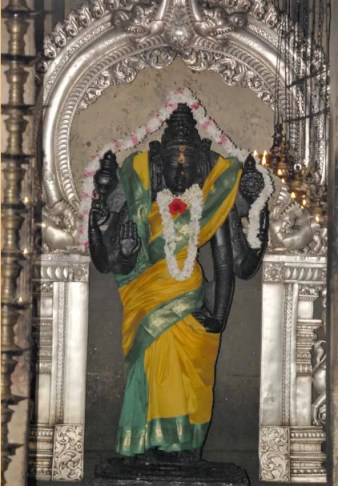
Ambal shrine is one of the 51 Sakthi peetams and is a separate temple with separate entrance and arch. Ambal is facing East. Ambal is considered as the form of MahaVishnu and due to this, there is no Vishnu temple within the territory of Thiruvaiyaru. She is seen standing with 4 hands. The upper hands are holding Sangu and Chakram; the lower left hand in the hip and the lower right hand in Abhaya hastham. Normally, in other temples, She will be seen in Abhaya Varadha hastha posture with the lower 2 hands but here She is just holding Her left hand in the hip in the same posture as Sri Mahavishnu.
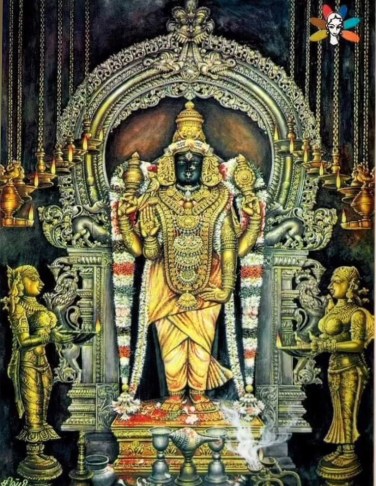
Every Friday night Sri Mahalakshmi visits Ambal shrine as if visiting Sri Mahavishnu and Deeparadhana takes place. During the whole month of Margazhi, Thiruppavai urchavams takes place. Urchava moortham Sri Thiripura Sundari Ambal, Sri Sarabeswarar, Sri Vinayagar and Sri Murugan are present in the mukha mandpam. The front mandapam of Ambal shrine has plenty of beautiful carving of various sculptures.
I have given below only a few. For full photo album see here.
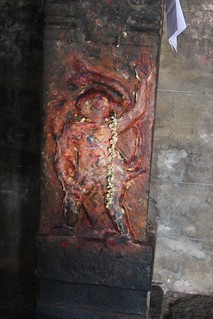
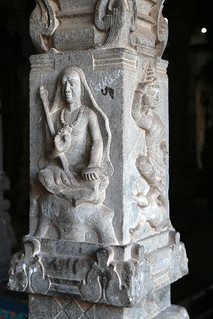
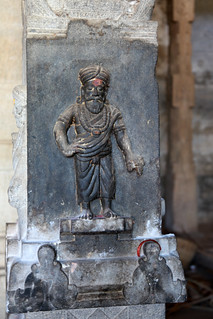
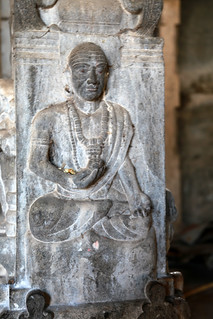
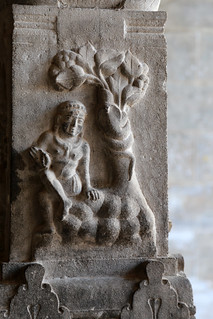
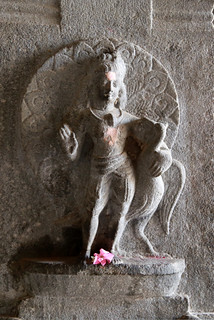
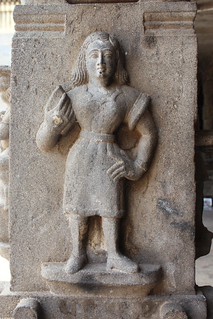
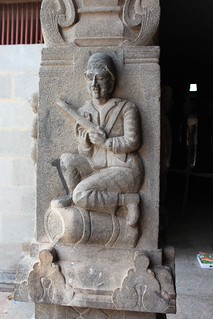
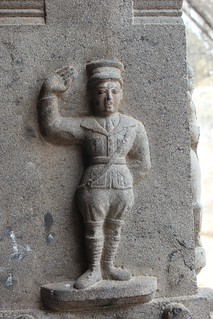
There are 3 temples inside – the main Sri Aiyarappar temple and South Kailayam & Vada Kailayam temples in the 4th praharam (but most of the time, they both will be closed).
South Kailayam:
We can reach South Kailyam and Surya Theertham through the Aatkondar shrine at the South entrance. South Kailayam is a separate temple with 3 tier Rajagopuram, Ardha mandapam, Maha mandapam and an inner praharam. Appar peruman is in a standing posture in the front mandapam and it is considered that he got the Kailaya dharshan in this place. The moolavar is present in a linga form with Bhagwan Shiva and Ambal being present in human form standing behind.
.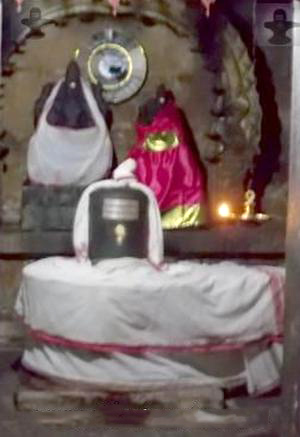
Bhagwan is called Sri Panchanthivanar and Ambal is called Sri Anjalai Ambal. South Kailaya temple was built by Panchavanmadevi, wife of Gangai kondan Rajendhra Chola. The mandapam has 44 pillars that were brought by Rajendhra Chola from Hemavathi, the capital of Chalukya/ Numlamba region (present Karnataka).
Vada Kailayam:
Vada Kailayam is also a separate temple and is called Lokhamadevichuram since it was built by Lokhamadevi, the wife of Rajaraja Chola 1. There are beautiful sculptures around. Sri Ambal, Sri Lokhavidangar (Sri Thyagarajar), Sri Natarajar, Sri Vinayagar, Sri Murugar and Sri Chandikeswar are present. There are inscriptions of huge list of ornaments that were donated by the King. It is said that this shrine also has the distinction of inducing Sri Rajaraja Chola to seriously start locating the Thevara Thirumurai palm leaves after he got inspired by recitation of the Thevar hymns here. Also, Sri Lokhamadevi only started the Sapthasthan festival. The nandavanam of this temple has 108 vilva trees and 27-star trees.
Praharams:
1st praharam: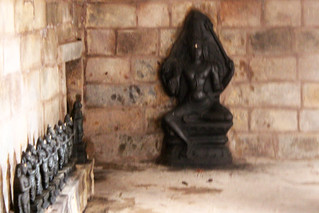
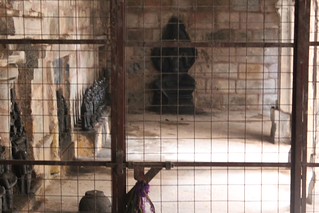
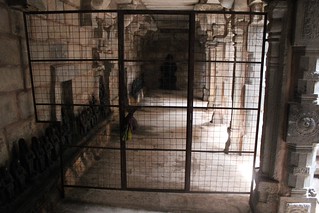
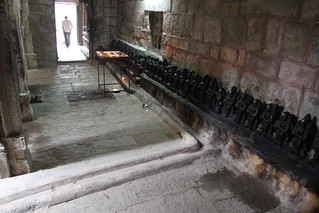
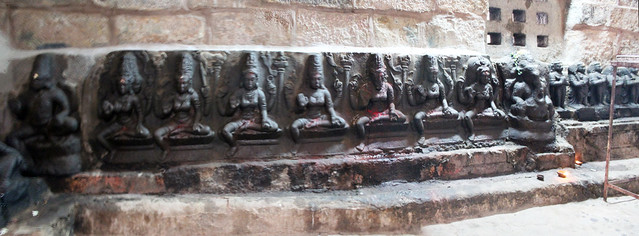
This is called Dakshinamoorthy praharam and the circumambulation of this praharam is allowed only for half round since it is considered that Bhagwan Shiva’s is holy hair is spread over the back of the main shrine and also all the devathas are in meditation here.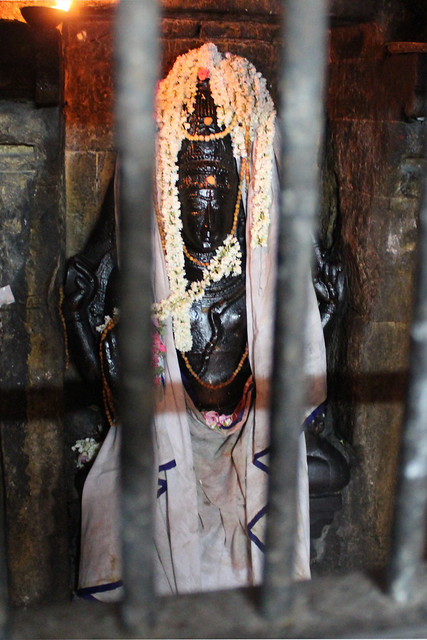
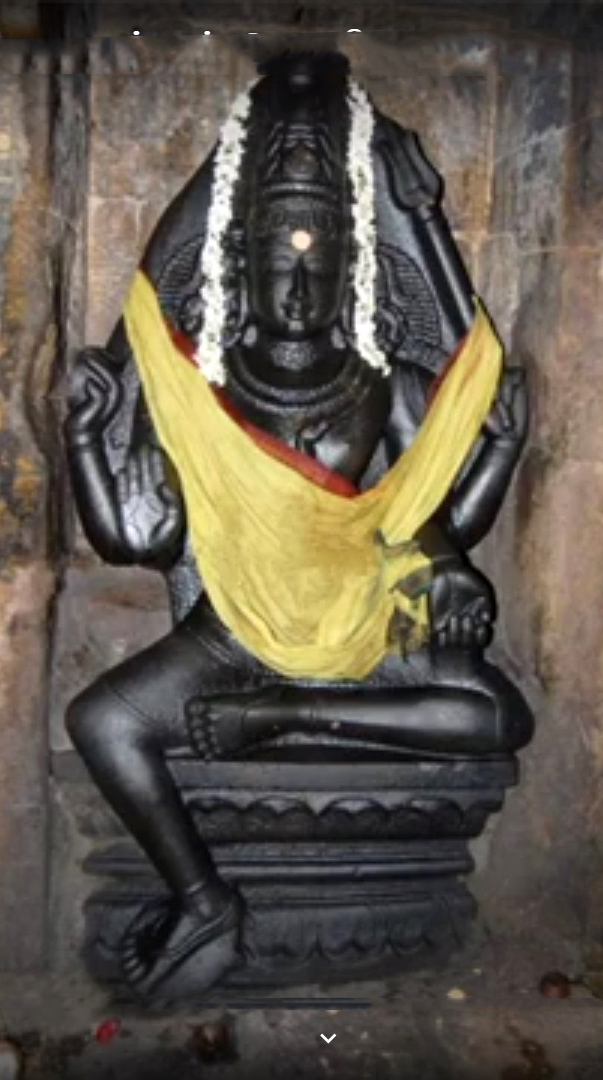
Sri Dakshinamoorthy is present as Sri Hariguru Sivayoga Dakshinamoorthy with 4 hands. The upper right hand has Kabalam; the upper left hand has the Soolam; the lower right hand is showing Abhaya hastham and the lower left hand is having Sivagnana book. He is having tortoise under His feet instead of the usual Muyalagan showing that control over our 5 senses like tortoise is necessary to achieve higher consciousness. It is said that Sri Mahavishnu worshipped this Sri Dakshinamoorthy to get His Sudharshana Chakra. This is the only temple where Sri Mahavishnu worshipped Sri Dakshinamoorthy and hence, the Dakshinamoorthy here is called Sri Hari Guru Sivayoga Dakshinamoorthy (Hari refers to Sri Mahavishnu).
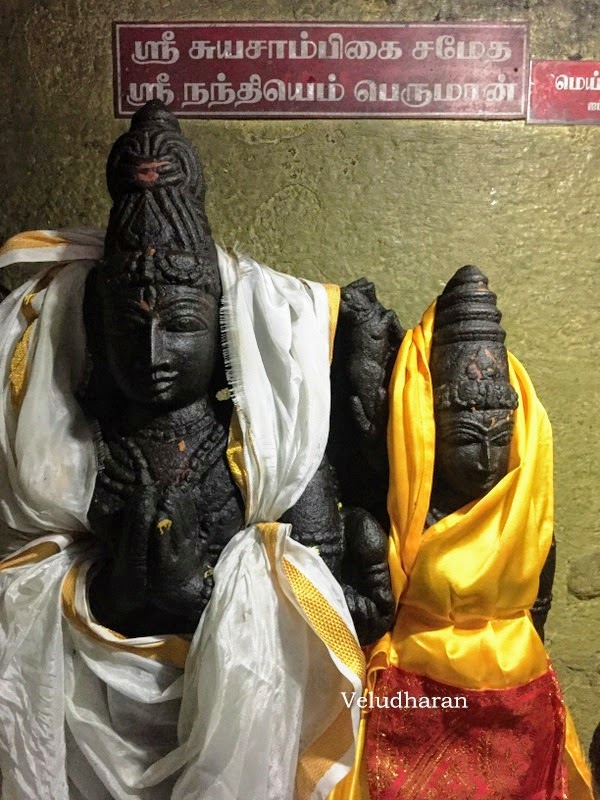
In the mukha mandapam, Sri Nandhikeswar with Sri Suyasambigai is present.
2nd praharam: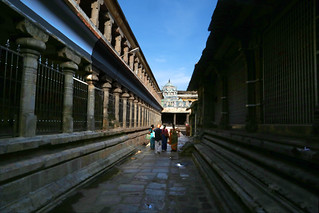
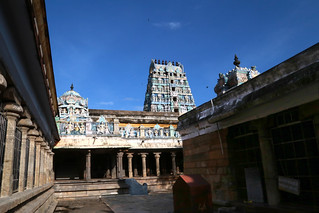
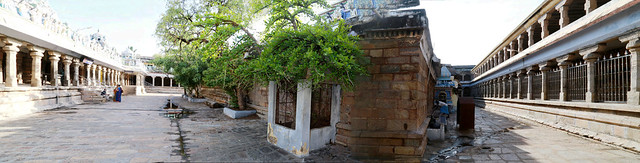
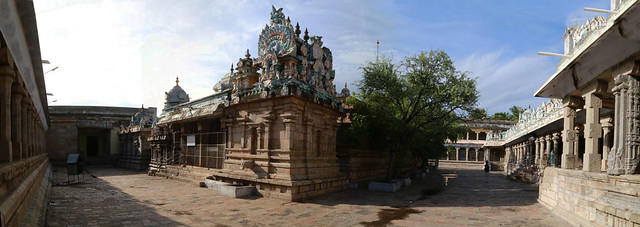
The above photo is of 2024 and the below photo is of the same place in 2012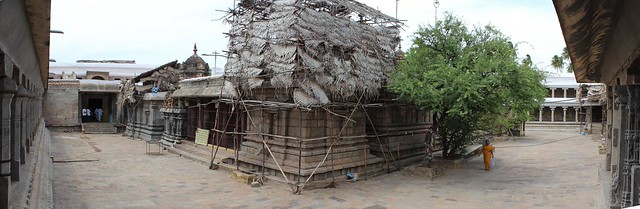
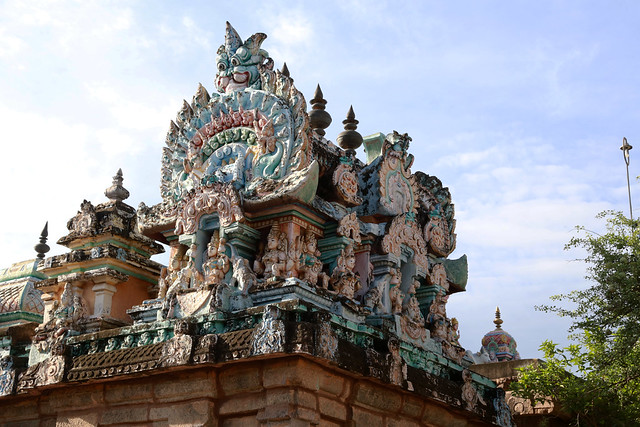
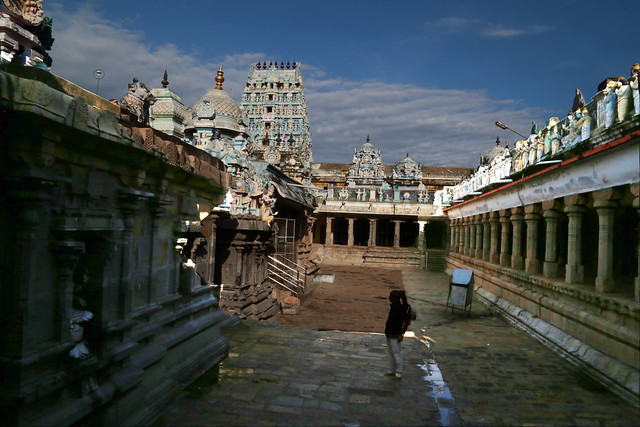
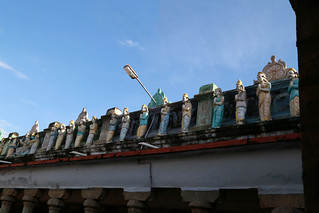
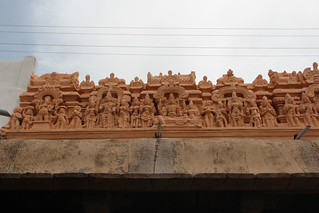
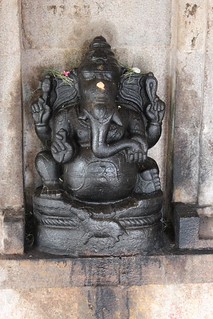
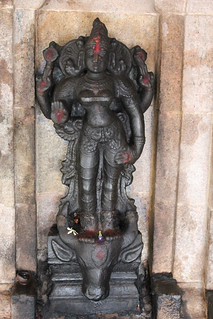
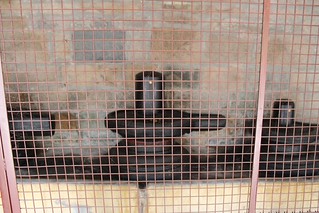
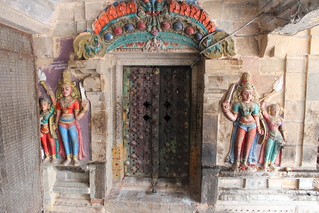
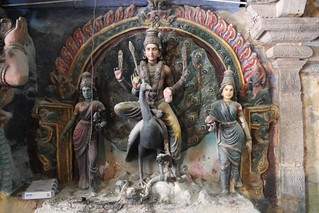
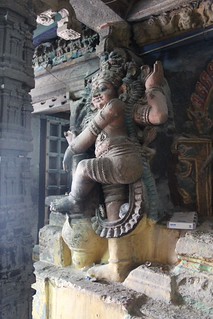
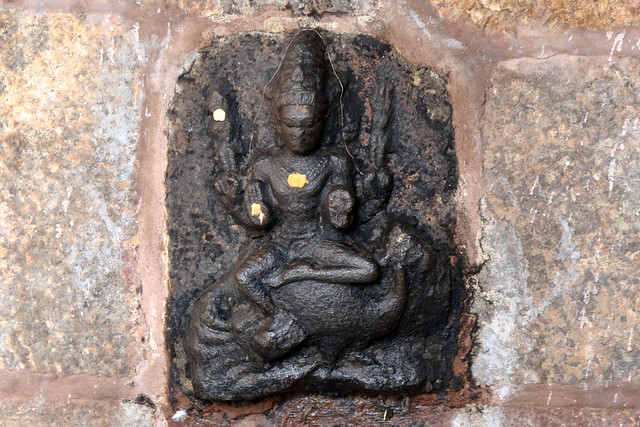
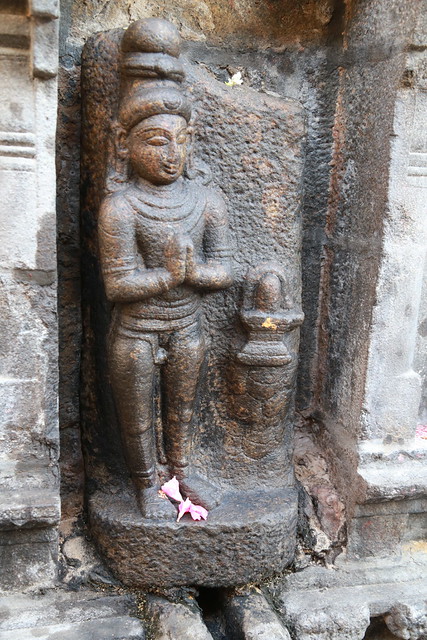
This is called Thirumaligaipathi which became Thirumalapathi because it has a palace-like structure (maligai in tamil means palace).
On the southern side, it has a separate east facing Sri Somaskandhar temple with mandapam; Sri Chattanathar shrine; Sri Pranatharthiharar shrine; Jappesa mandapam or Mukthi mandapam with Pancha bootha lingams, Sapthamathars, 63 nayanmars, Sri Aadhi Vinayagar and Navagrahas; beautiful Marathi period mural paintings on the prahara walls.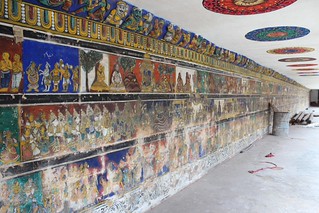
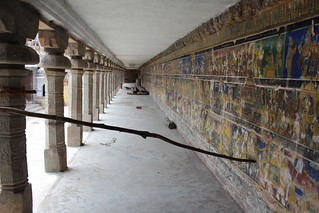
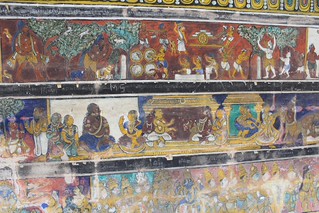
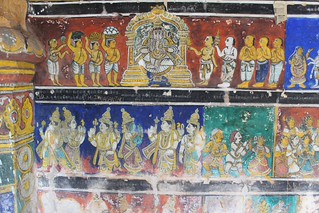
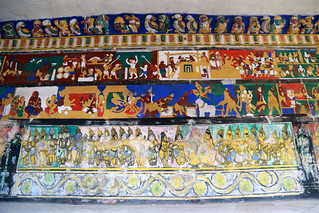
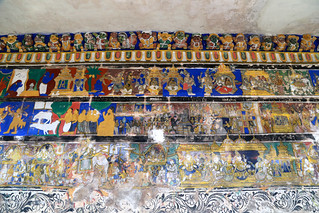
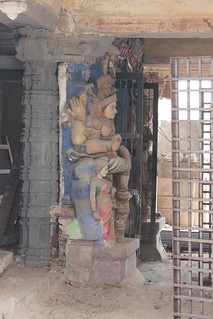
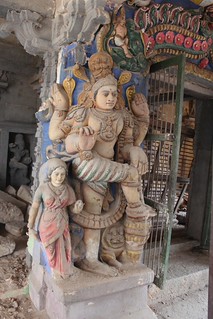
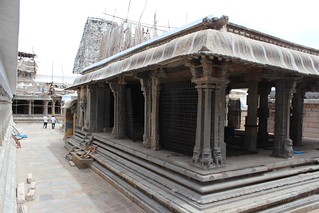
On the western side, Sri Siddhi Vinayagar, Sri Chandrasekar, Sri Kasi Viswanathar, Sri Aavudai Vinayagar, Sri Bala Dhandayuthapai and Sri Villenthiya Velavar are present.
On the northern side, Sri Durga, Sri Lakshmi and Sri Saraswathi are together in a shrine; Sri Vishnu Durga, Sri Chandikeswar, the Theertha well, Sri Agappei Siddhar shrine, Sri Jwarahareswarar, Sri Natarajar in Natarajar mandapam, Sri Kala bairavar & Ashta bairavar, Saptha sthana lingams, Meikandar, Umapathi Sivam and Arul Nandhi Sivam are present.
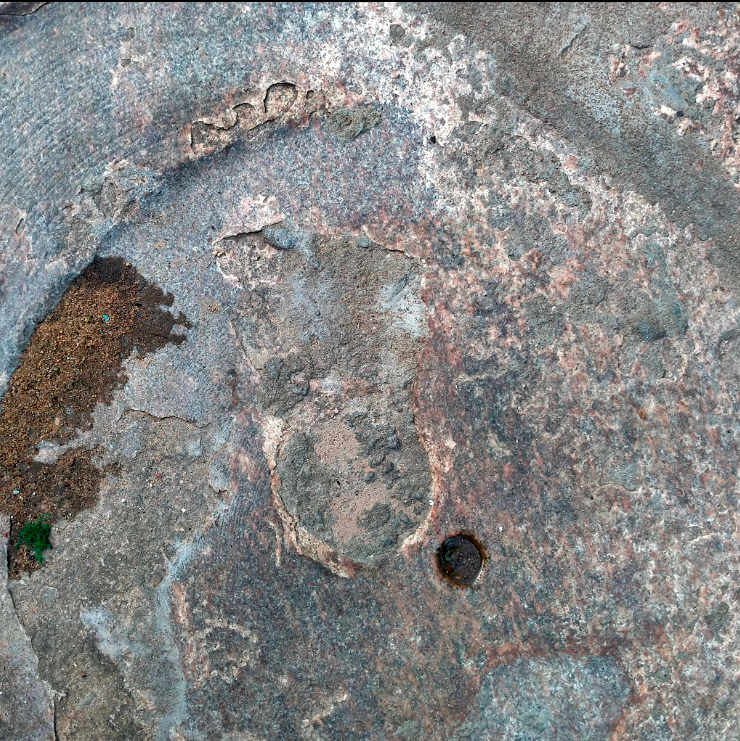
Near the Jappesa mandapam there is a hoof mark (footprint) of Nandhi with 3 round marks and a pit. This is the place under which all the treasures to build the temple were present and was shown to King Karikala by Bhagwan shiva Himself as Siddhar Nyamesar.
When Sarfoji King found a girl for his son at Kasi for marriage, she insisted that she will live only at a place where Sri Kasi Viswanathar and Visalakshi are present and so they were installed in the praharam by the King.
In the Navagraha shrine, all the navagrahas are facing Suryan at the centre with Suryan facing West
As a rare presence Sri Aavudai Vinayagar is seen here with Sri Vinayagar on a square Aavudai (linga base) which can’t be seen anywhere else.
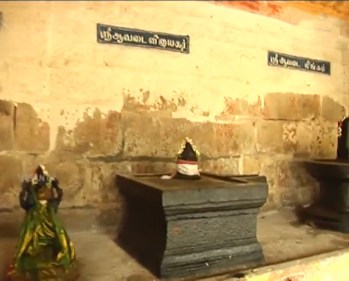
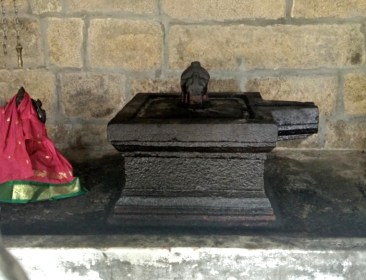
The Subramanya murthi along with His consorts is present at the backside of the moolavar shrine facing East and is seen as a hunter with a bow in His hand as Dhanusu Subramanyam/ Villenthiya Velavar (வில் ஏந்திய வேலவர்).
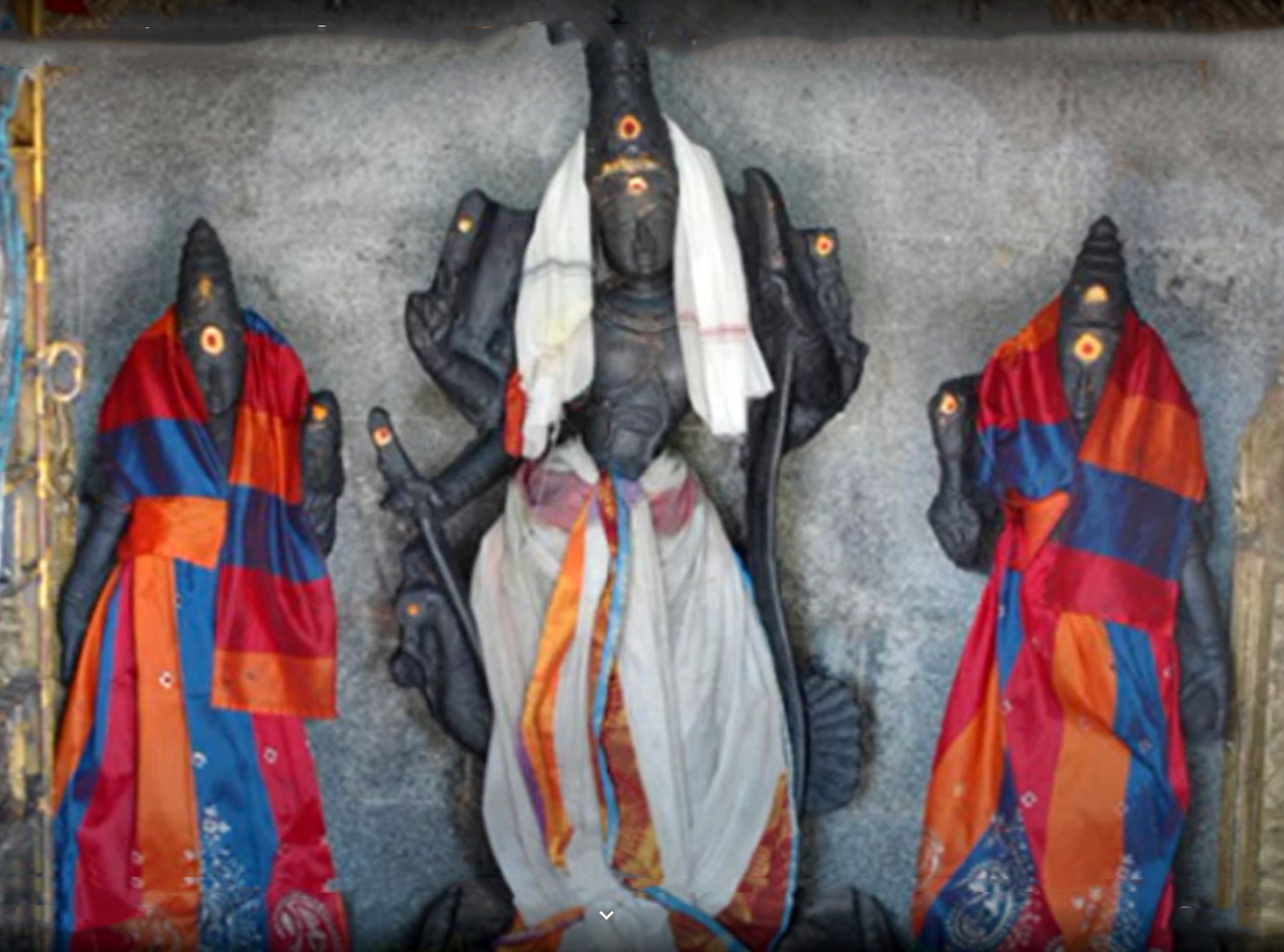
Apart from Sri Villenthiya Velavar, there is another Sri Subramanyar with Sri Valli and Sri Deivanai in the praharam and they are carved out of a single stone.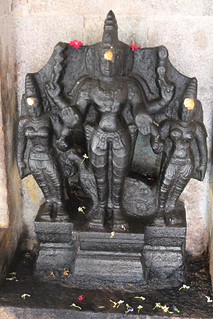
3rd Praharam: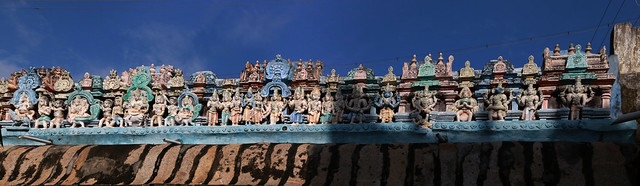
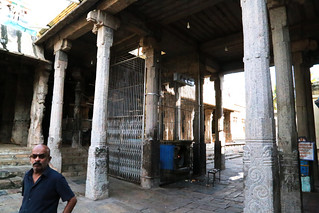
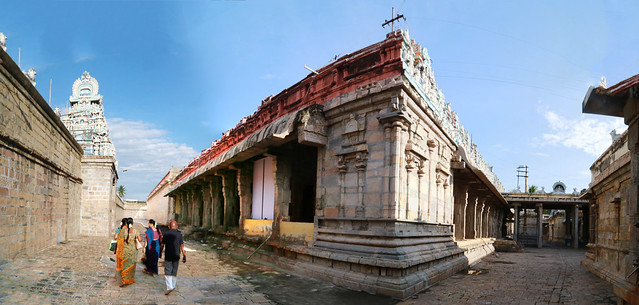
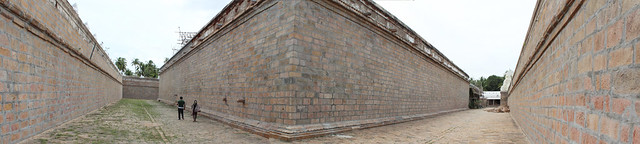
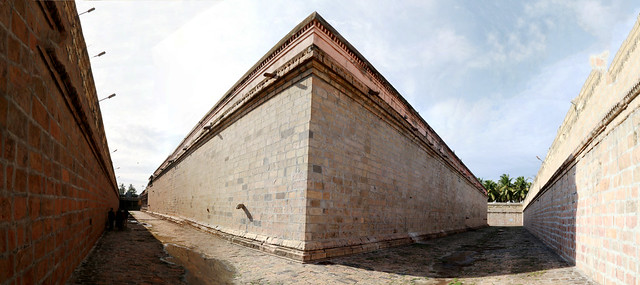
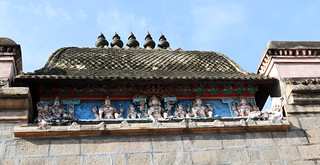
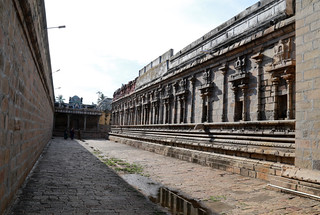
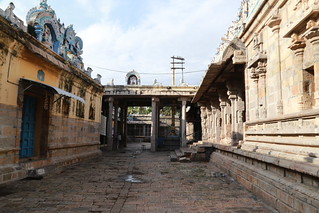
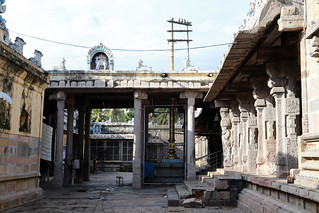
The 3rd praharam has no shrine but various mandapams, Yaga Shala, Madappalli and Dwajashtambam. The South west corner will echo 7 times whatever we say.
The Westen side of the 3rd praharam is called ‘Saptha (seven) Oli (sound) praharam’ and the South west corner has a small hole on the wall. Whatever we say loudly into this hole will reverberate back 7 times.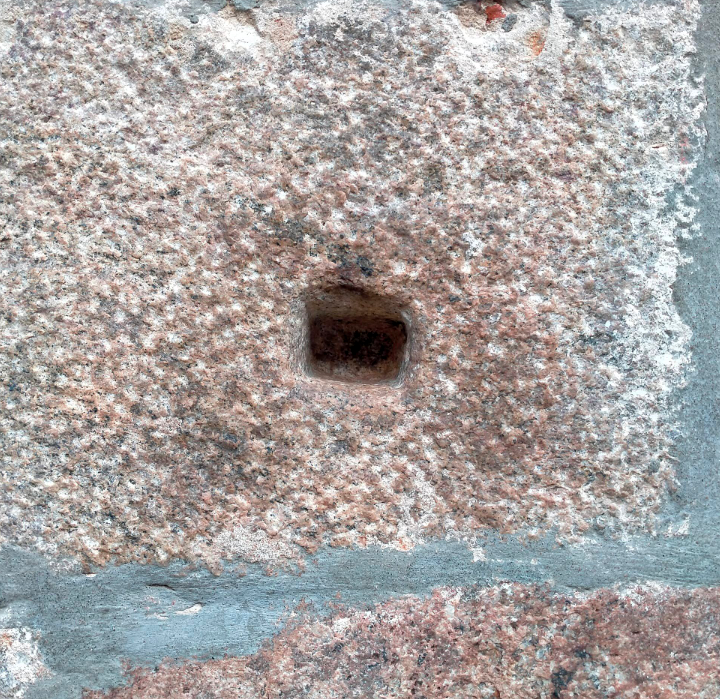
4th Praharam: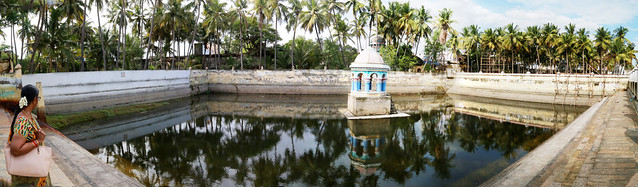
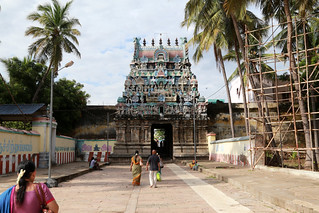
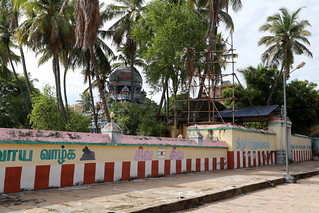
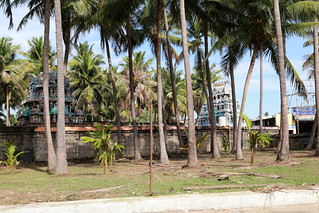
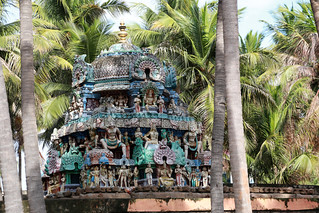
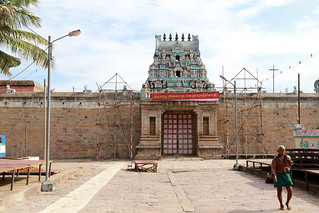
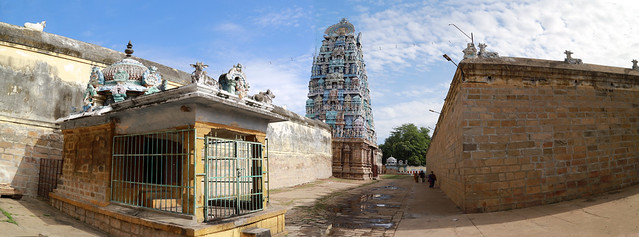
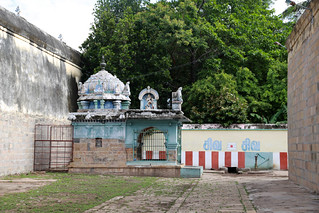
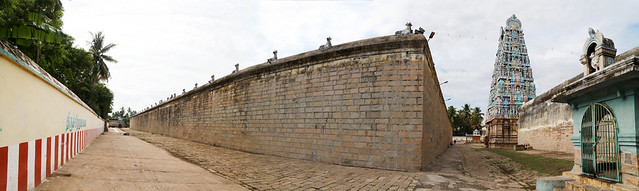
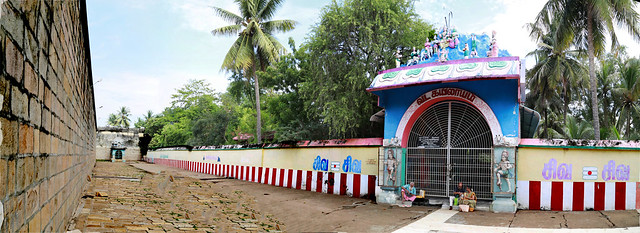
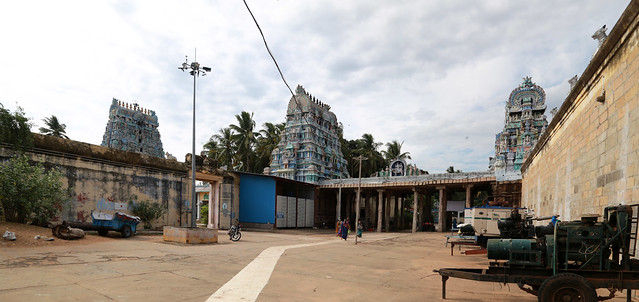
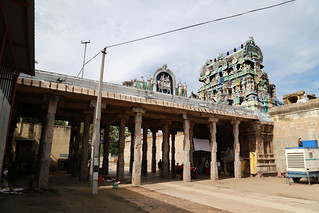
The 4th praharam has Surya pushkarani, Kasi Visalakshi shrine on its bank, way to Aatkondar shrine at South gopuram, South Kailayam, Vada Kailayam, Pachaiyappar mandapam, the Ambal shrine and the Dandapani Mandapam.
5th Praharam:
The 5th praharam constitutes the Mada streets around the temple.
Dhyana Mandapam/ Mukthi Mandapam/ Seppesa Mandapam/ Jappesa Mandapam: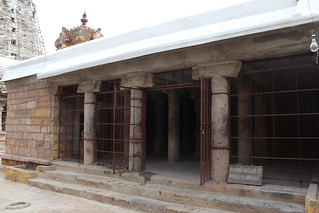
The Jappesa mandapam is a very sacred and powerful place to do Japa. Doing Japa here is considered equivalent to doing Japa 1 lakh time. Per legend, Indhra did Japa towards Sri Dakshinamoorthy and got the power to take up the war with demons through the Saptha mathars. The Saptha mathars in this mukthi mandapam is considered to have been installed by Indhran himself. Sri Mahavishnu, Sri Agasthiyar, Sage Silanthar, father of Sri Nandhikeswar, Sage KoraThapasi have done Japas here. Also, Sri Ramalinga Vallalar, Kodaganallur Sri Sundara Swamigal had meditated for many days. Sri Thyagaraja had composed many songs at this mandapam.
Note:
The Mukthi mandapam is present only in 3 temples – Kasi, Thiruvaiyaru and Nagapattinam
Moolavar Vimanam:
The Vimanam of the Bhagwan Shiva shrine has 3 tiers
Note: The photos below are from different time periods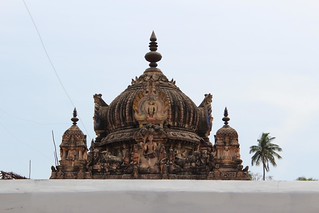
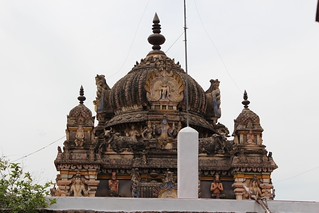
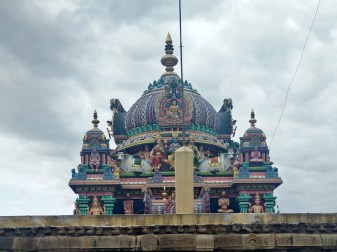
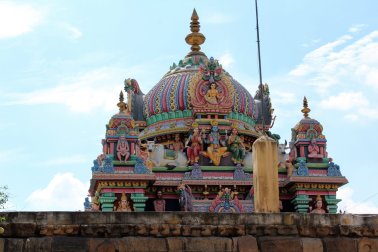
The middle tier has one gopuram with vimanams in each direction and 2 Siddhars per gopuram totalling 4 gopurams with vimanams & kalasams and 8 Siddhars.
The bottom layer has 3 kalasams and 4 Siddhars in each side totalling 12 kalasams and 16 Siddhars.
So, there are a total of 17 (1 + 4 + 12) kalasams and 24 (8 + 16) Siddhars in the main vimanam of Bhagwan Shiva shrine. Gopura dharisanam is kodi punyam and consider the power of worshipping this gopuram!
Contributions to the Rajgopurams and Temple: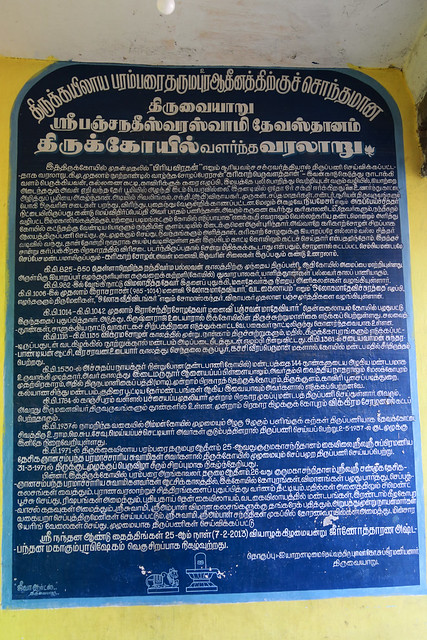
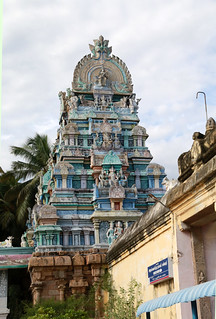
- The 7-tier East Rajagopuram with plenty of beautiful sculptures is the main entrance; the 2nd level East gopuram has 3 tiers and called Kali gopuram; the 3rd level East Gopuram built by Vikrama Chola has 3 tiers and is called Thattai Gopuram.
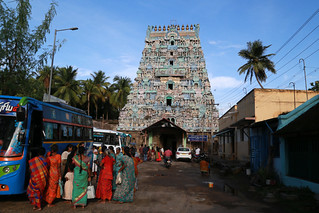
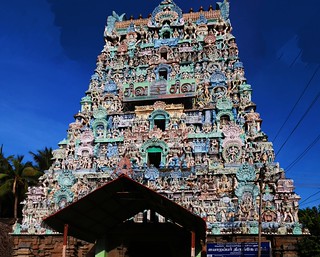
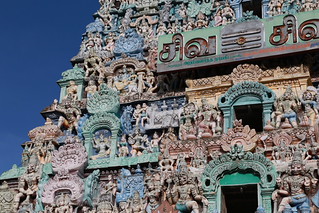
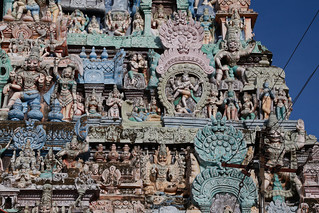
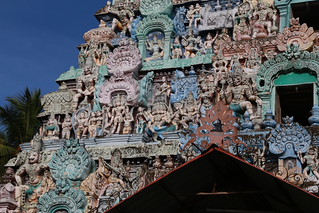
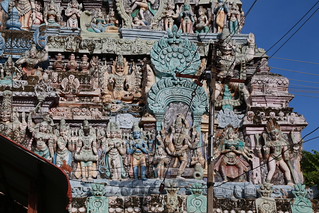
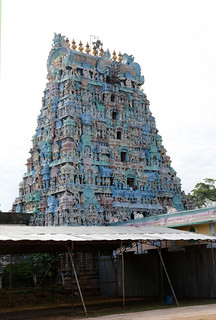
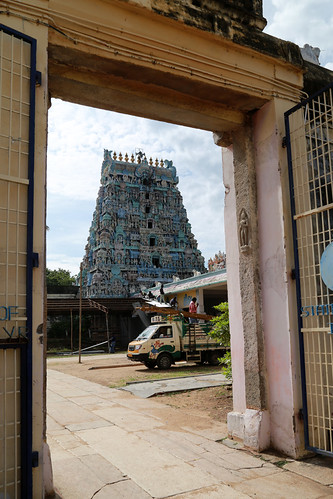
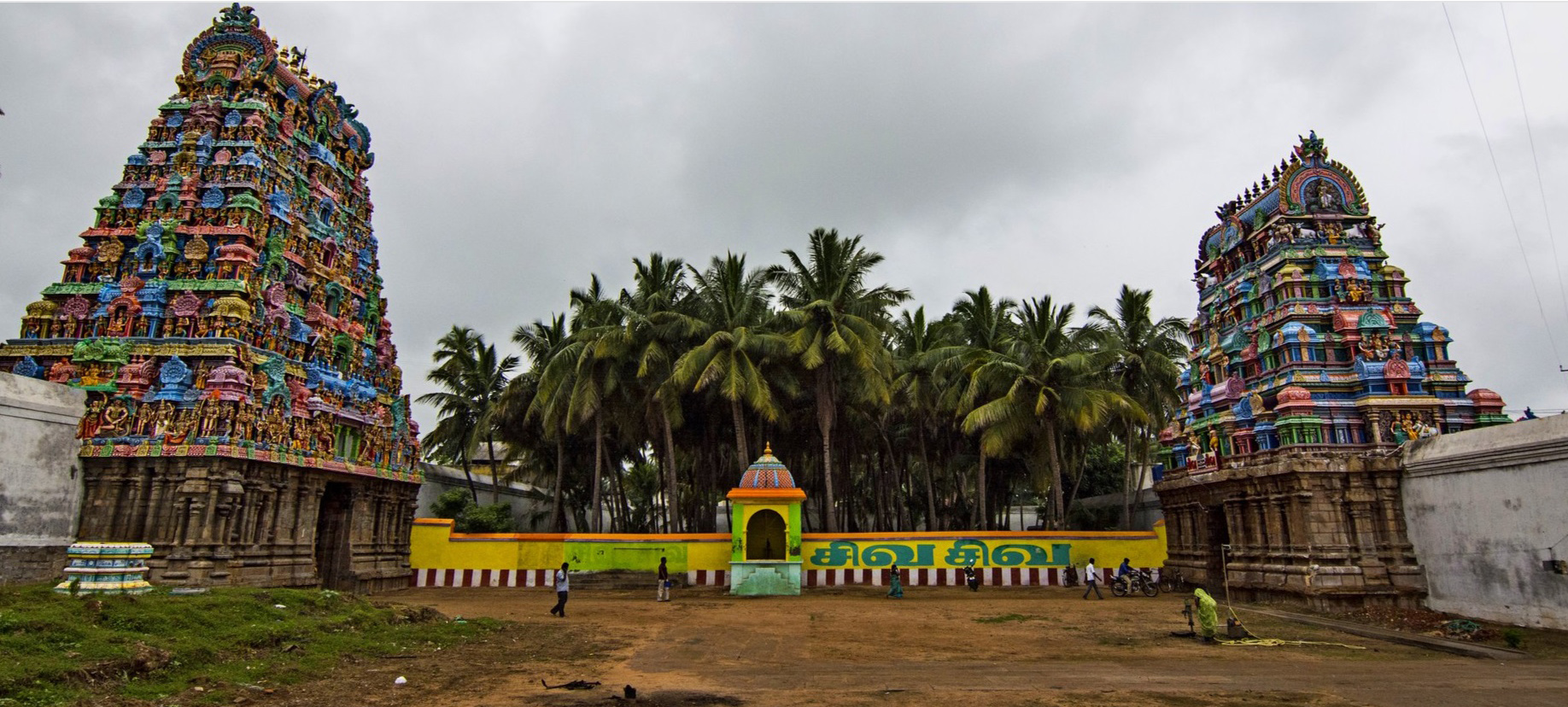
- The South gopuram has the Atkondar shrine and we can enter the temple through this also.
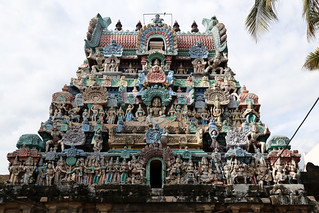
- There is a 2nd level South Rajagopuram also with 3 tiers called as Thitti vasal/ Thiruvolakka vasal gopuram but this is normally closed and is being used only during special festival occasions. In Kailayam, Bhagwan used to come through the South entrance only and Thiruvaiyaru, being the South Kailayam, Bhagwan will come through this South entrance only for festival processions.
- The 7-tier western gopuram has beautiful sculptures.
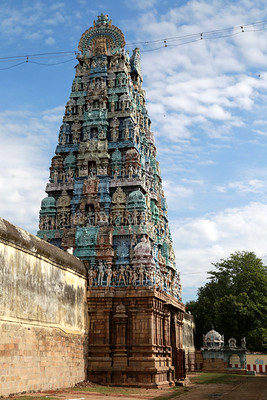
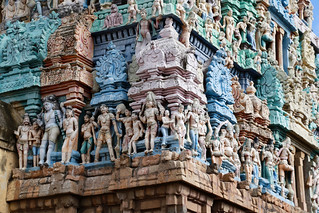
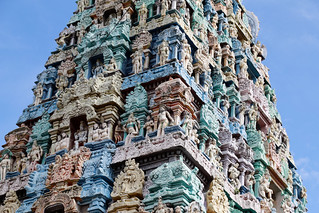
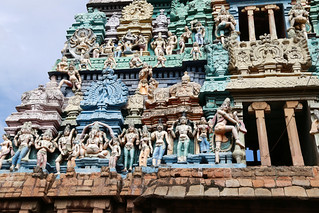
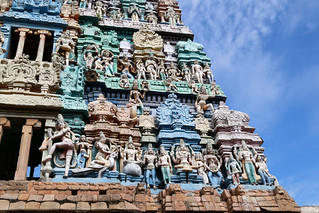
- The Aiyarappar shrine was built by Nandhi Varma Pallavan;
East Gopuram and 3rd praharam by Vikrama Chola;
West Gopuram, 1st praharam, Nadai Thirumaligai Pathi, Surya Pushkarani, South Gopuram were built by Aanaya Pillai and his brother Vaithyanathar during the rule of Achuthappa Nayakkar;
Dandapani mandapam with 144 pillars was built by Achuthappa Nayakkar in the 16th century
Poosa/ Pushya ghat:
From the South gopuram we can reach the cauvery bathing ghat which is called as Poosa/ Pushya Mandapa ghat. Thiruvaiyaru is one of the Mukthi sthalams of Tamilnad which are considered at par with Kasi among Srivanchiyam, Thiruvenkadu, Mayiladuthurai, Thiruvidaimarudhur and Chayavanam. Doing pithru pooja/ tharpanam at the Poosa ghat is considered highly powerful. This is also called as Tulaghat. Thiruvaiyaru is also one of the most sacred places to take Tula snanam – to take cauvery bath during Tula (Tamil month of Aippasi) along with Srirangam, Kumbakonam, Mayiladuthurai and Sri Vanchiyam. Arupathu Moovar Madam is also present in this street that leads the bathing ghat to the South gopuram.
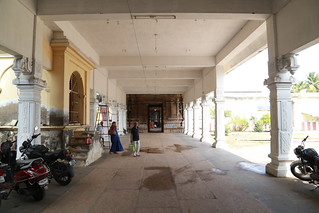
- As soon as we enter the temple, on the right side, Sri Dhandapani Mandapam is present with 144 pillars and has Sri Vallabha Vinayagar shrine and Sri Dhandayuthapani shrines. As we enter the temple, on the left side, just opposite the Dhandayuthapani shrine, we can see His vahana, peacock, in a mandapam
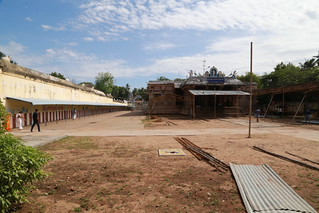
- We can see 5 Rajagopurams from the same place at a particular place in the praharam.
- The Jeppasa mandapam was built using limestone and karuppati. 4 pits are there. Two pits for storing limestone and karuppati and two pits for gold and silver. It is said that the workers were given gold and silver as salary and they could take whatever they can through these holes.
- Sri Ardhanareeswarar in the koshtam is unique. Here Bhagwan Shiva is on the left side and Sri Parvathi devi is on the right side – interchanged from their usual positions.
- A very rare Calabash (திருவோடு) tree whose fruits are used to make begging bowls is present in the praharam.
- Sri Mahavinshu made of Athi wood is being kept in a glass chest in the Ambal shine (not sure)
- The temple is under the control of Dharmapura Aadheenam
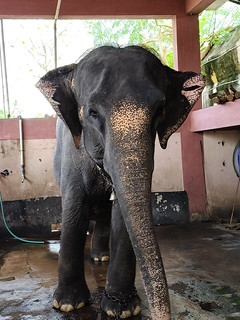
Festivals:
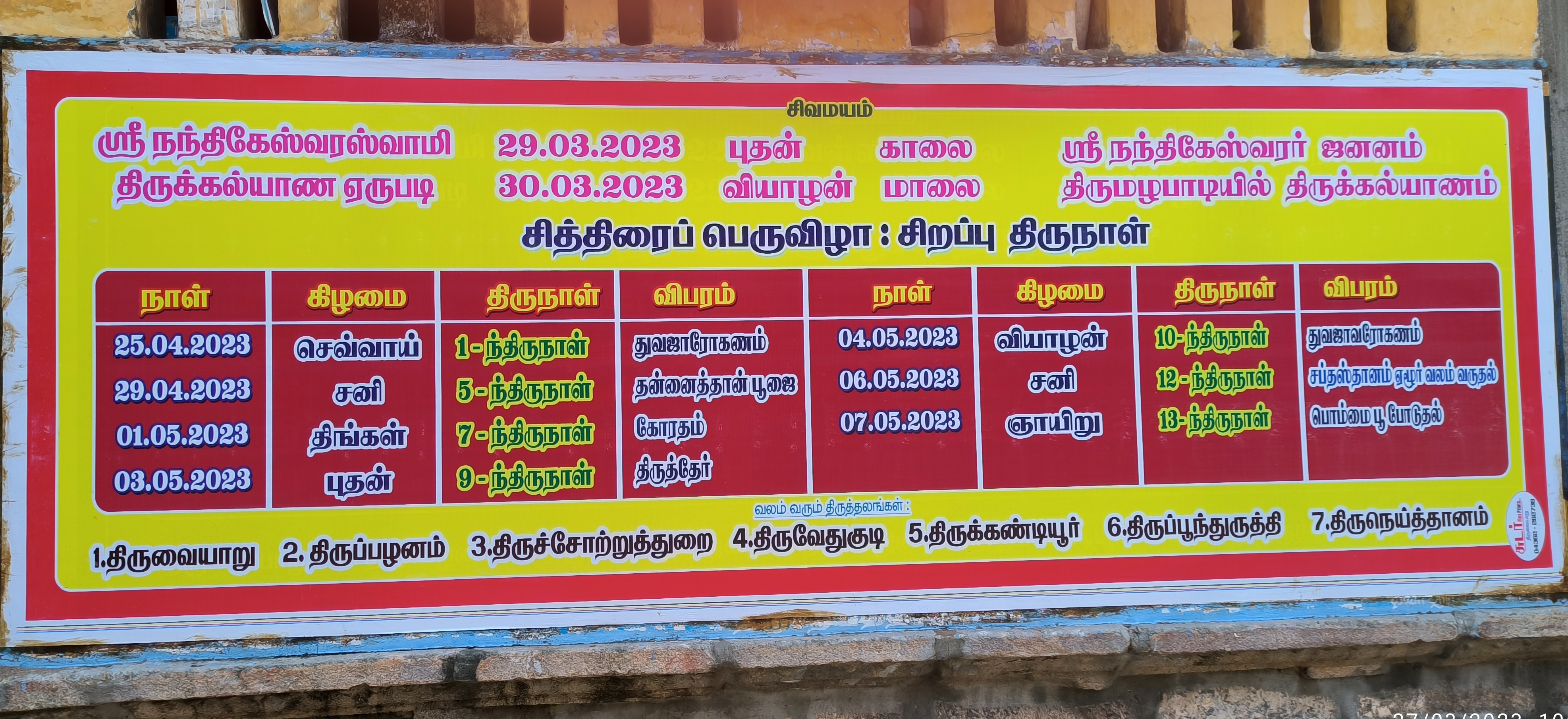
- The Saptha sthana festival connected with Nandhi devar marriage is highly popular and is being celebrated during the 13 days’ annual Brahmotsavam in the Tamil month of Chithirai.
-
- On the 1st day, flag hoisting in the dwajasthambam (துவஜாரோகணம்)(
- On the 5th day, the festival of ‘Bhagwan Shiva doing pooja to Himself’ takes place
- On the 9th day, Chariat festival (திருத்தேர்) takes place
- On the 10th day, Circumambulation of the inner praharam 7 times and the lowering of the flag in the dwajasthambam (துவஜாவரோகணம்) takes place
- On the 12th day, Sapthasthana festival (ஏழூர் திருவிழா) takes place
- On the 13th day, the festival of doll showering flowers on the Nandhikeswar couple and the devotees present (பொம்மை பூ போடும் நிகழ்ச்சி).
- On the Mahadeva Kalashtami (November), Sri Kalasamharamoorthy on the Yama vahana and Sri Aatkondar on the Rishba vahana go to Cauvery for Theerthavari.
- The float festival is celebrated on Aavani Moolam
- The Appar festival is celebrated on Aadi Amavasya.
Theertham: Surya Theertham, Pancha Theerthams – Five tributaries of the cauvery river – Cauvery, Kudamurutti, Vennar, Vettar, and Vadavar, Nandhi Theertham, Samudhra Theertham and Devamrutha Theertham
Sthala vruksham: vilvam
Links: Location Photos Weblink
Sri Veera Anjaneya Swamy Temple at Bawa Swami Agraharam and Sri Pattabirama Temple at Pudu Agraharam
It is said that Sri Rama temple was in existence at the present Sri Dharmasamvarthini Ambal shrine/ temple. The presence of a small Sri Anjaneya temple in the middle of the Bawa Swami Agraharam just opposite to the Ambal temple facing the Ambal shrine is the testimony for this claim. When Thanjavur was under the Maratha rule, then queen by name Mohanambal fell in love at the striking beauty of Sri Rama and His parivara of this Sri Rama temple. She decided to shift this temple to the new town (about 1.4 kms from Sri Aiyarappan temple) on the southern bank of Cauveri, named after her as ‘Panchanatha mohanambal puram’. She had brought in many scholars and pundits to the new town and hence the place came to be known as ‘Pudhu Agraharam‘ now.
Saint Thyagaraja, a staunch devotee of Sri Rama, worshipped this Sri Rama daily.
Sri Veera Anjaneya Swamy Temple at Bawa Swami Agraharam
Links: Location Weblink
Sri Pattabirama Temple at Pudu Agraharam
Links: Location Weblink
Note:
We were there in the temple for nearly 2 hours but while writing this blog article, I’m finding that we had seen only 50% the temple secrets/ aspects. We need another visit for a few hours to completely understand the temple.
We came out of the temple by 9:20 AM and then proceeded to our room. Took breakfast and then continued our trip to Aaduthurai (Thirukoodalur) Sri Jagathrakshaka Perumal temple, Thiruvedhikkudi, Thiruchotruthurai etc.,
See you in the next post…